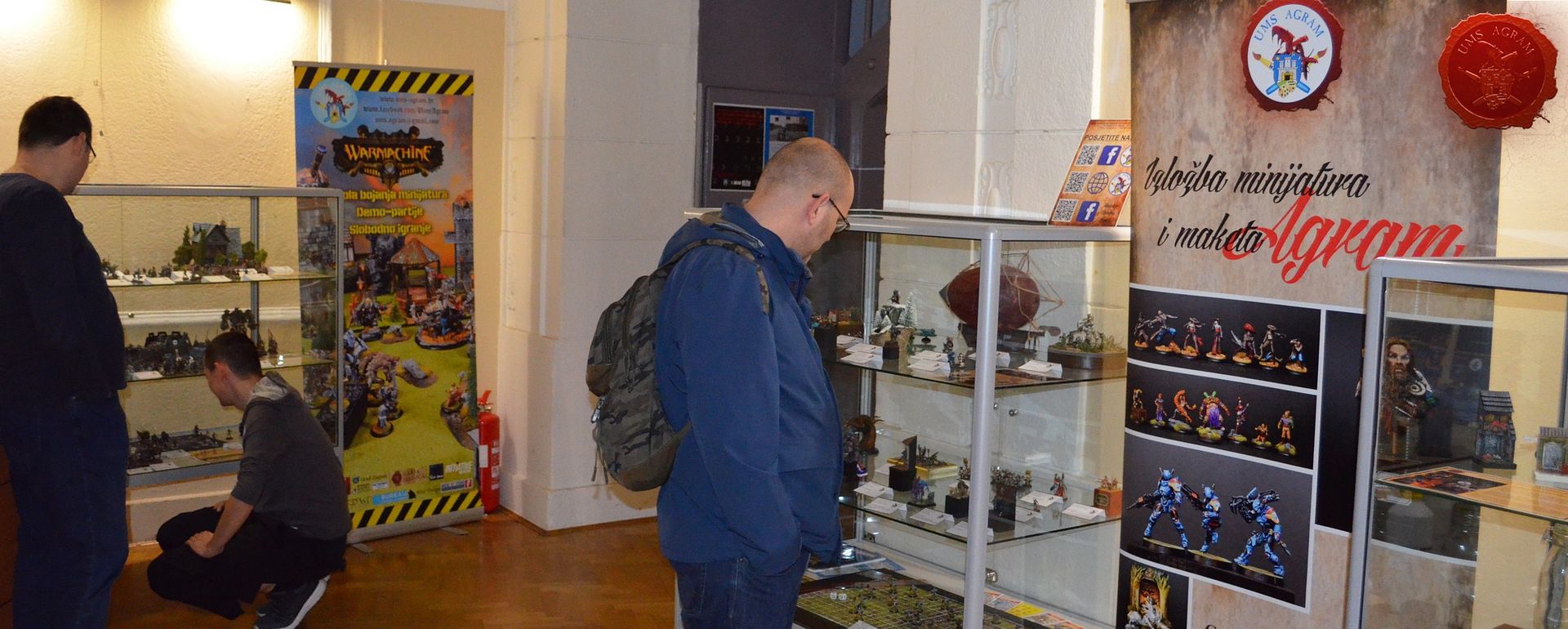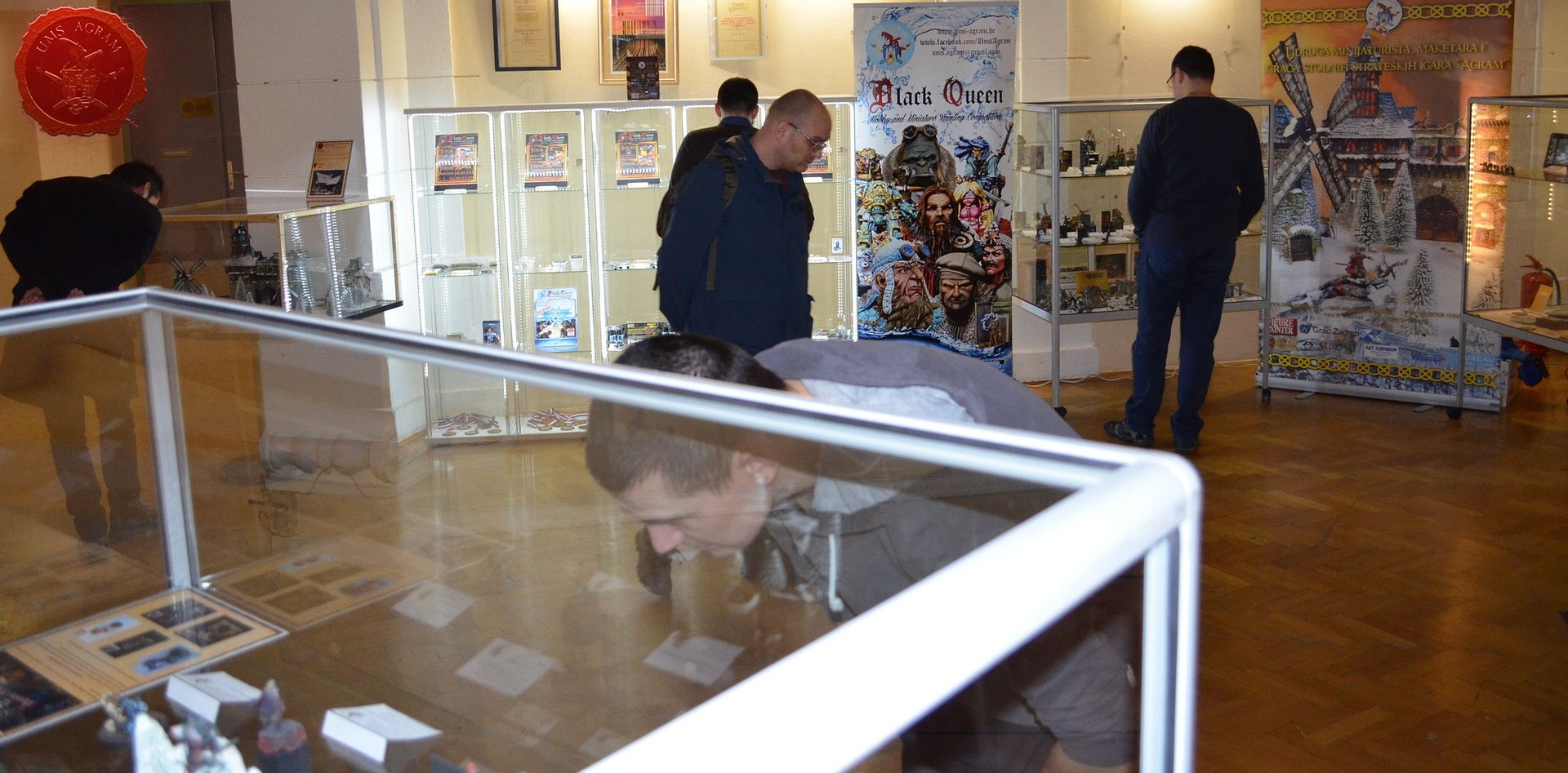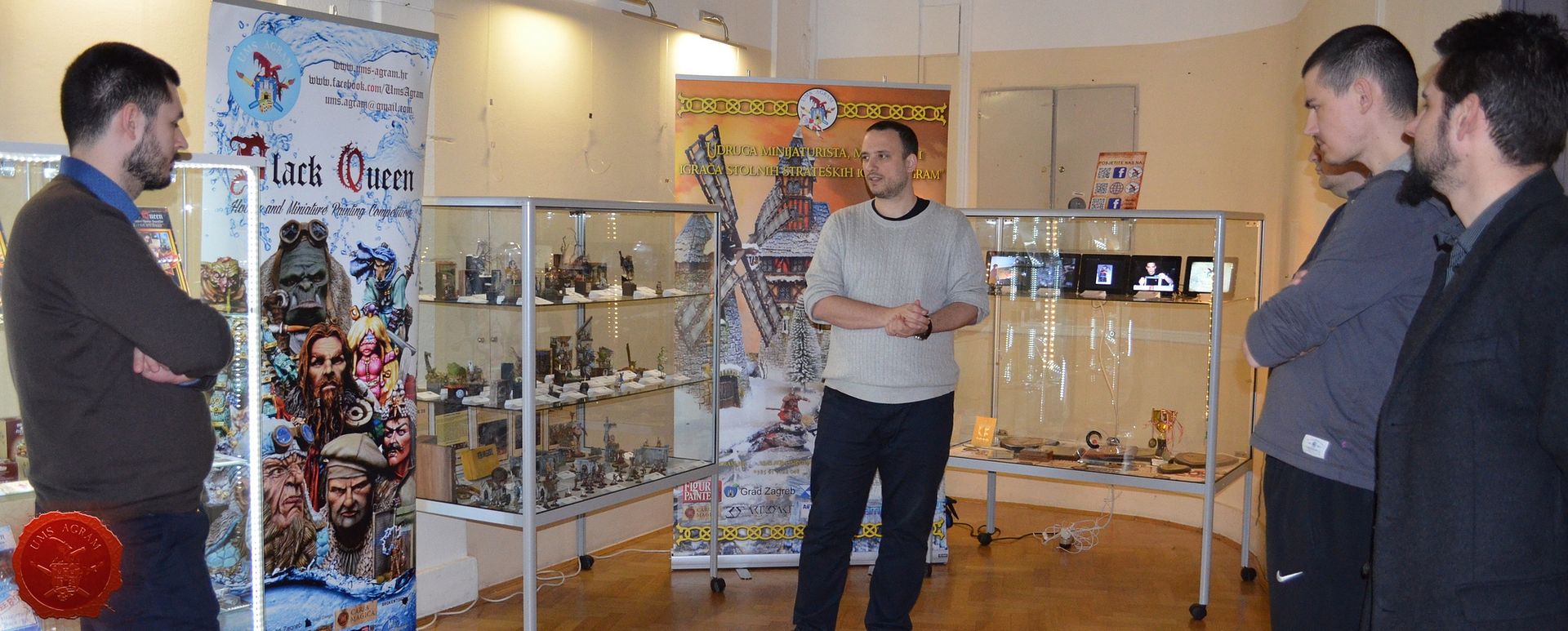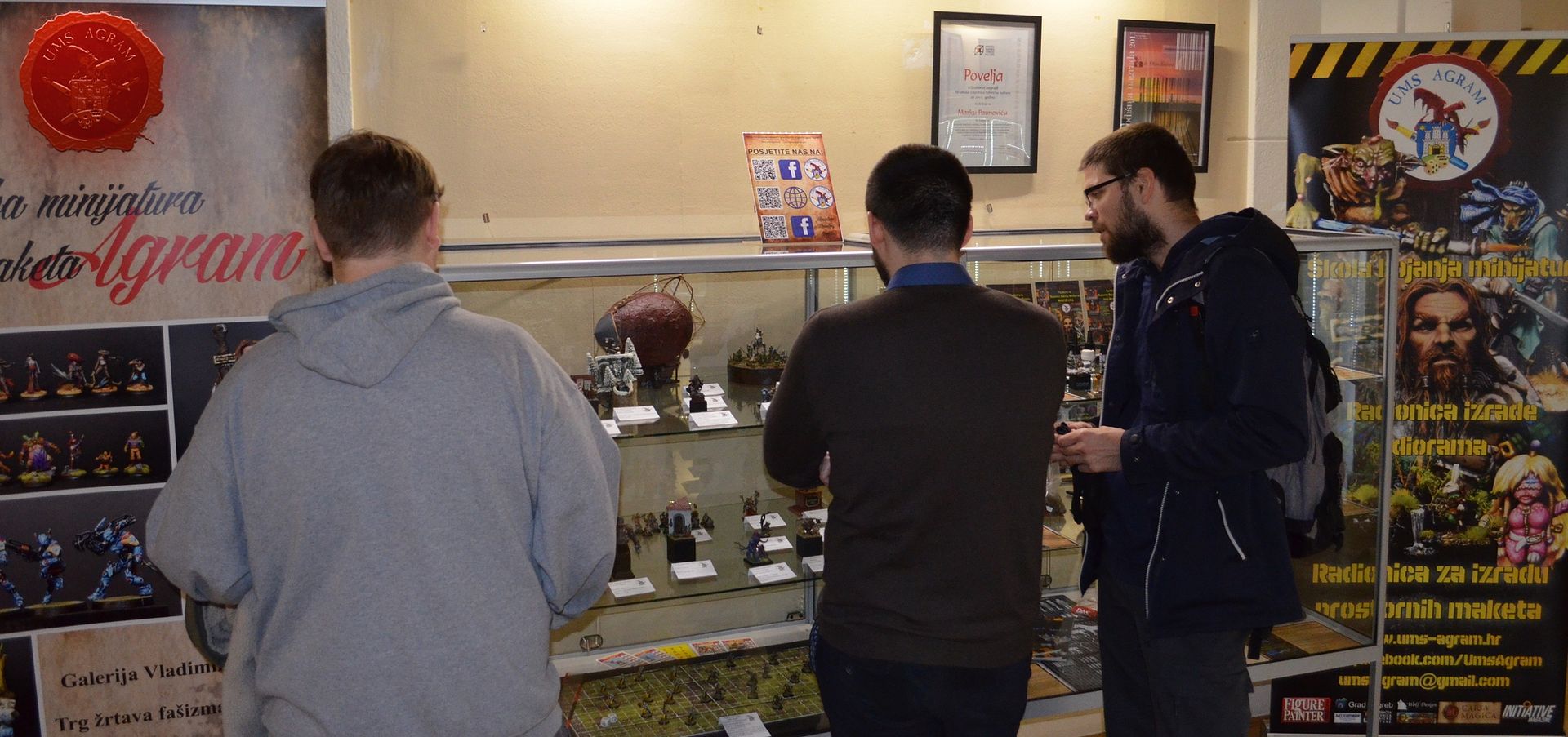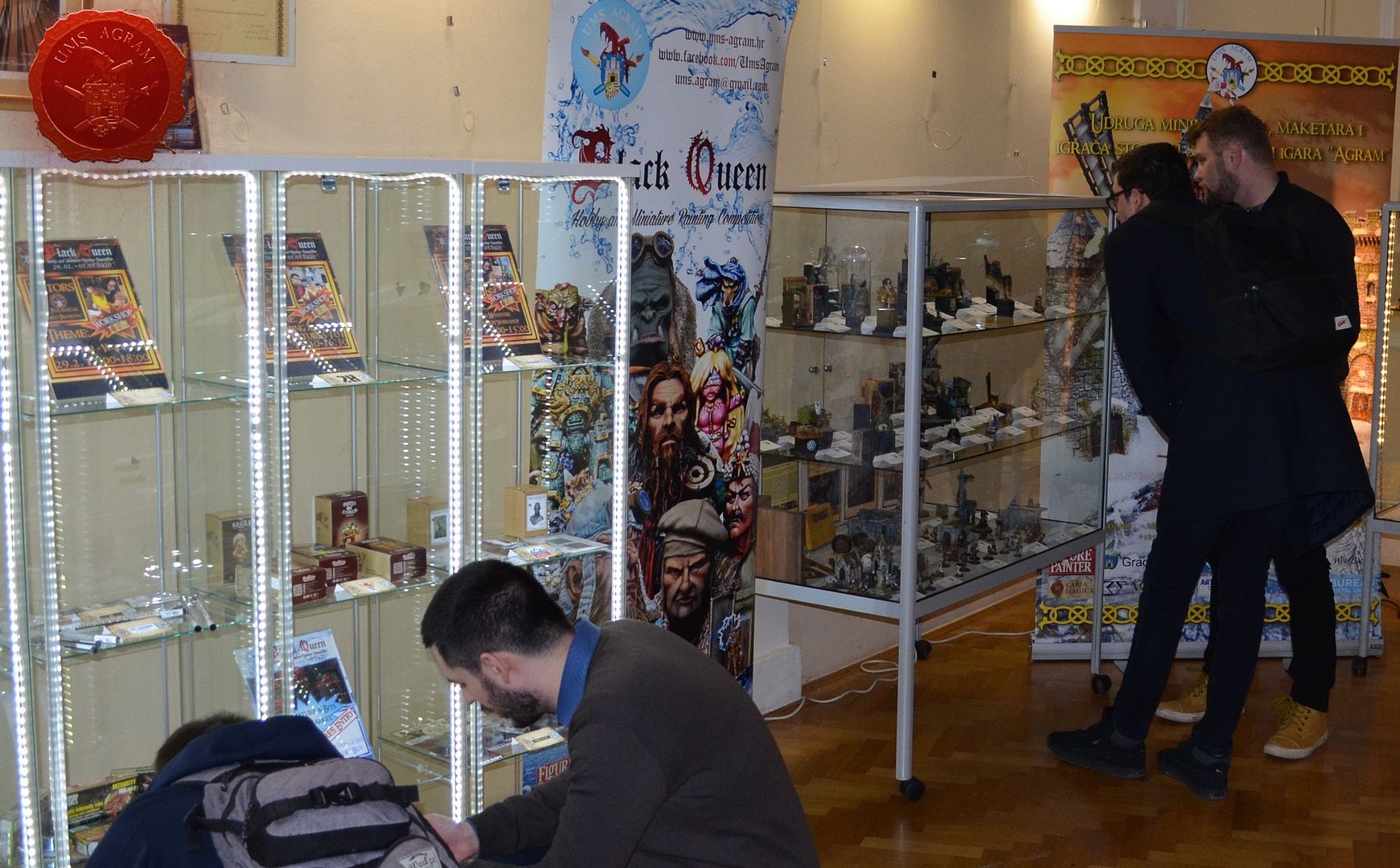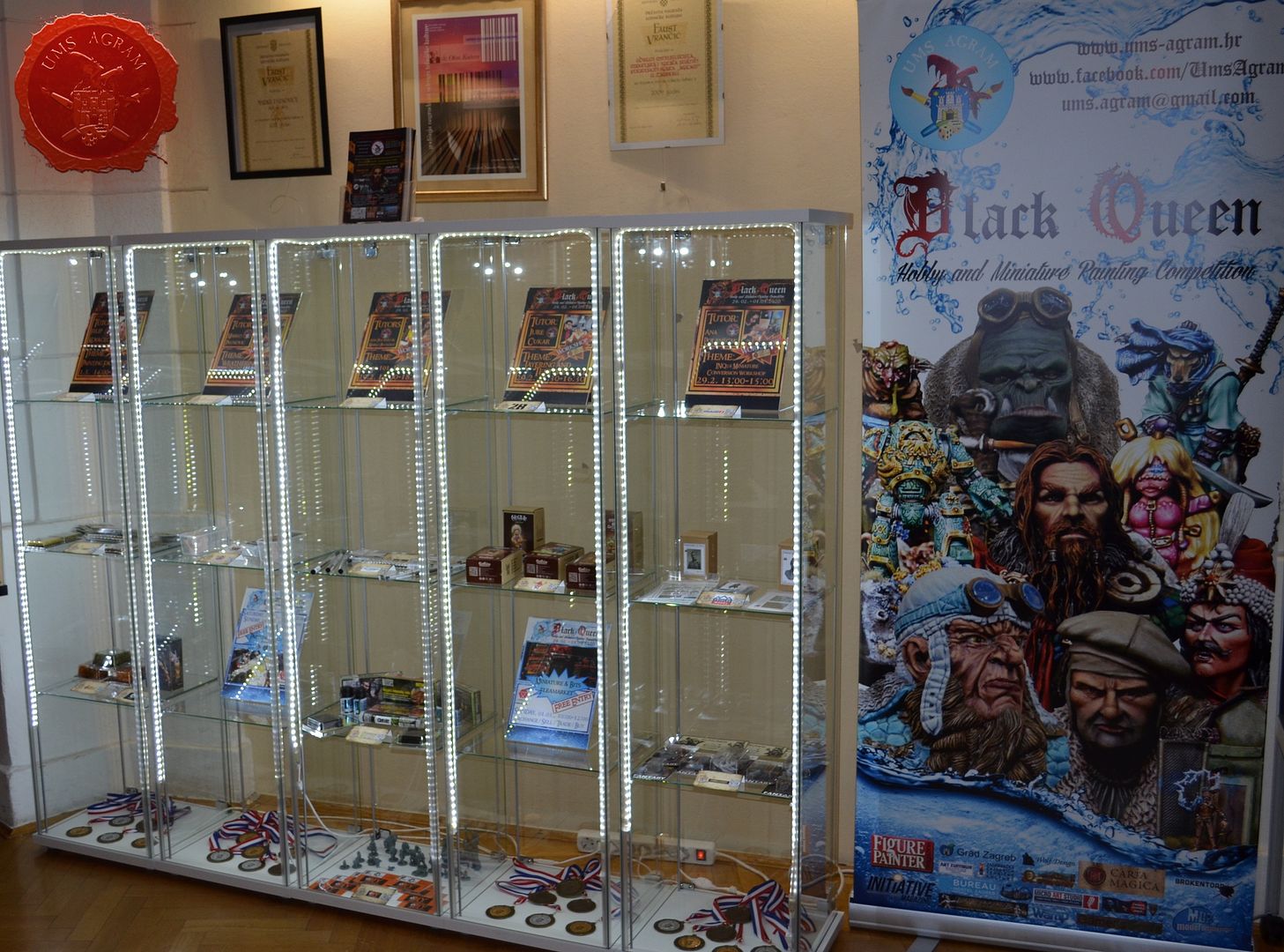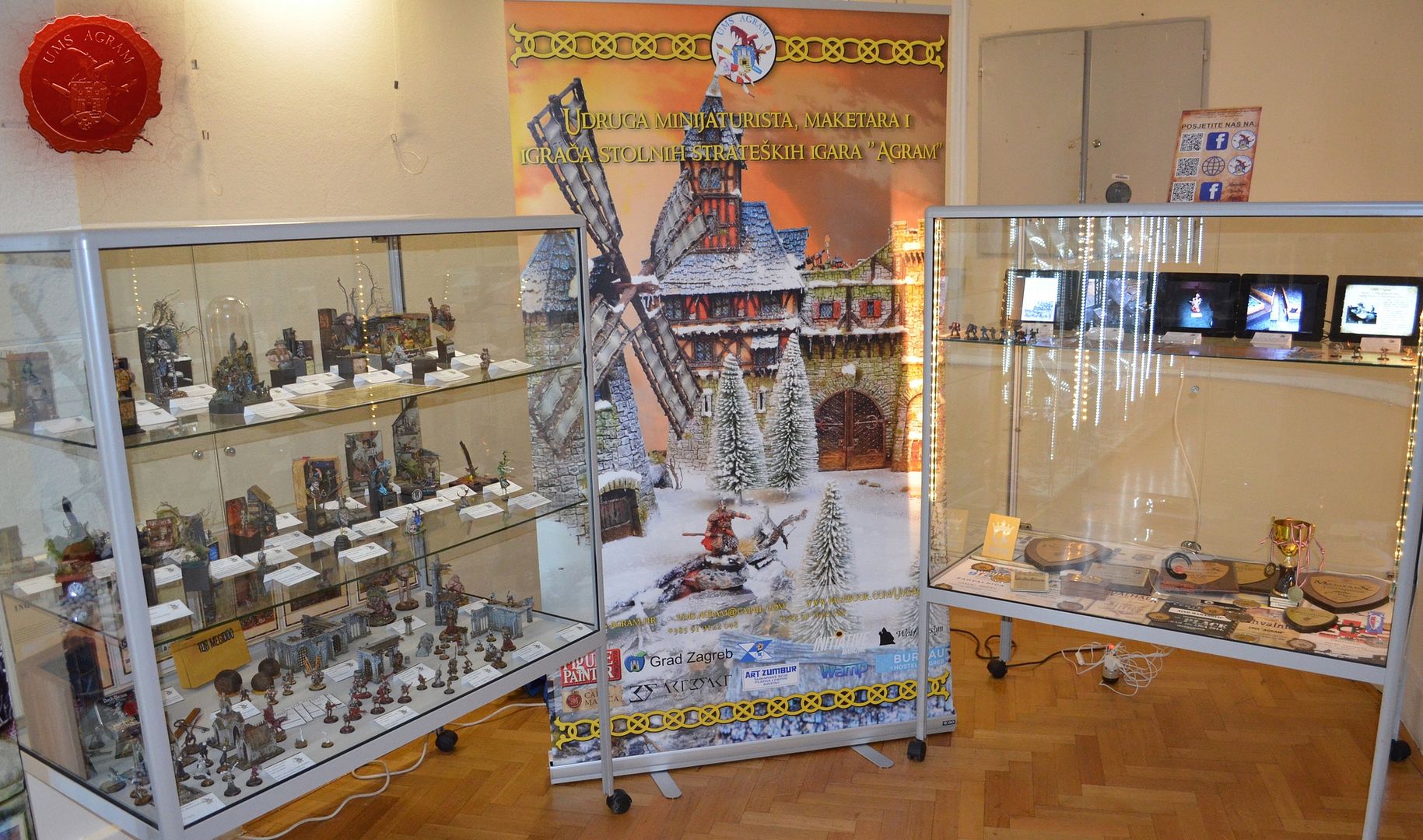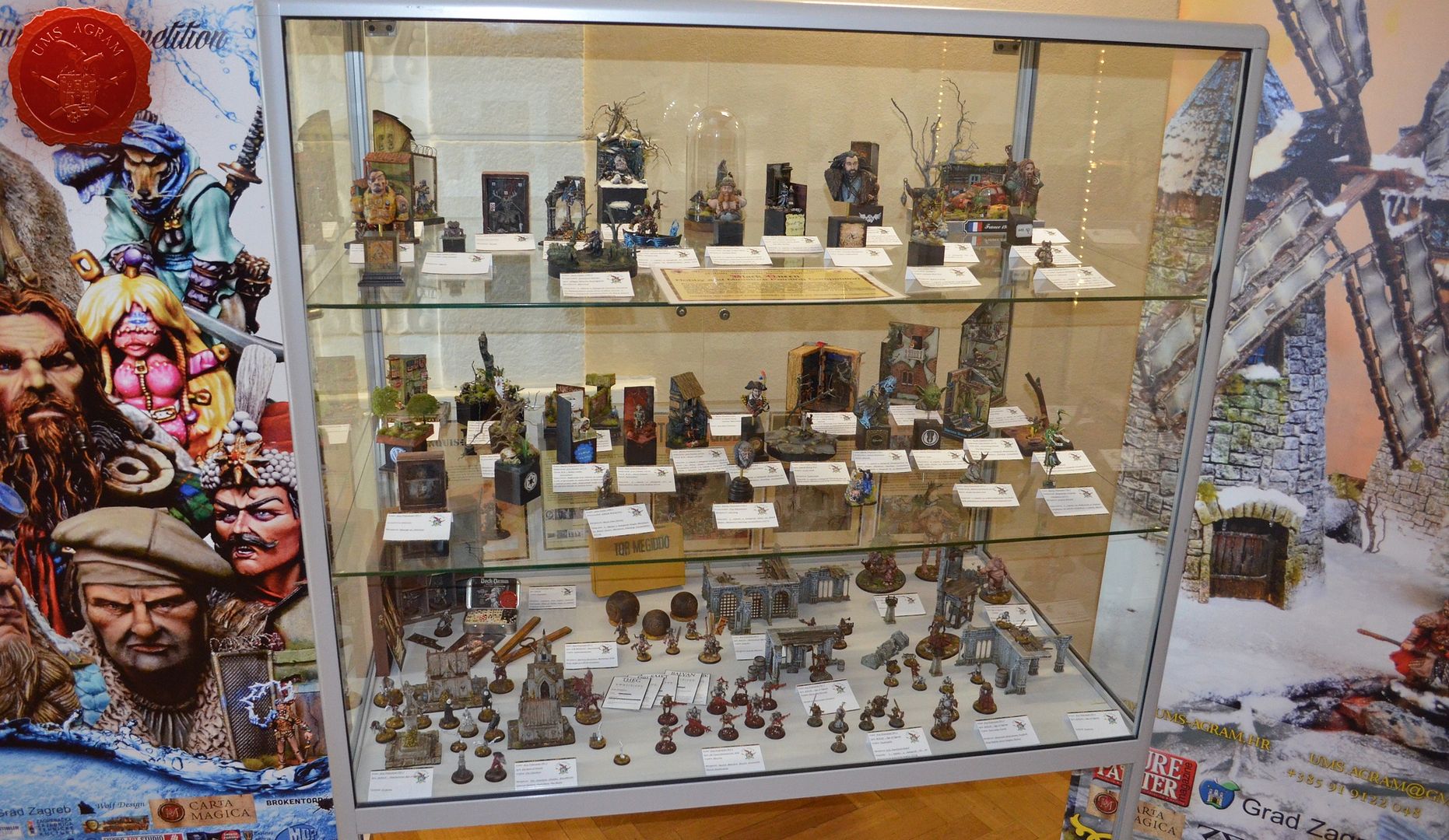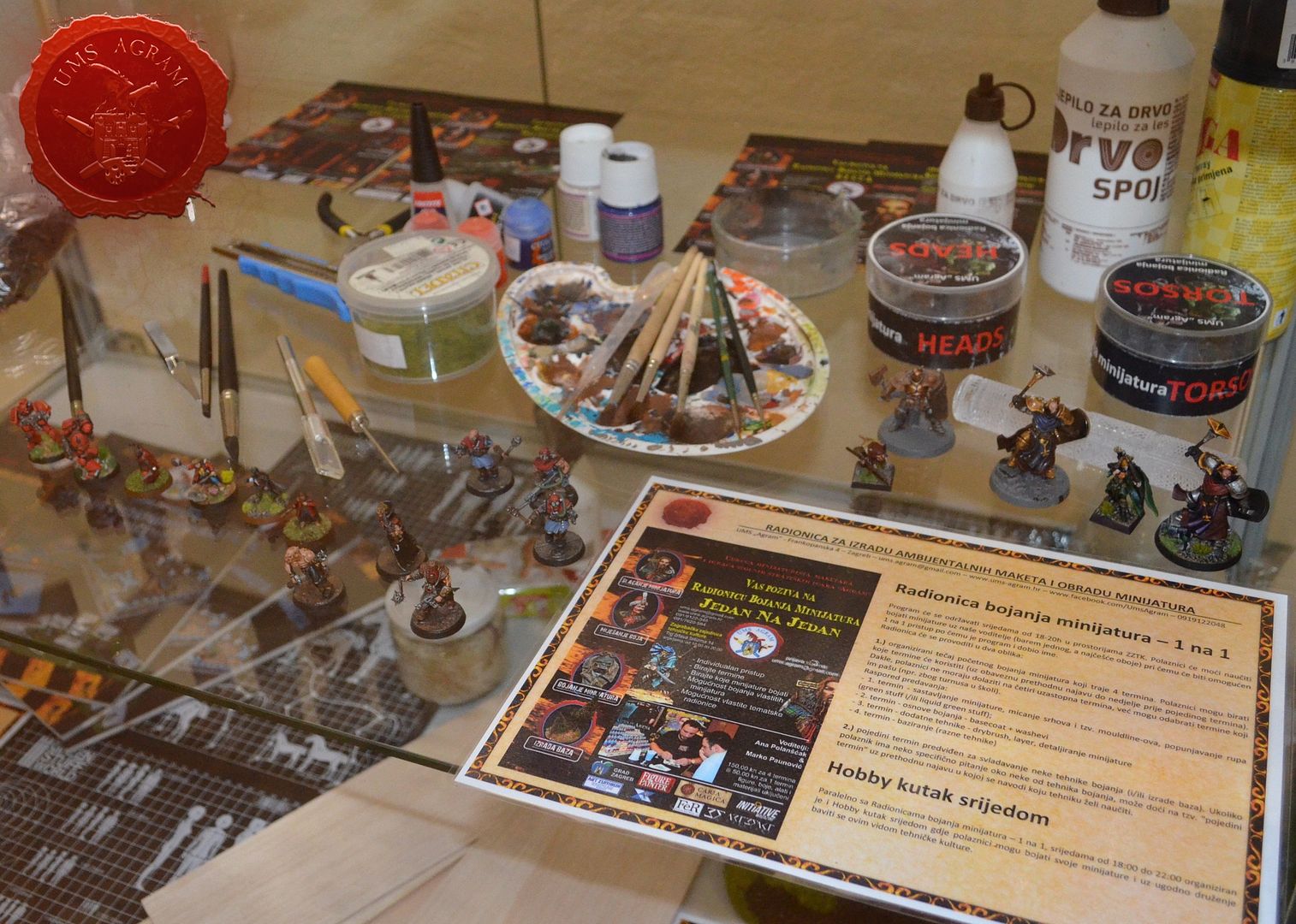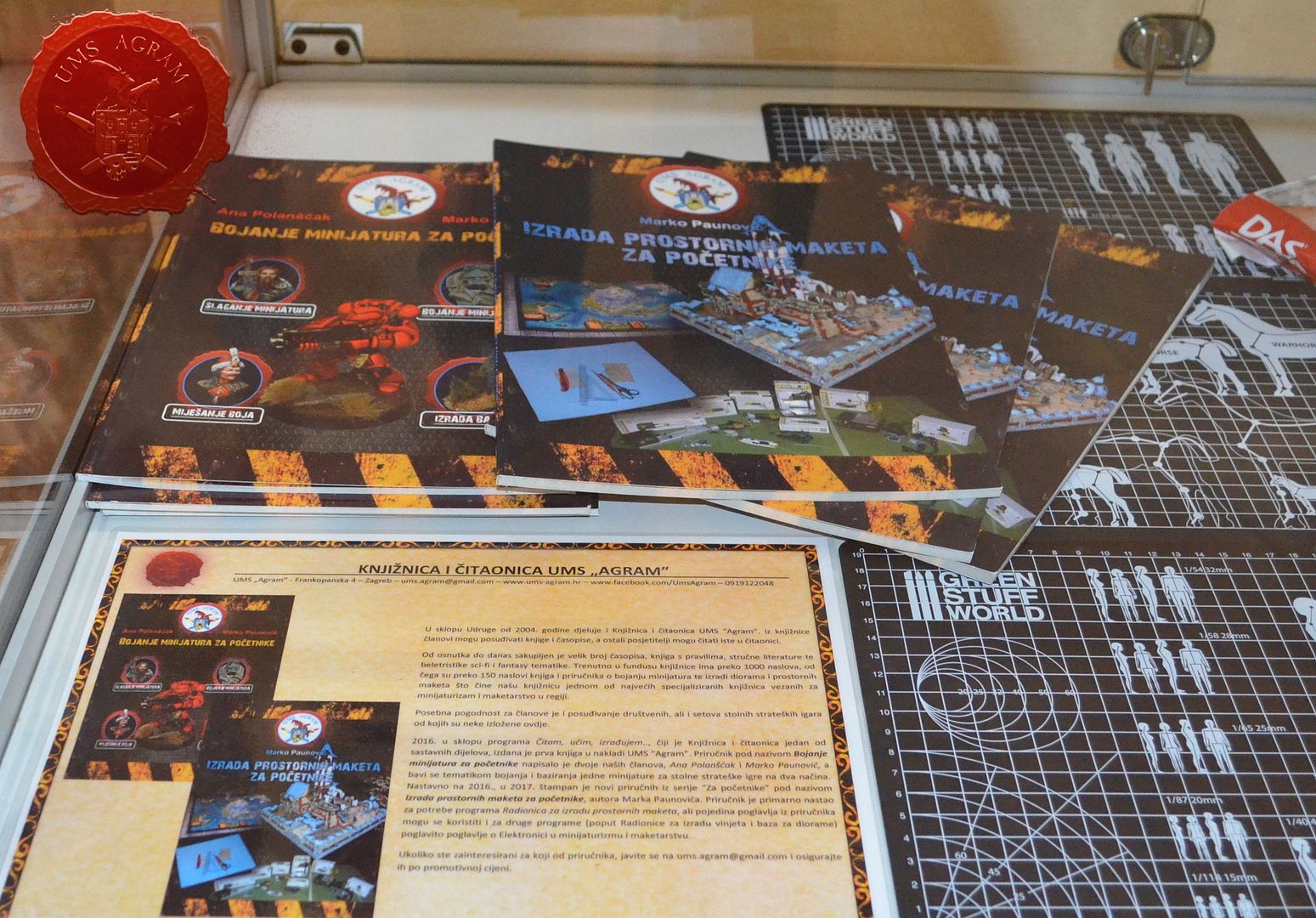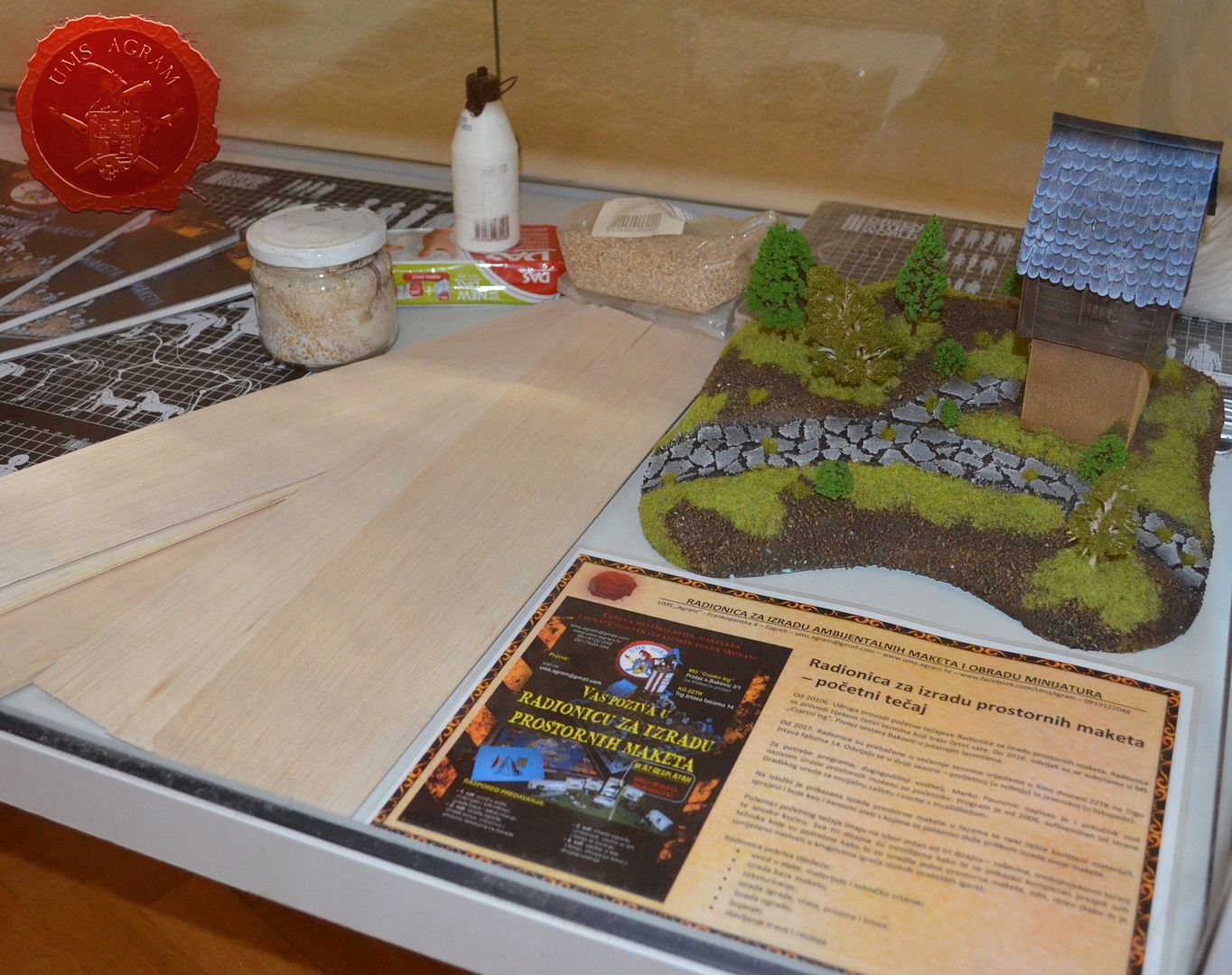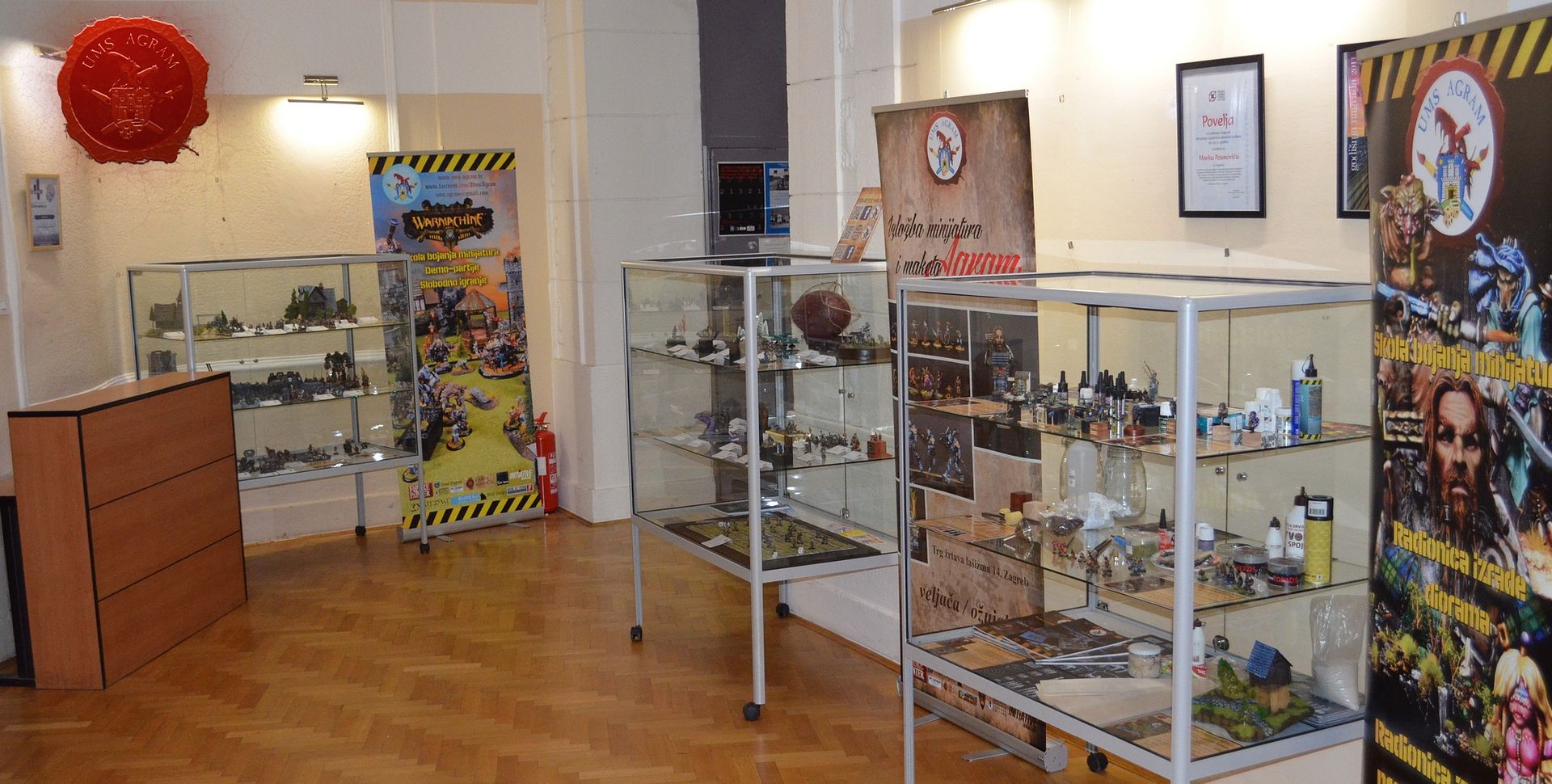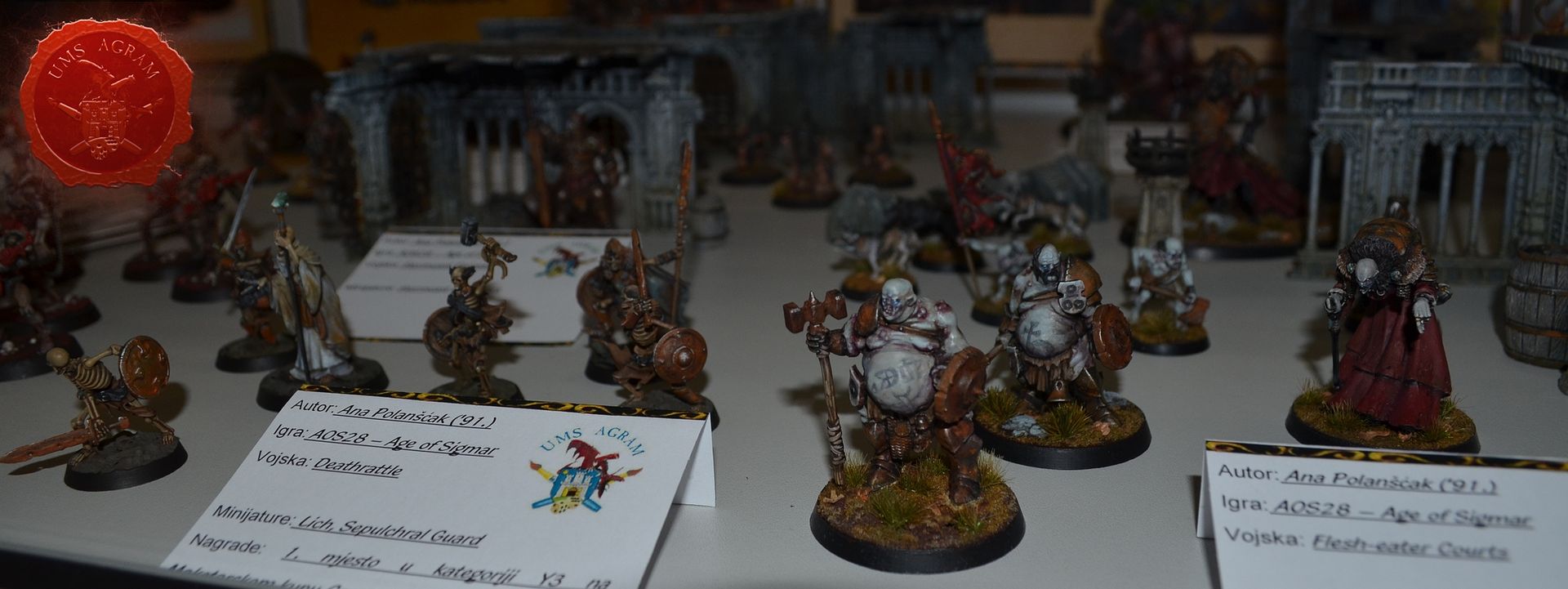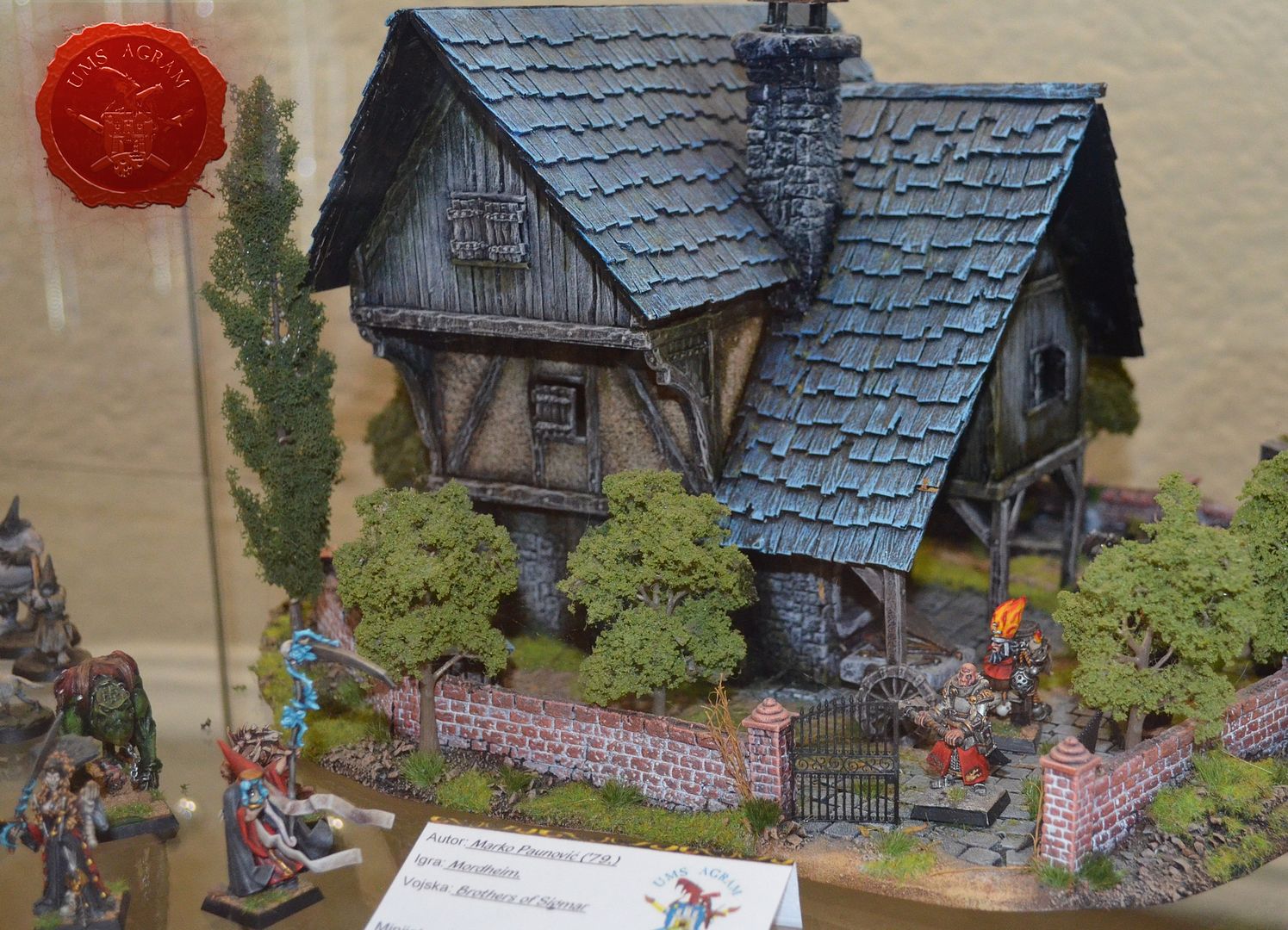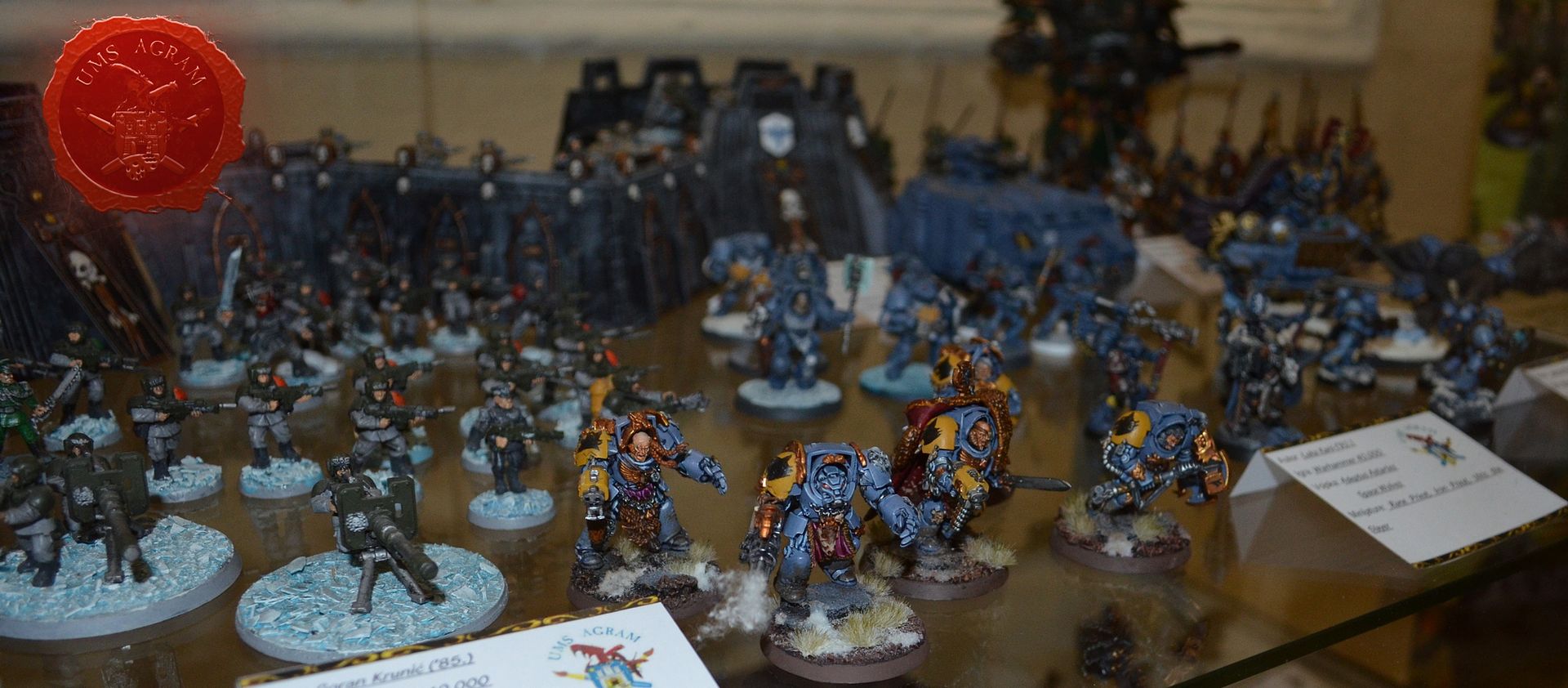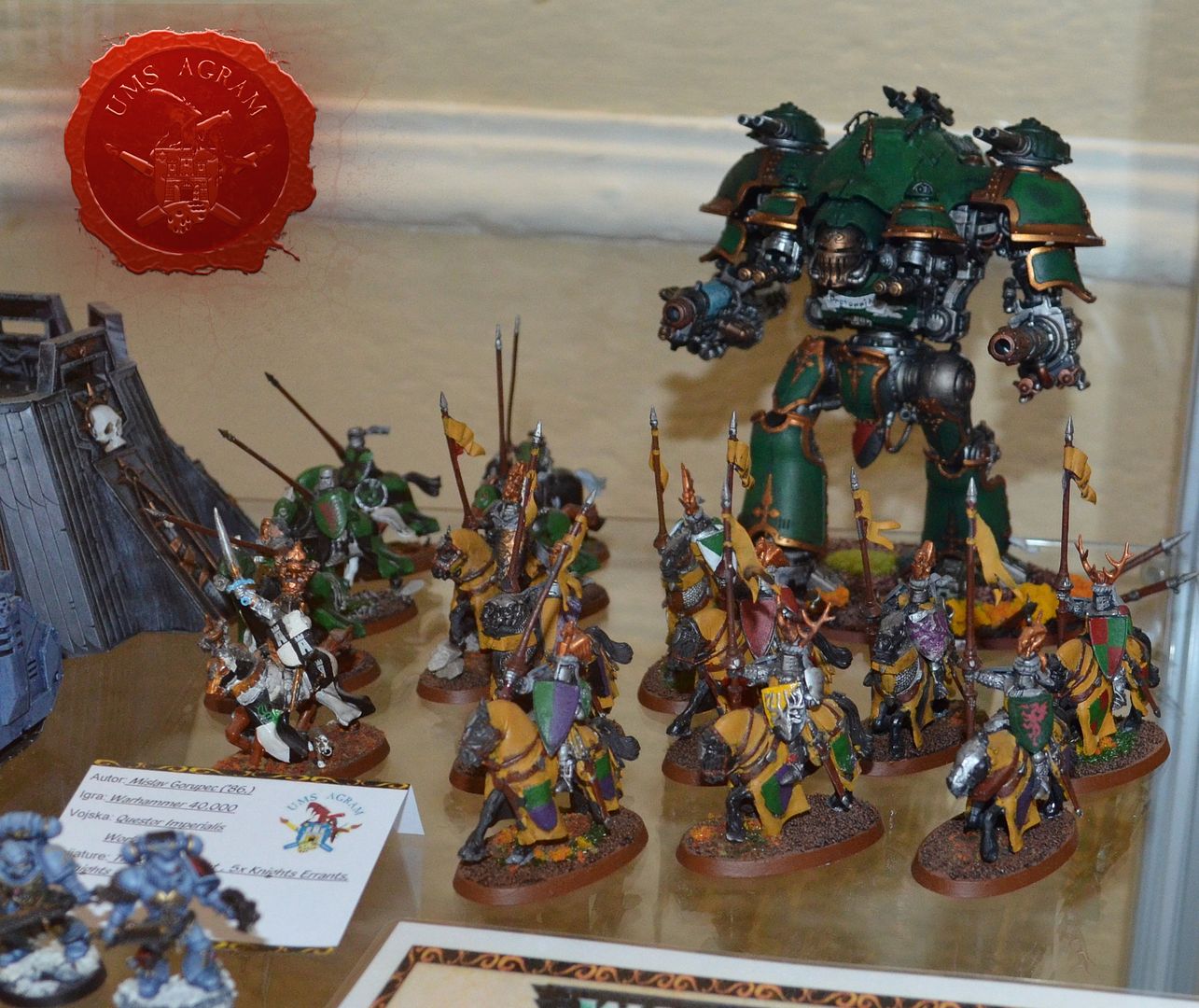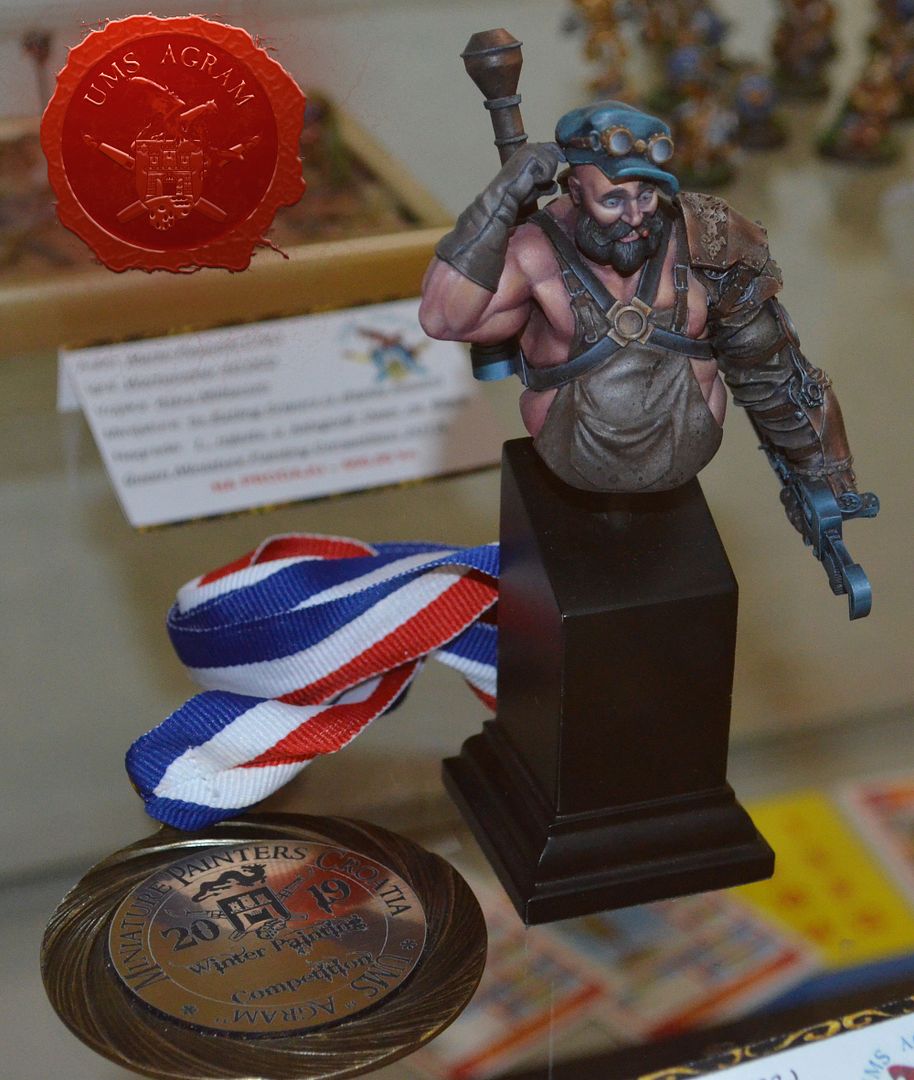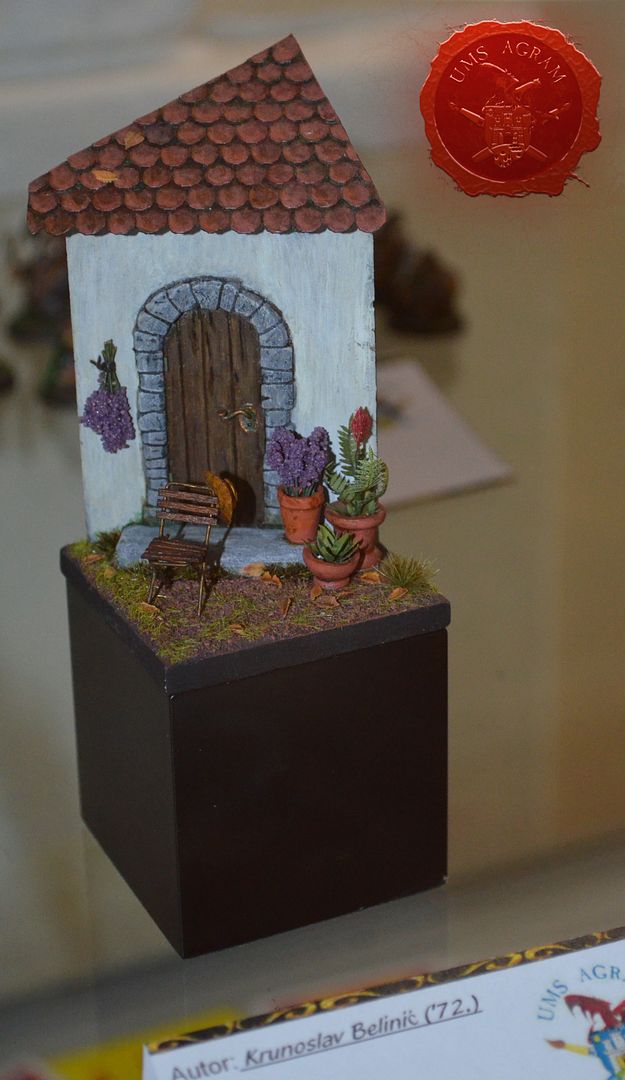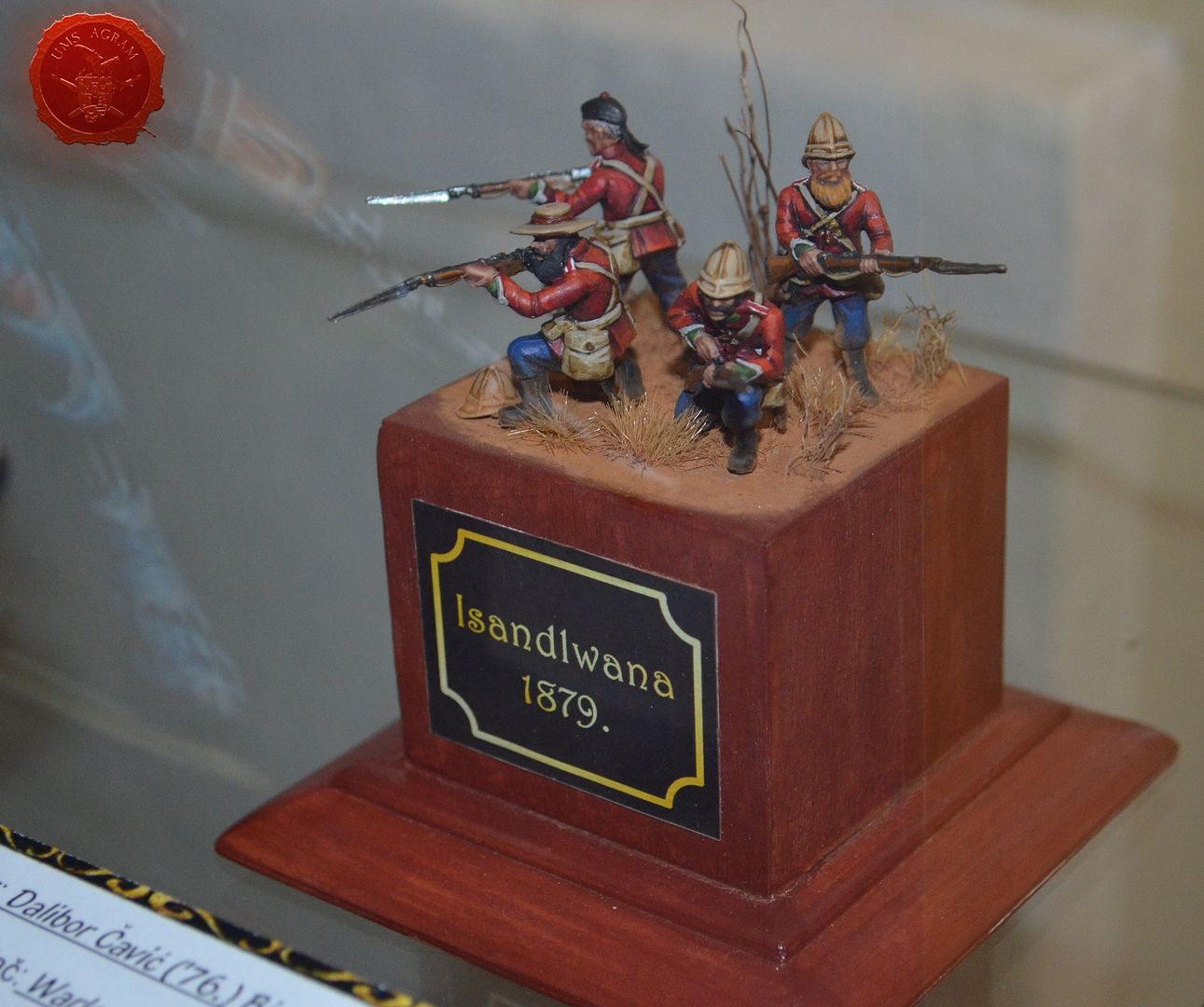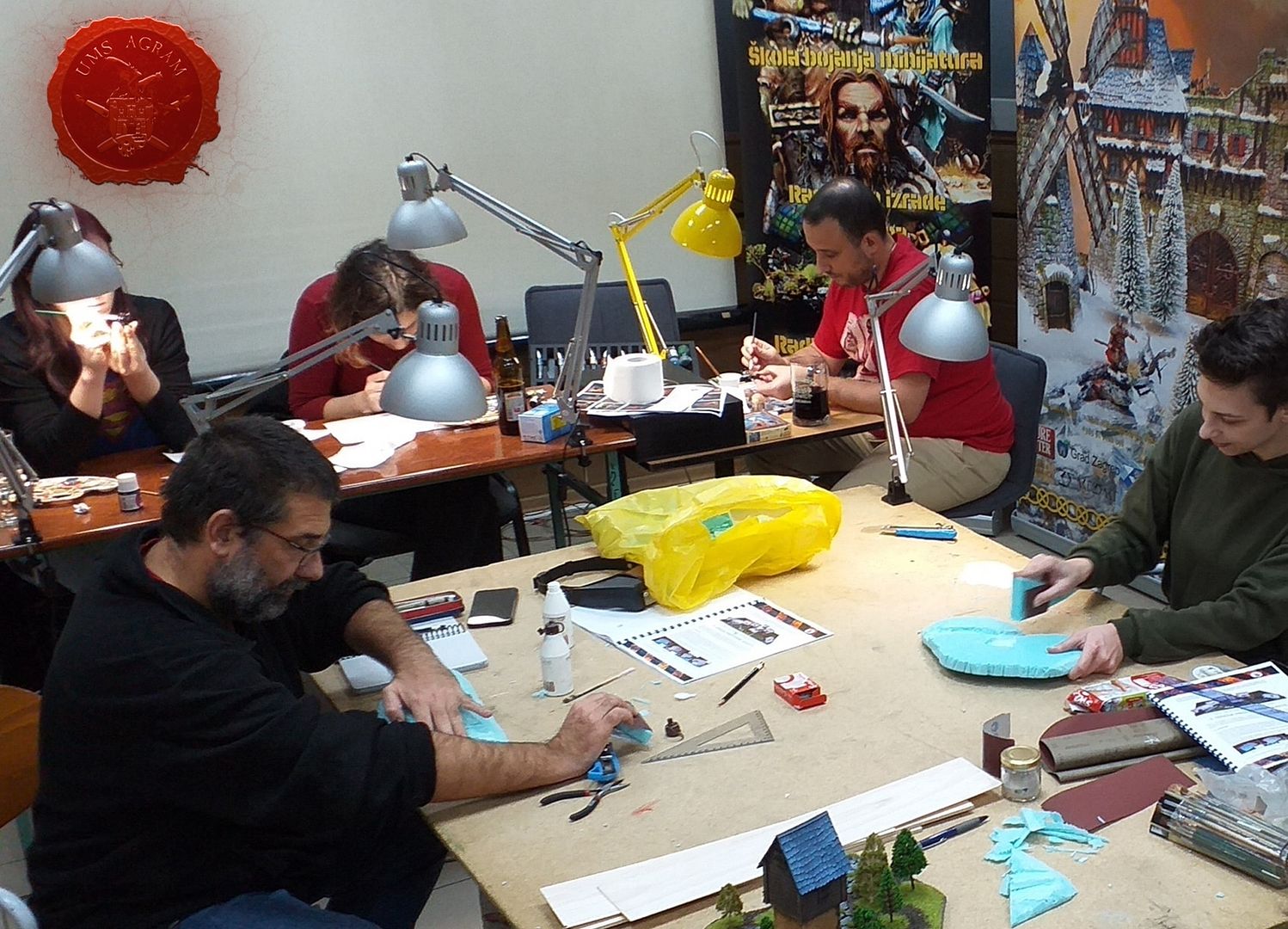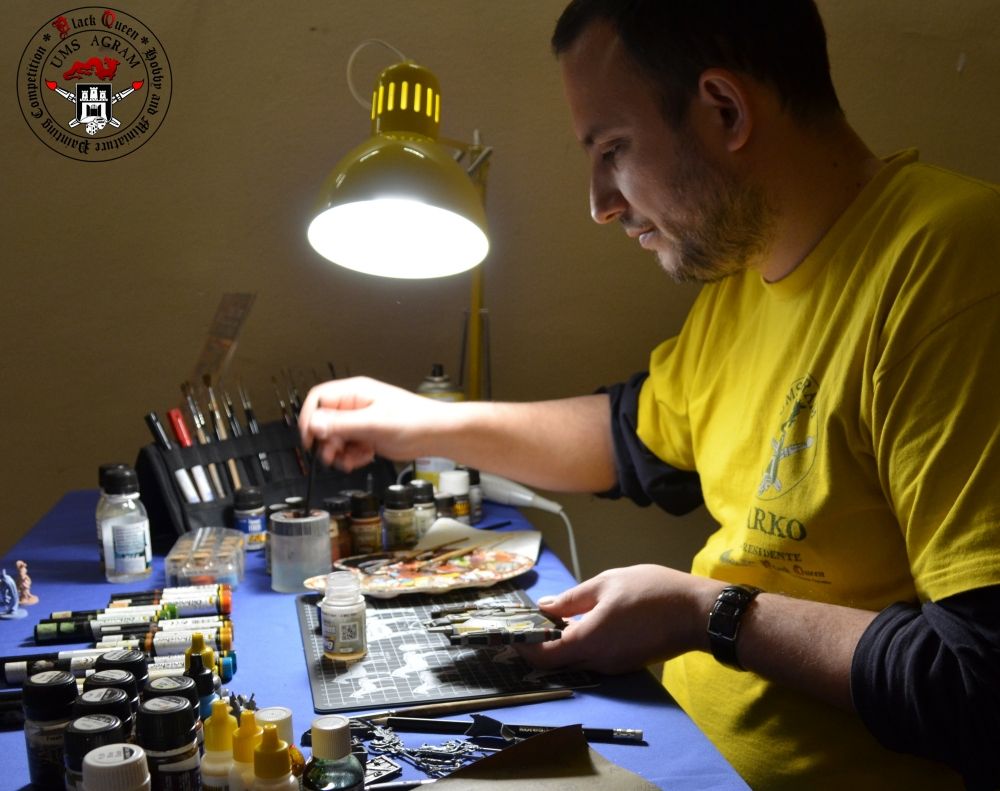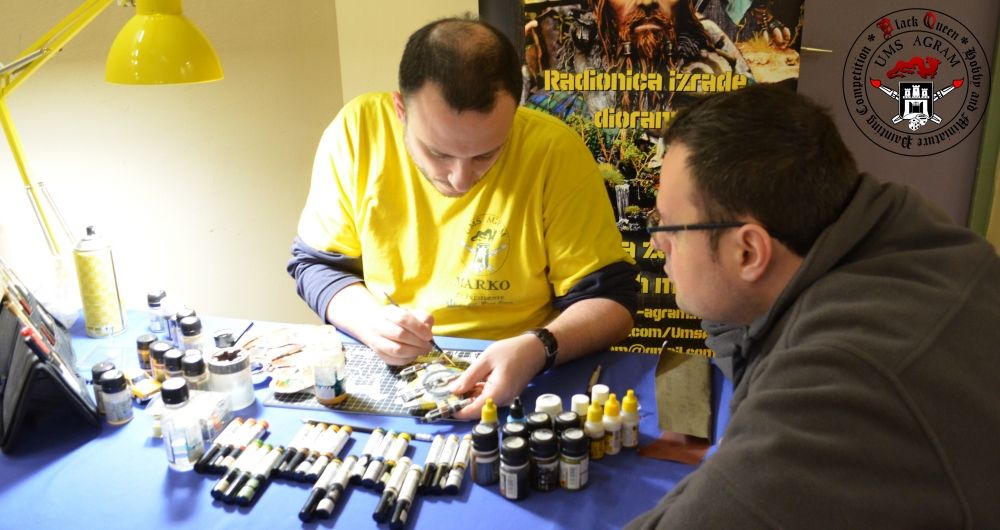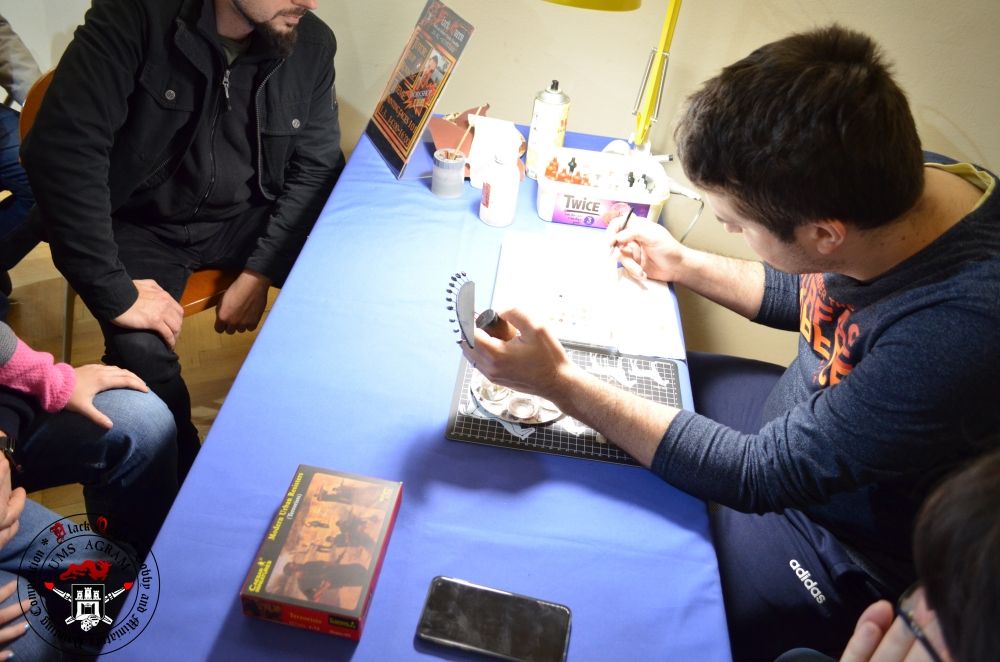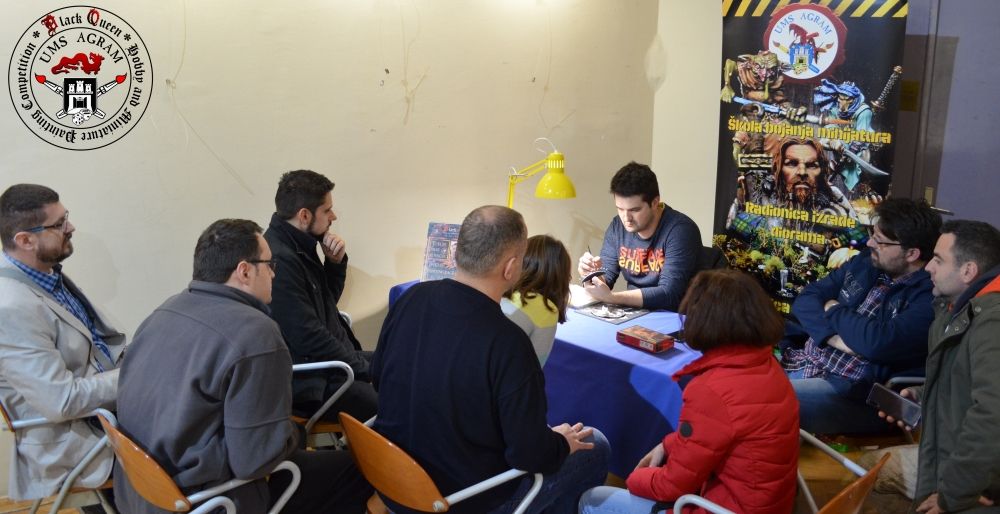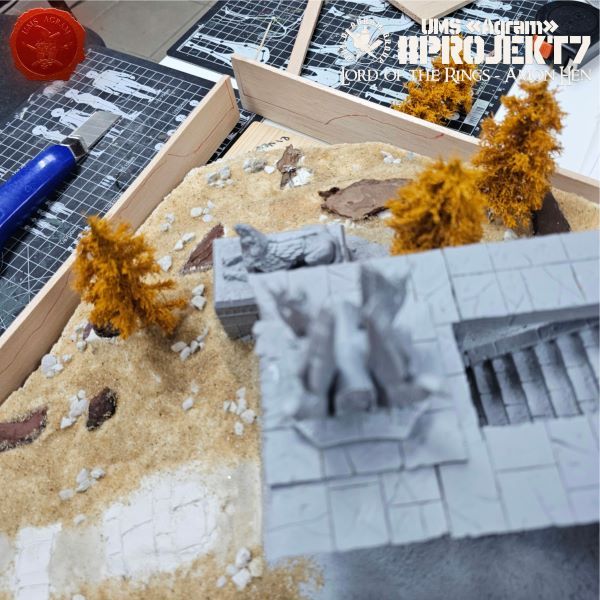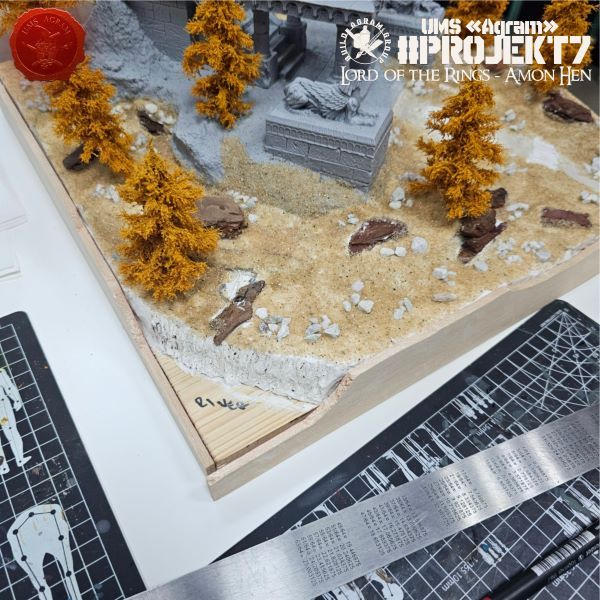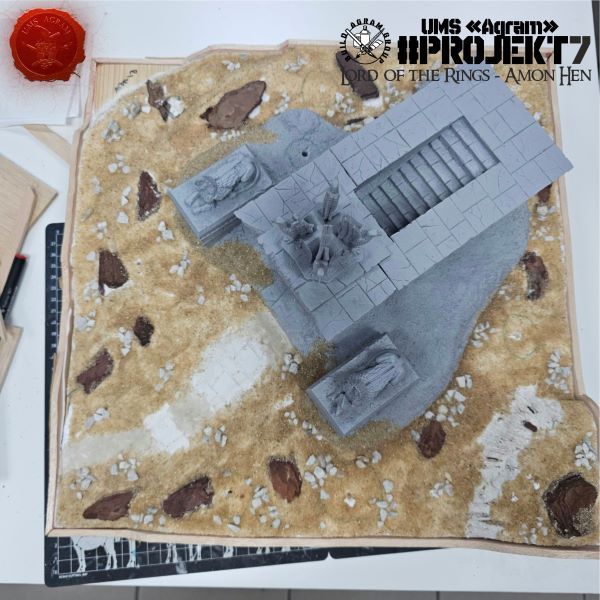
Exhibition of Miniatures and Tabletop Scenery Agram 2020
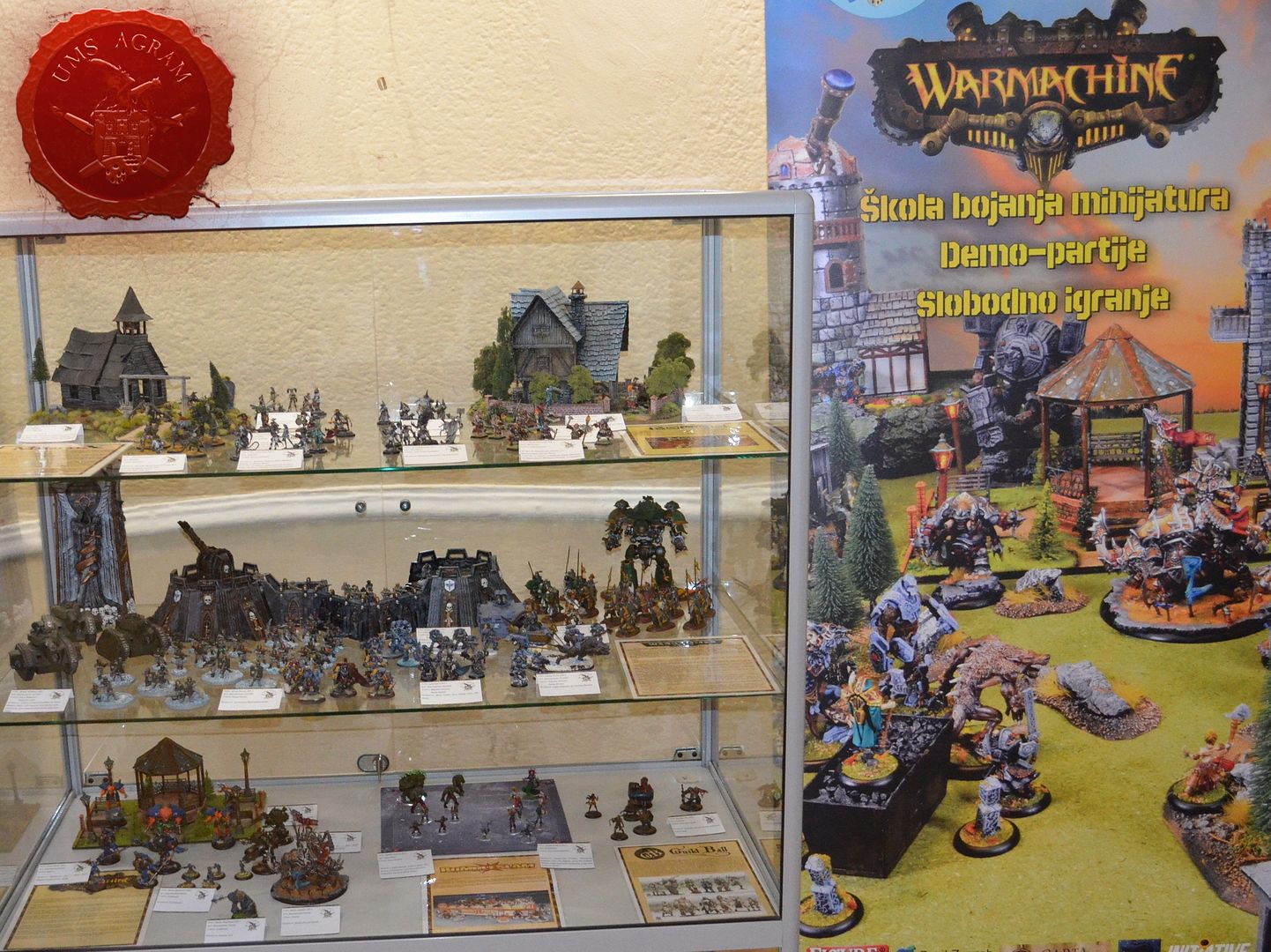
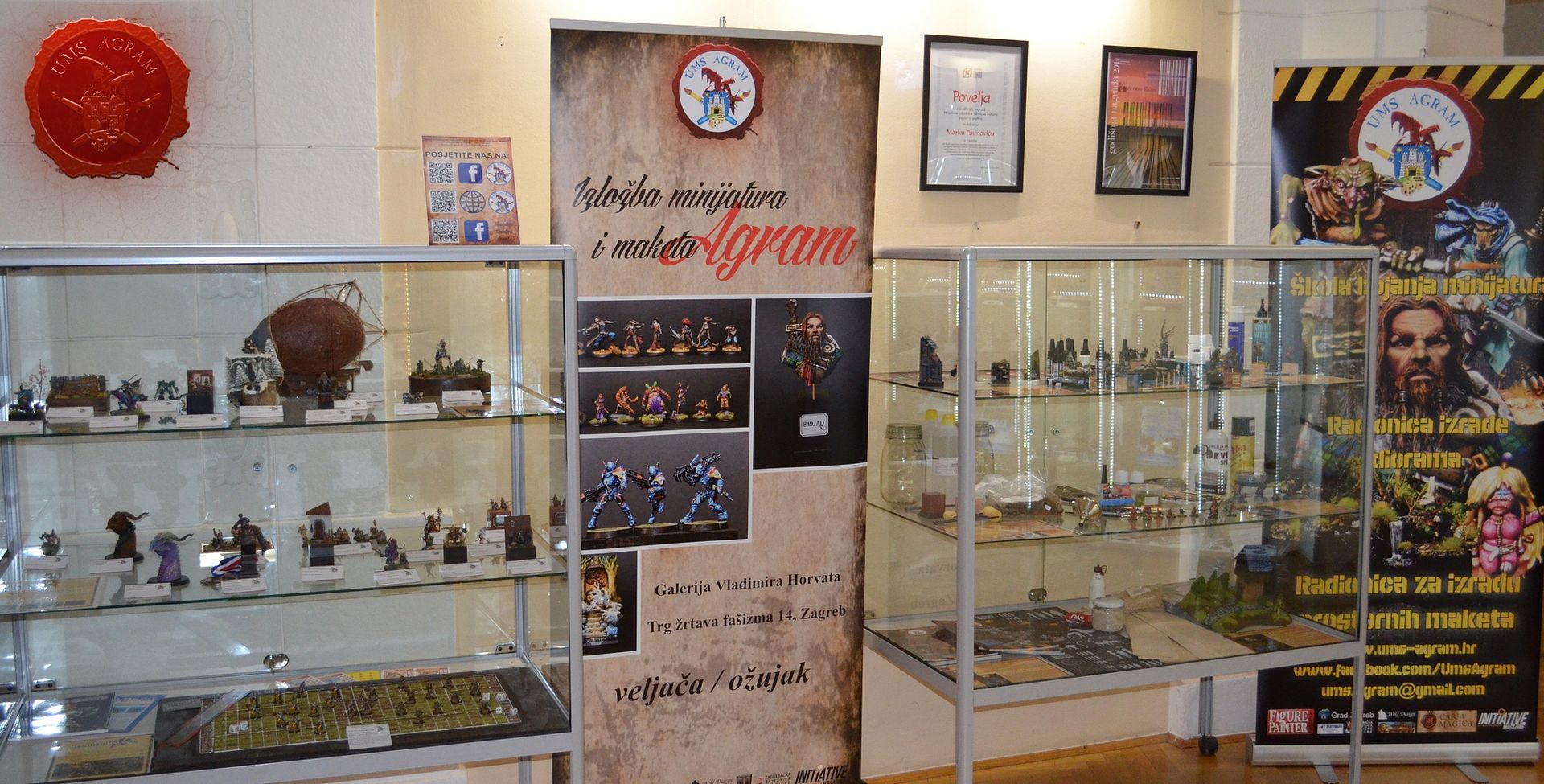
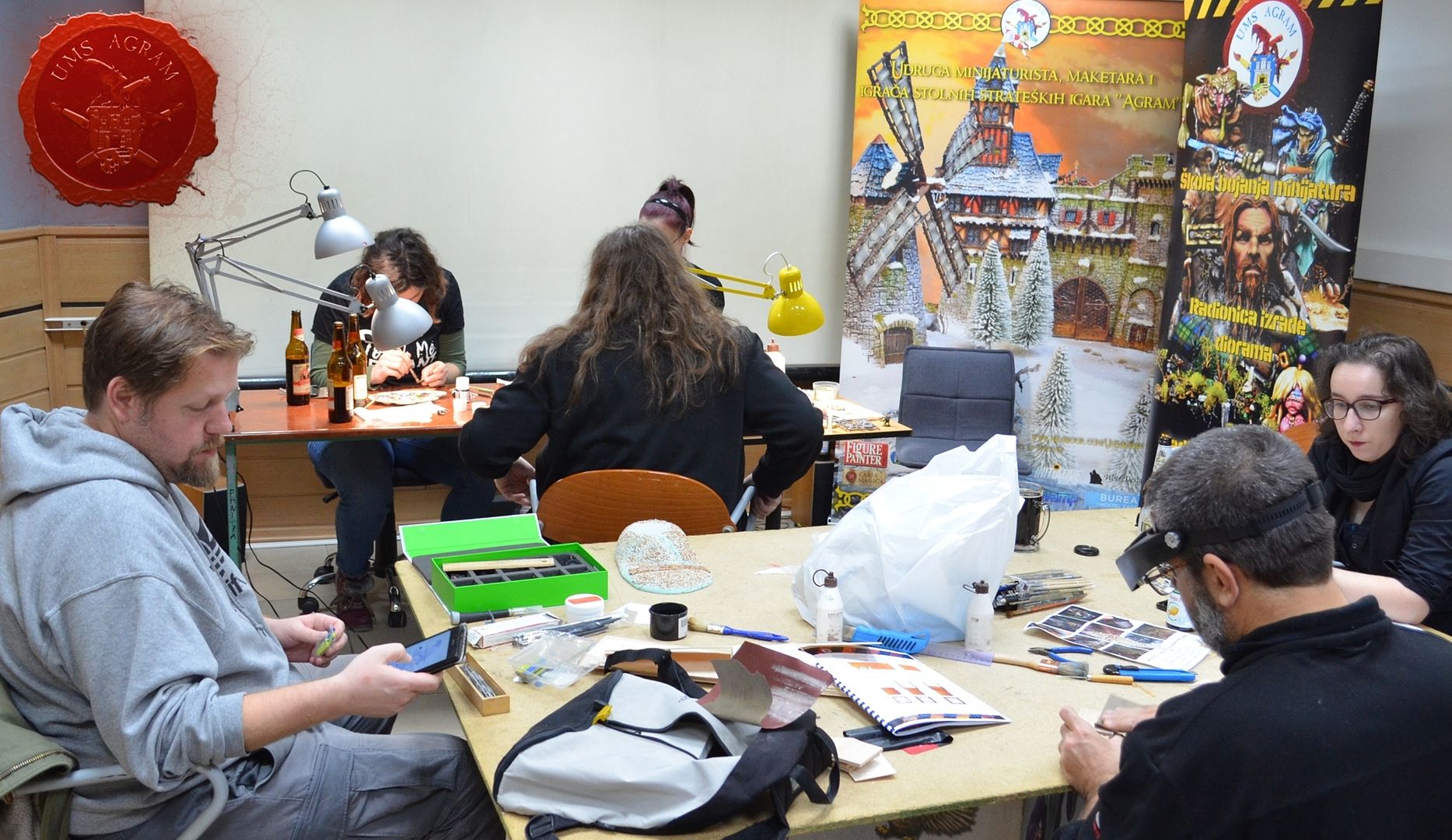
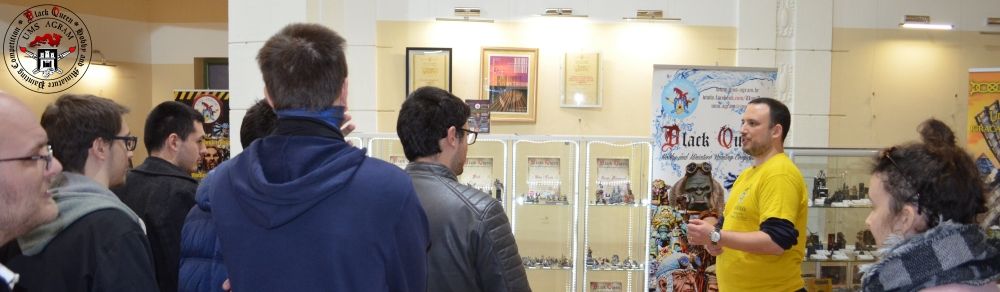
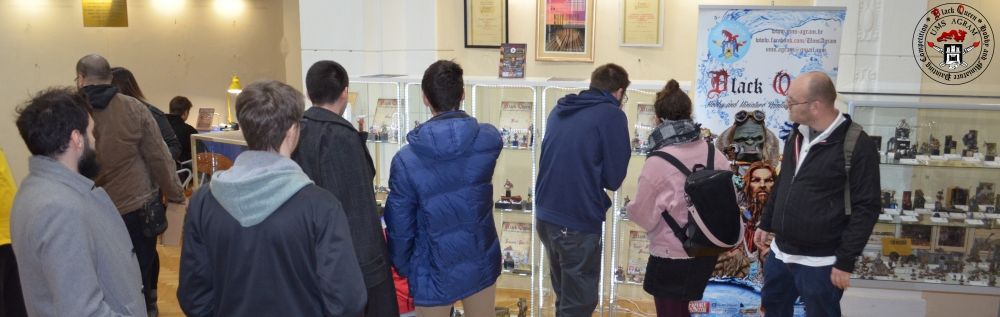
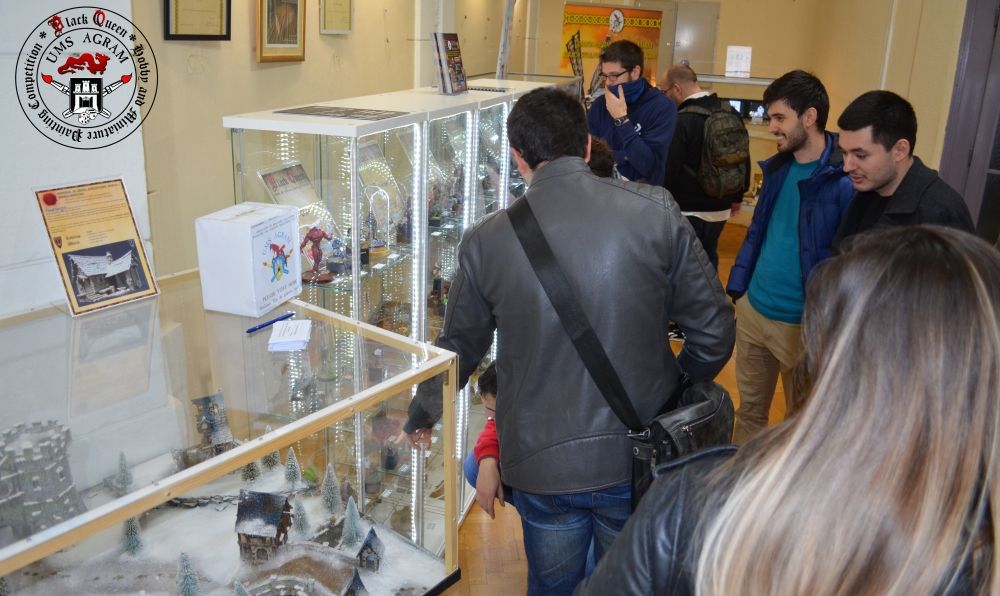
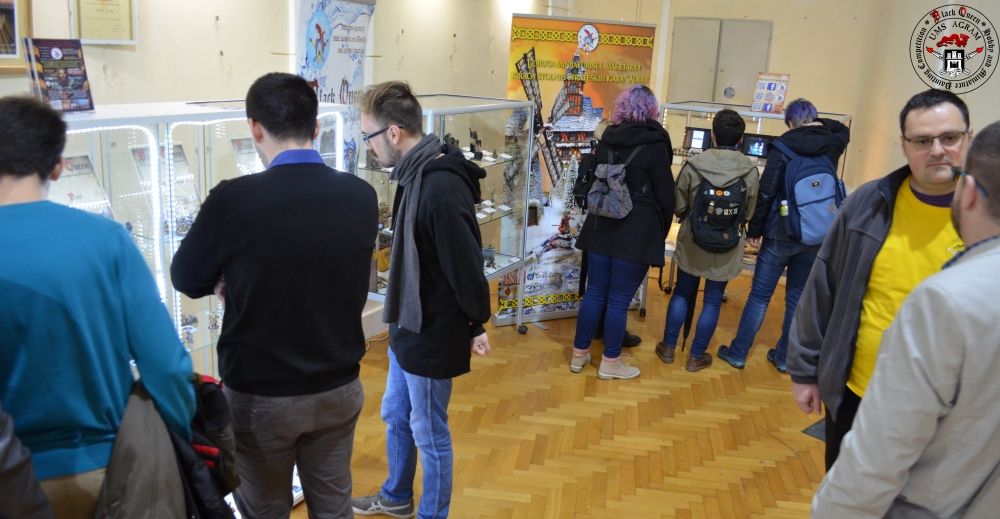
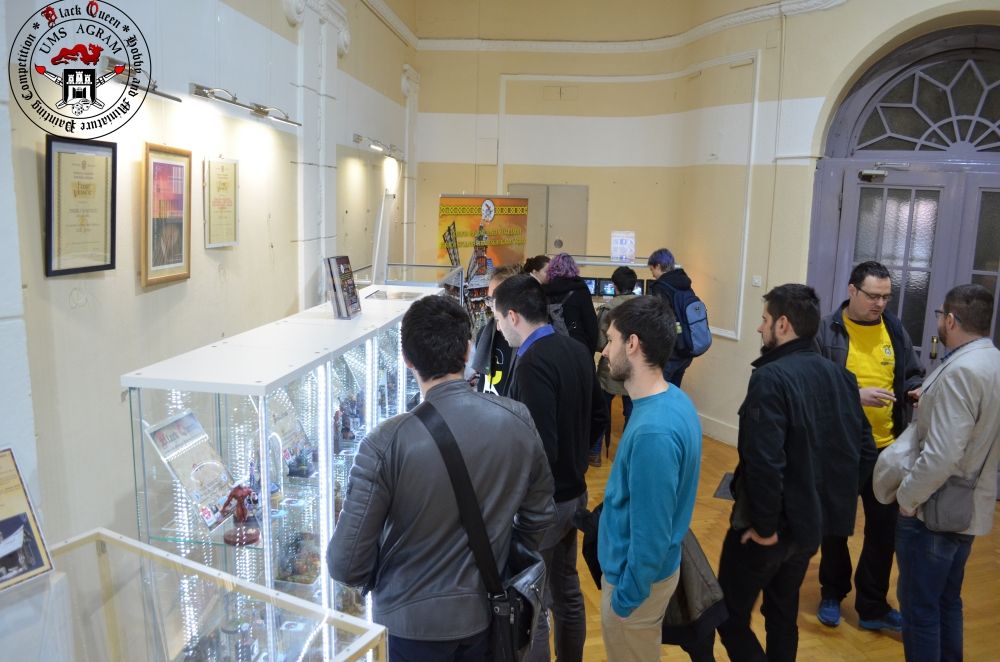
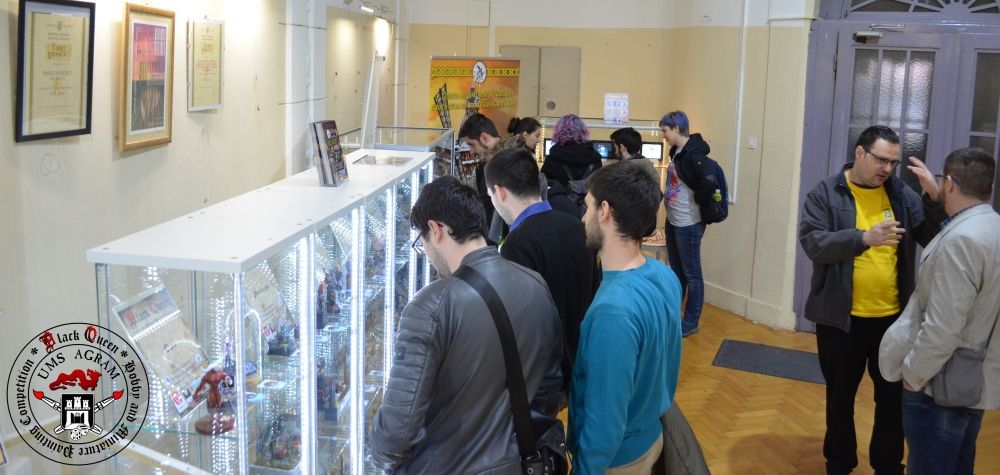
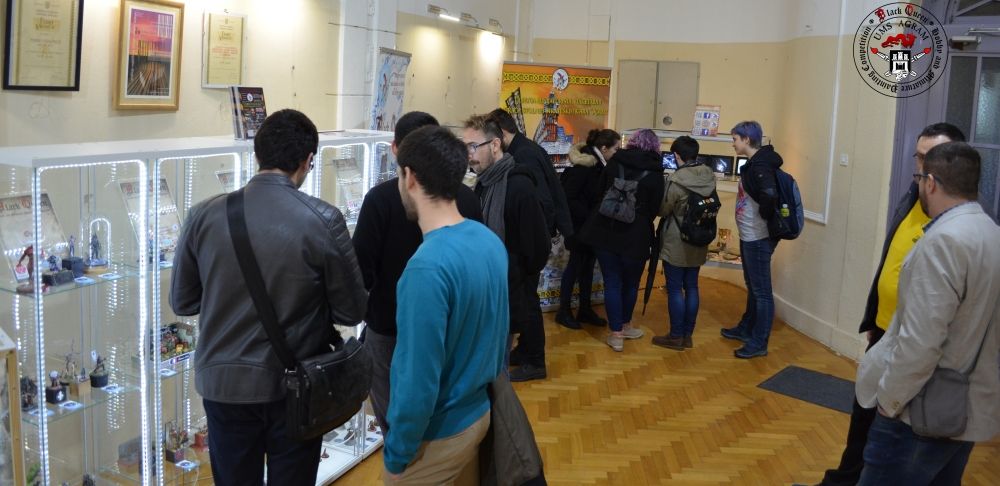
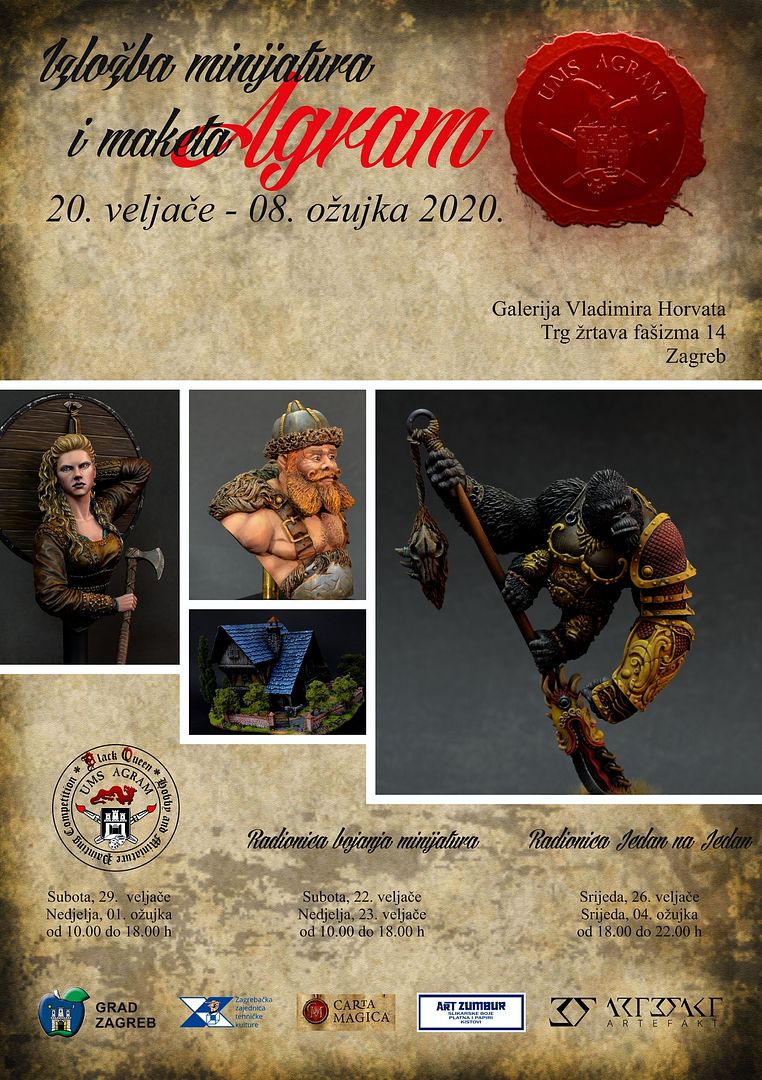
Exhibition of Miniatures and Tabletop Scenery Agram is a project that UMS Agram organises every year at the end of February and start of March in the Vladimir Horvat Gallery, ZZTK, Trg žrtava fašizma 14, Zagreb.
UMS Agram is a non-profit organization whose main interests are painting and converting of miniatures, workmanship of terrains for table-top wargaming, playing strategic table-top games along with other various activities concerning technical culture, history, fantasy and science-fiction.
The Association was formed to enable better communication and for connecting persons who have common interests in the mentioned activities as well as to improve the conditions for engaging in this highly creative hobby and to a higher level in Zagreb as well as in Croatia. Special attention is given to younger population which resulted in numerous awards by the highest authorities:
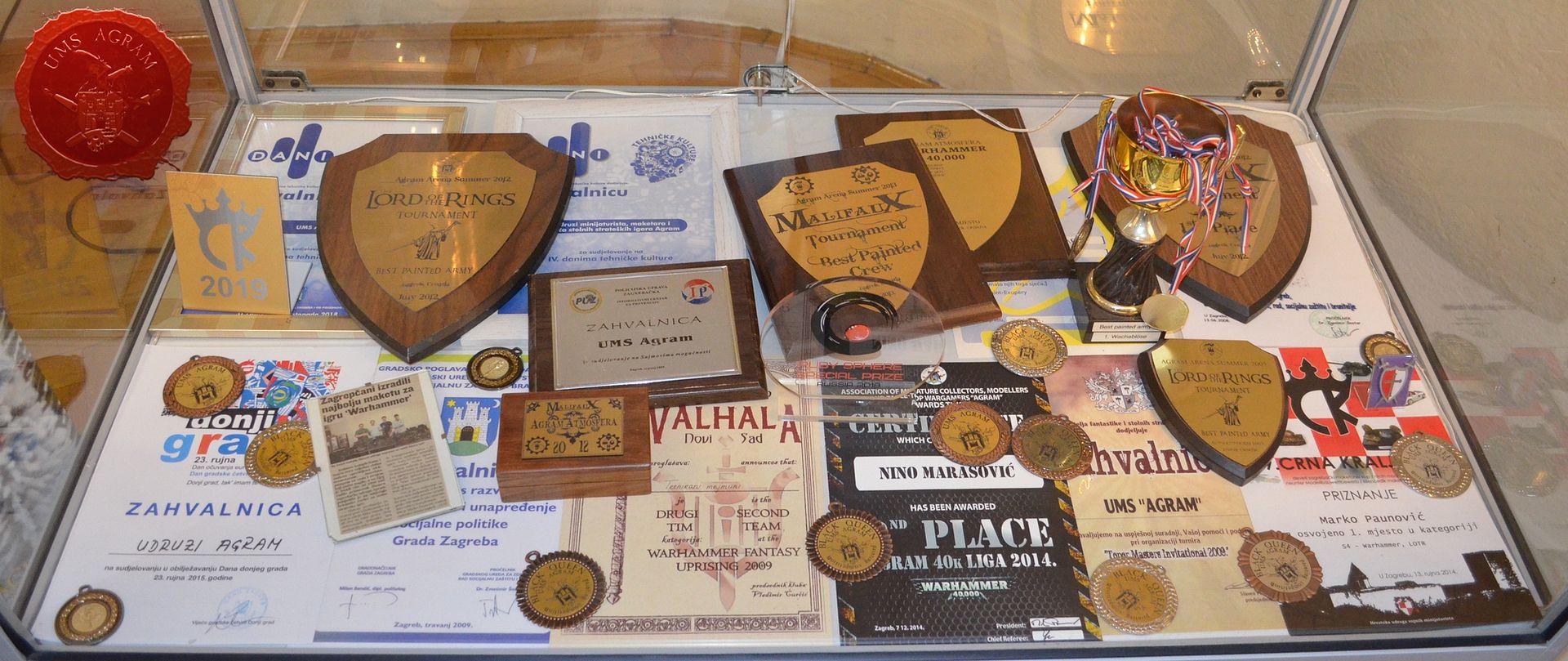
• 2009. State Award for Technical Culture Faust Vrančić;
• 2010. Annual Award of Zagreb's Association of Technical Culture Oton Kučera;
• 2011. Annual Award of Zagreb's Association of Technical Culture Oton Kučera for the UMS Agram president, Marko Paunović;
• 2012. State Award for Technical Culture Faust Vrančić for the UMS Agram president, Marko Paunović;
• 2017. Annual Award by the Croatian Association of Technical Culture for the UMS Agram president, Marko Paunović.
The first Exhibition was held in 2007 making this one a fourteenth edition!
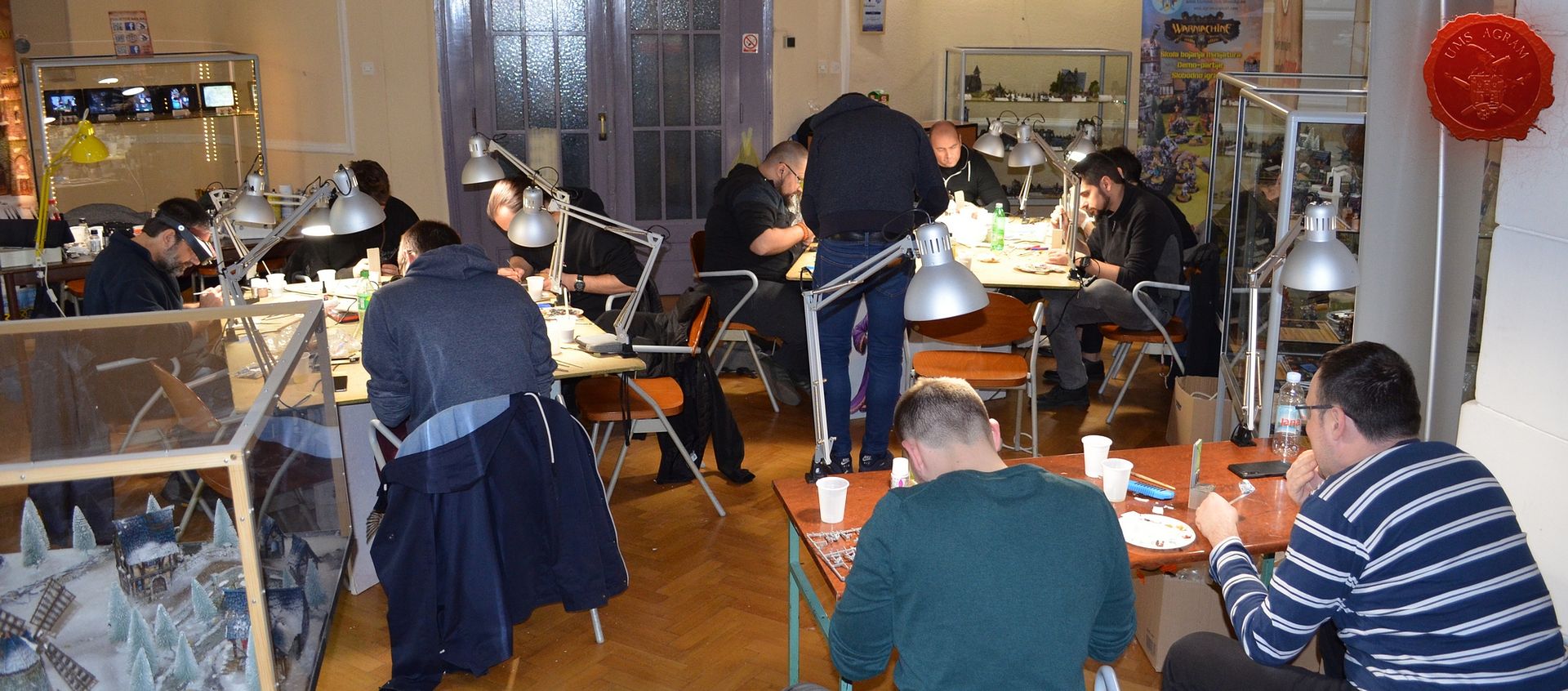
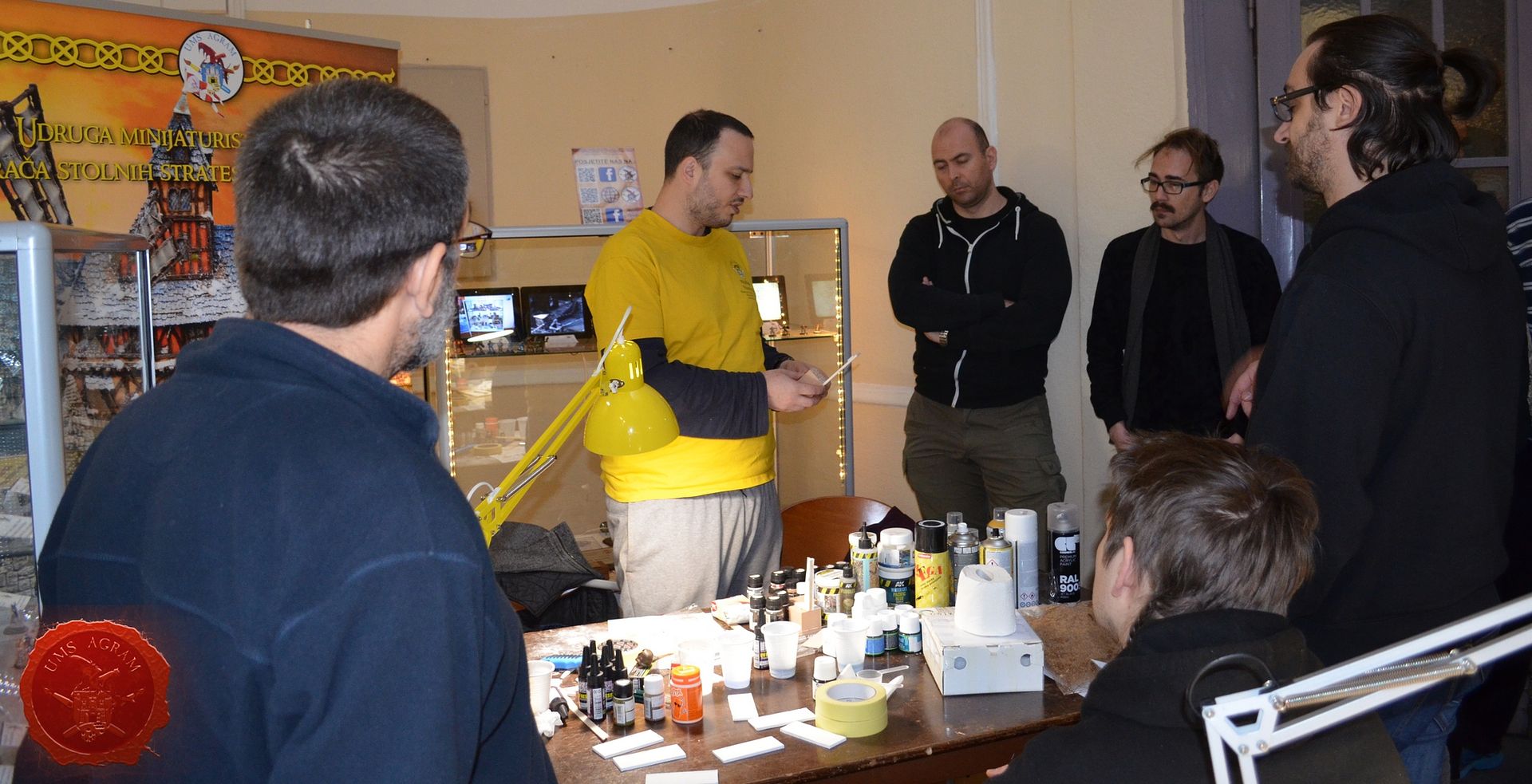
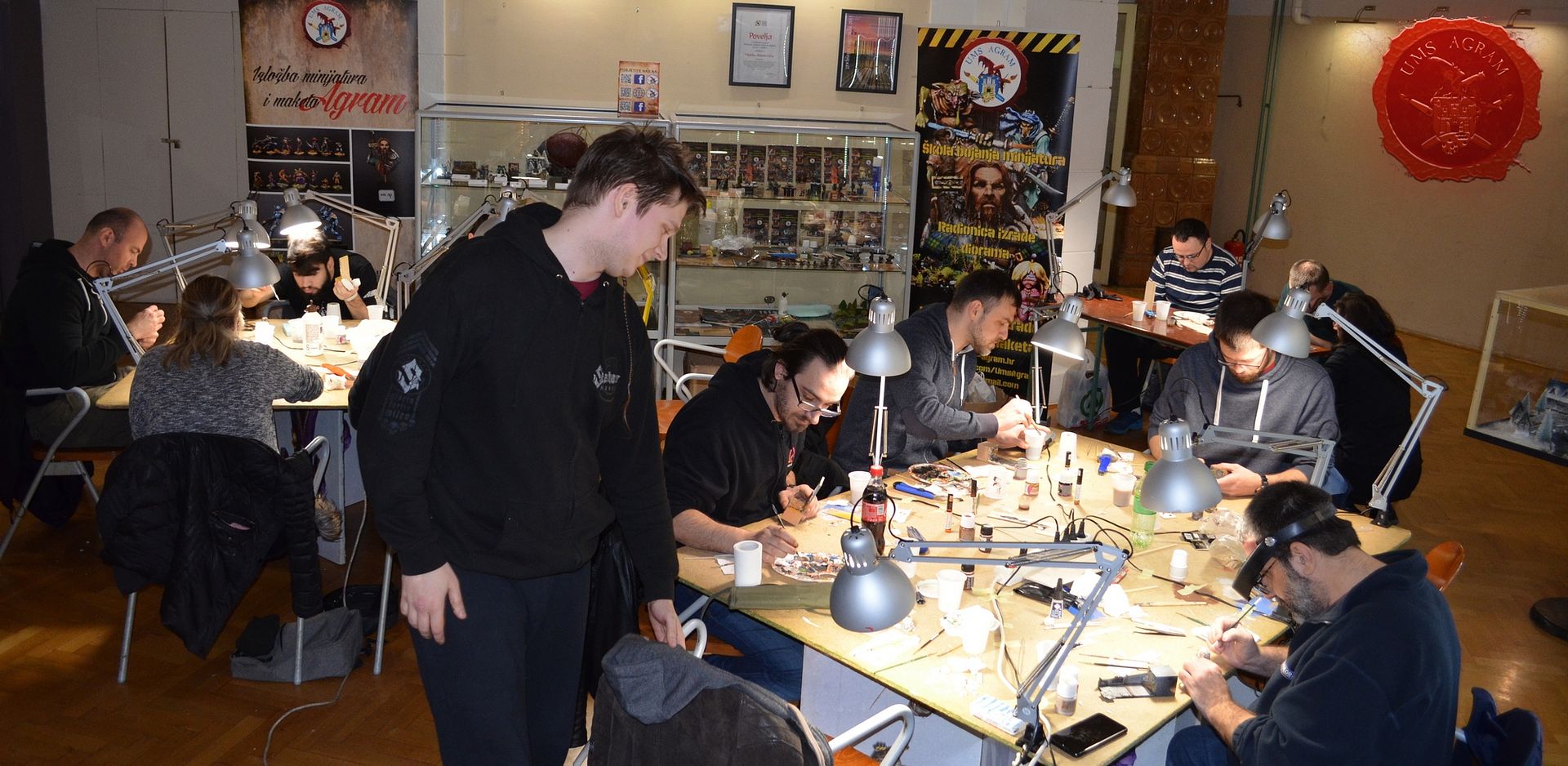
As a part of the Exhibition, UMS Agram regularly organises Miniature Painting Workshops, Miniature Photographing Workshops, tabletop wargames demos and miniature painting competitions in order to promote technical culture and this creative manner to spend free time on. UMS Agram has full support of media which is seen in numerous newspaper articles and TV reports about the event.
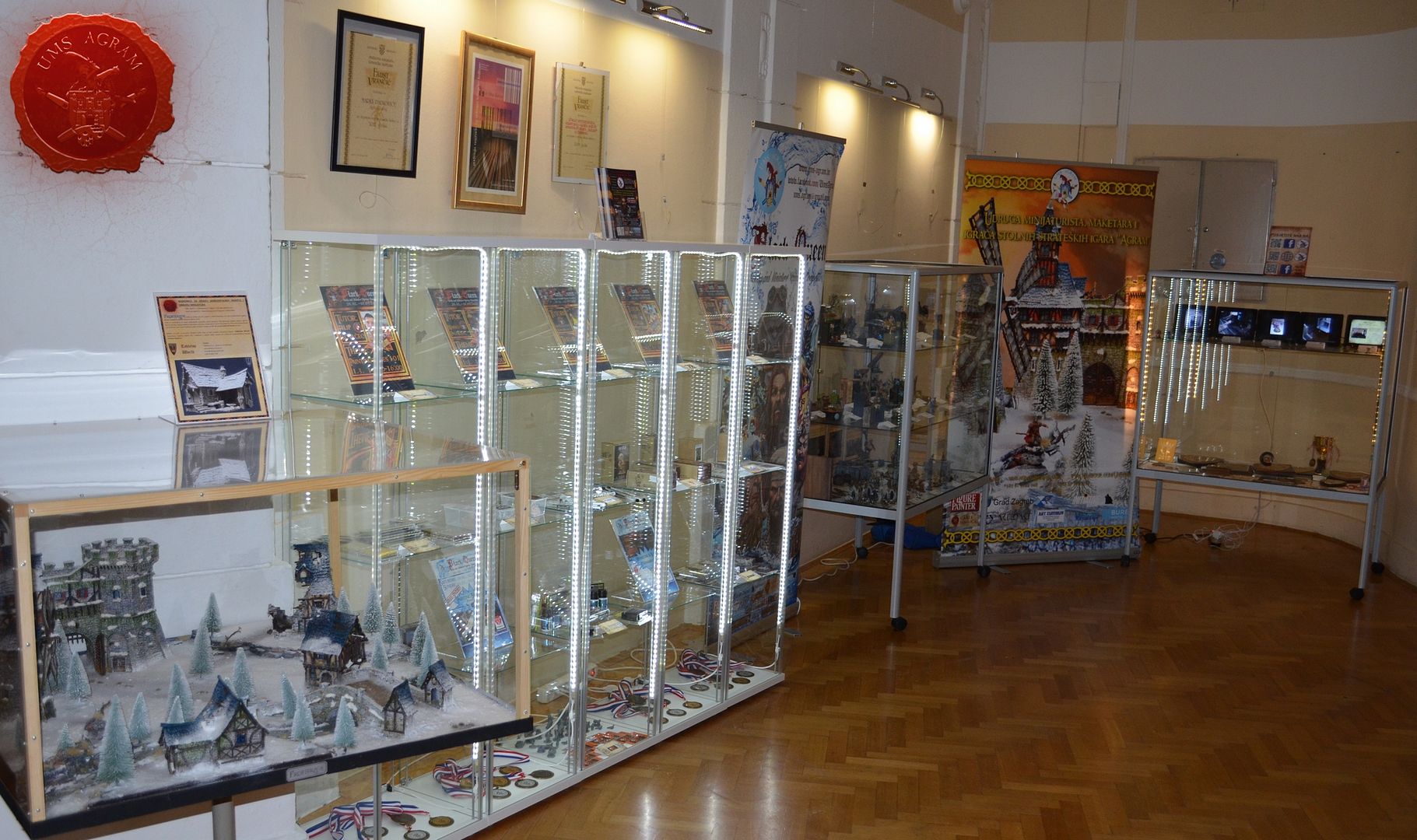
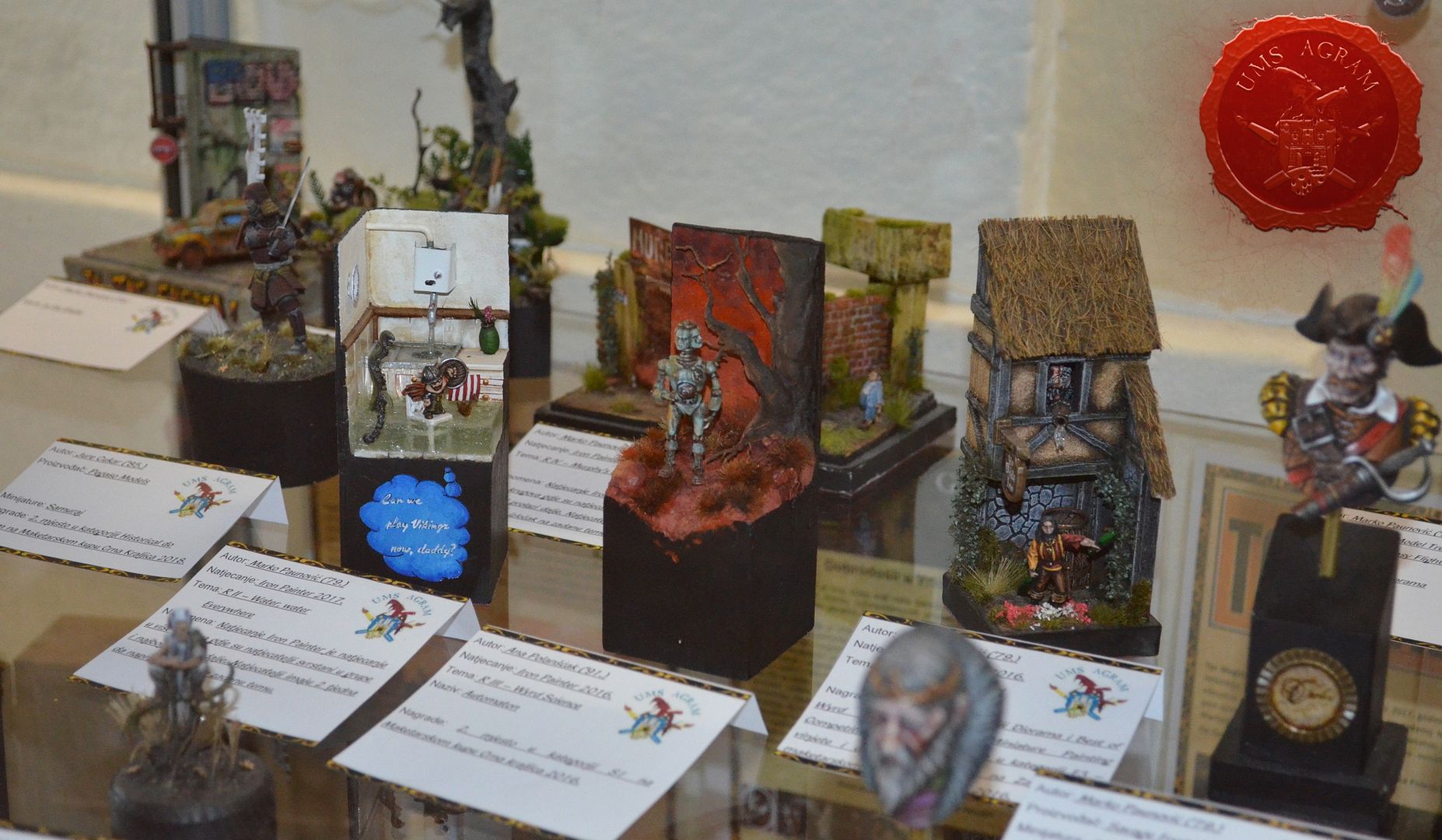
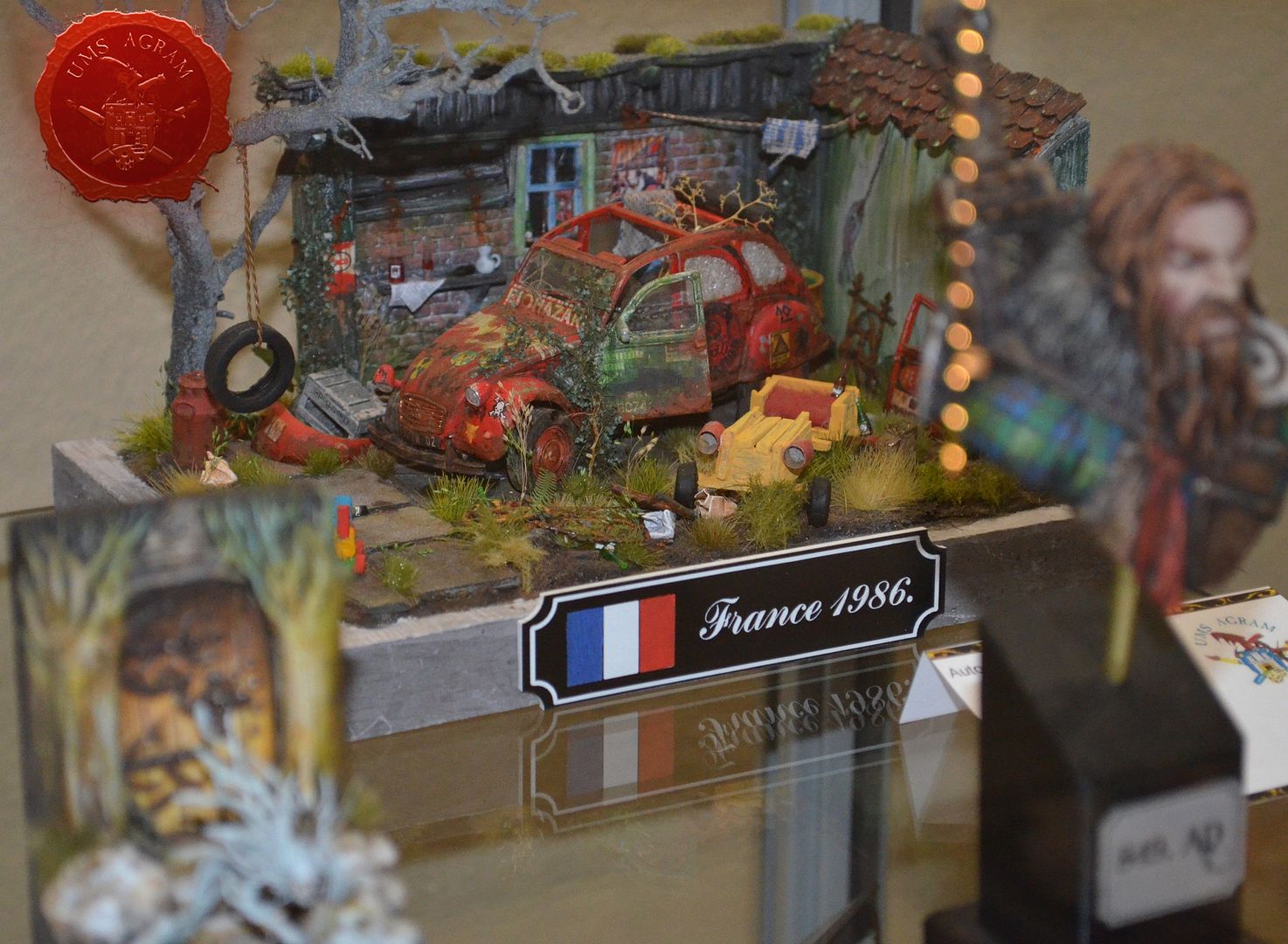
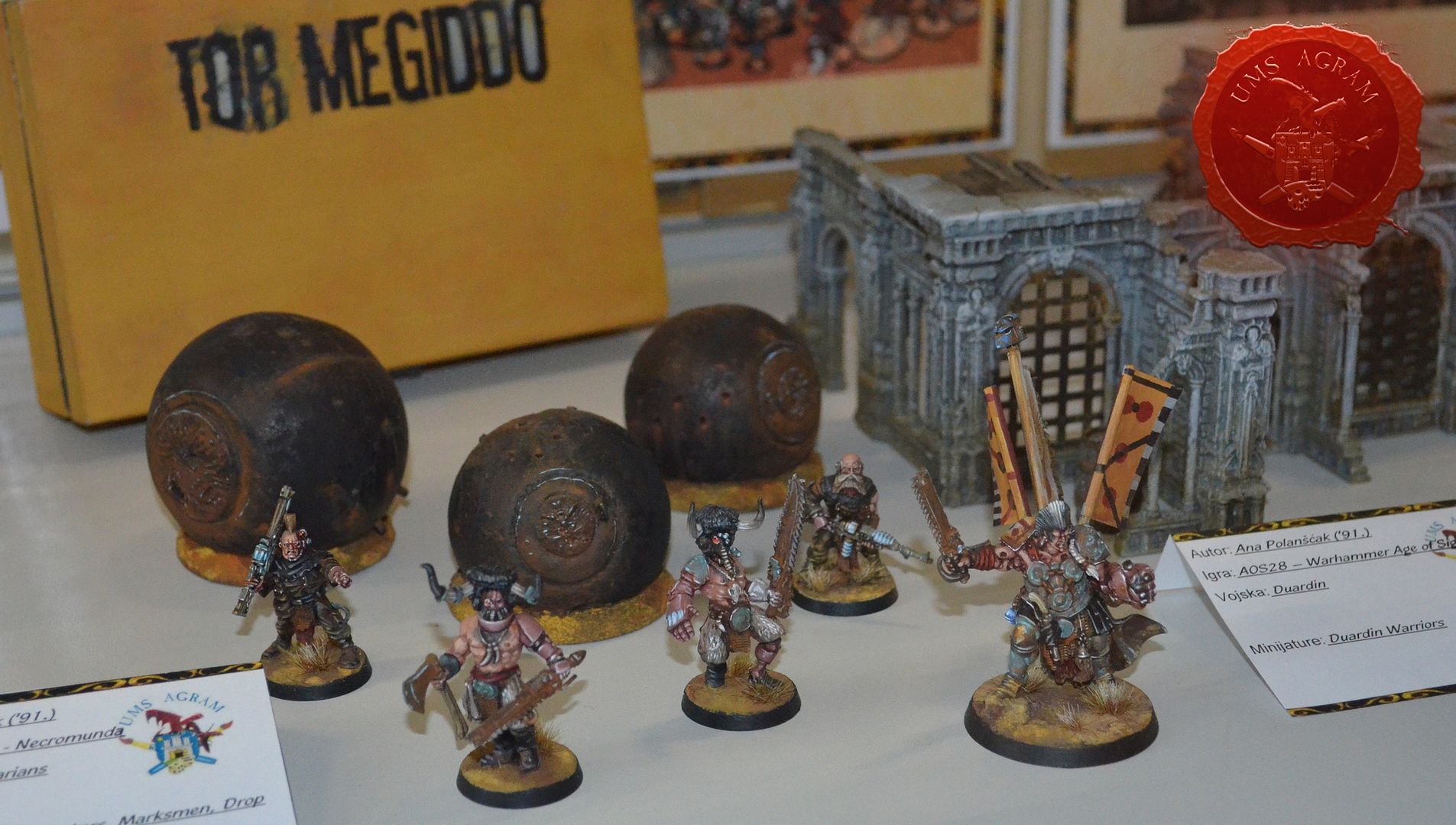
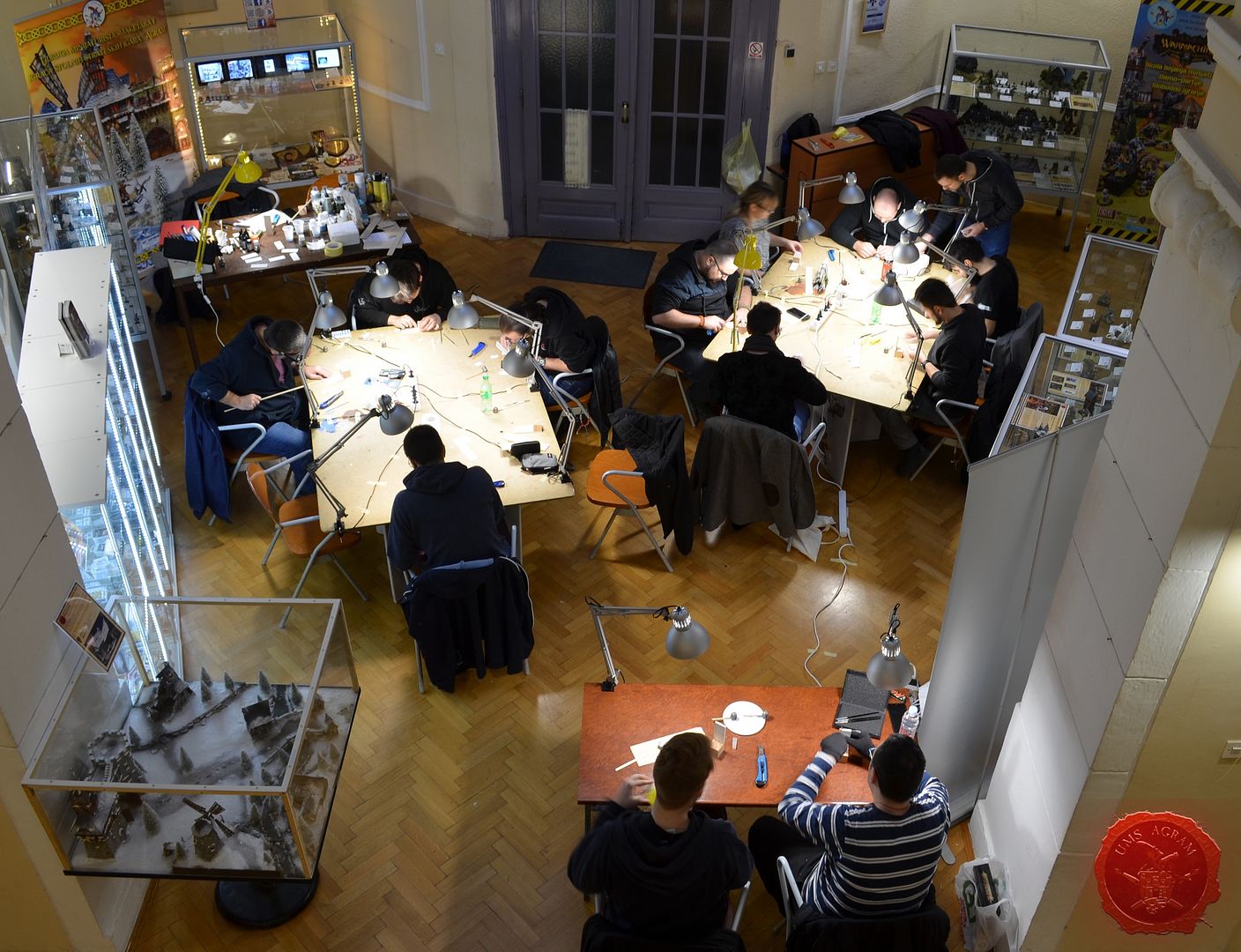
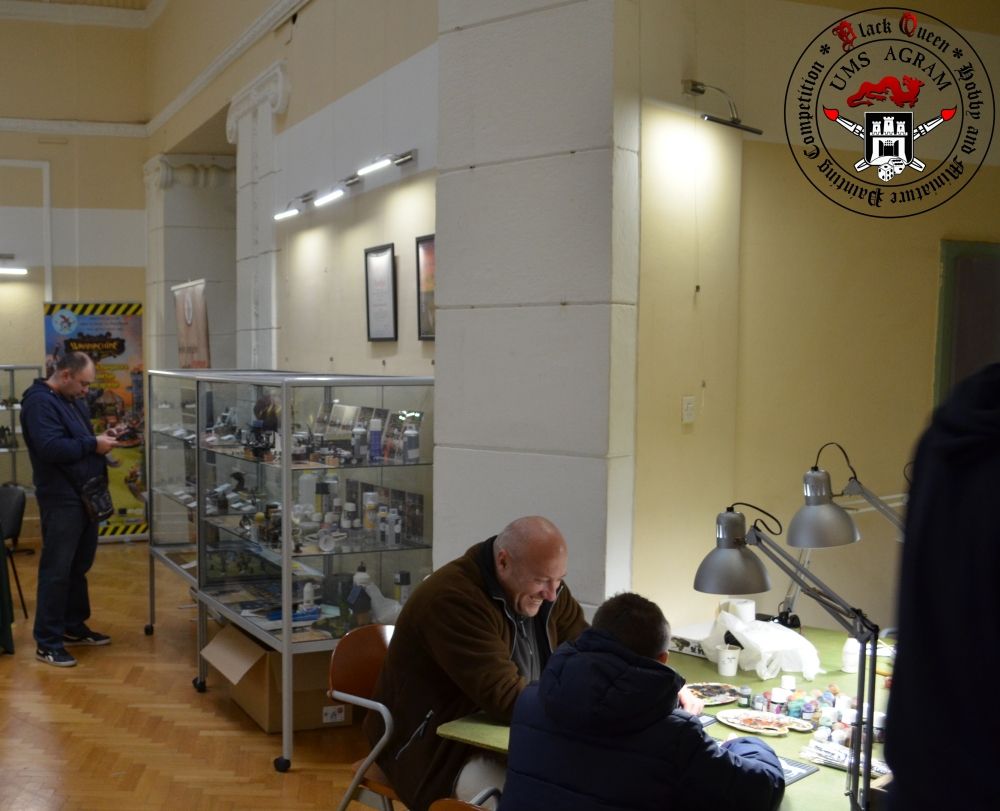
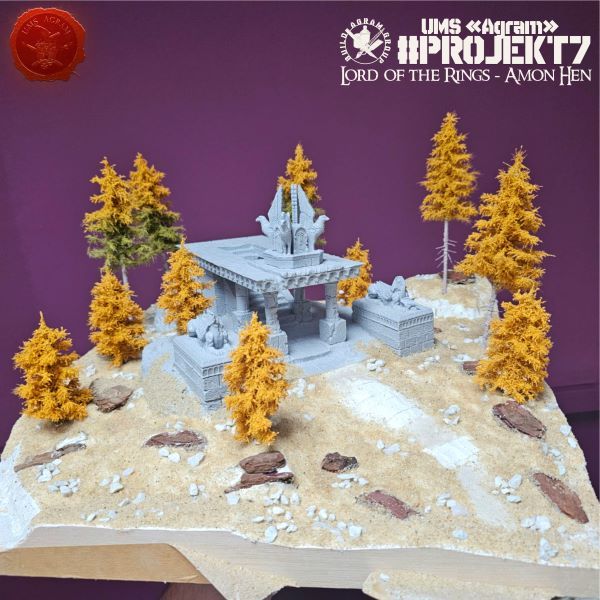
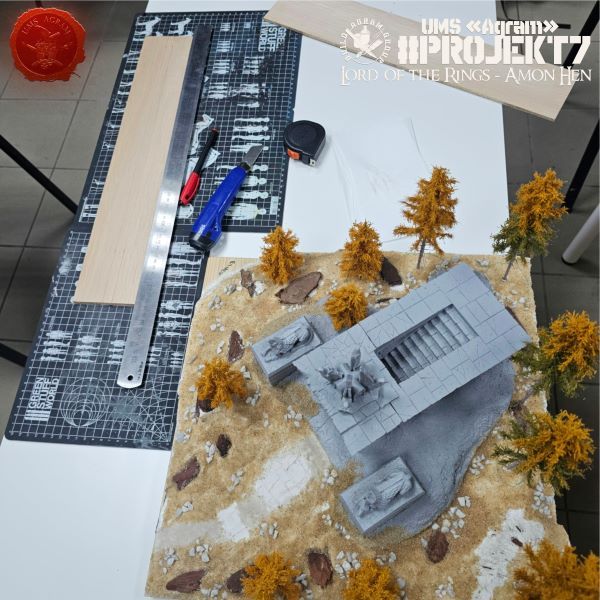
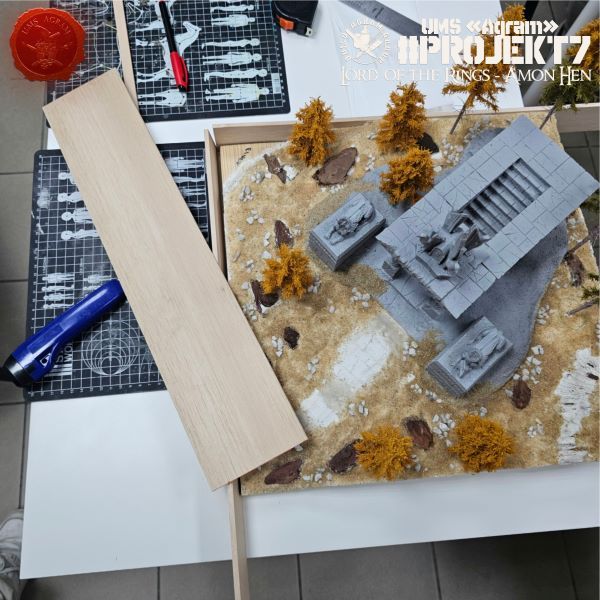
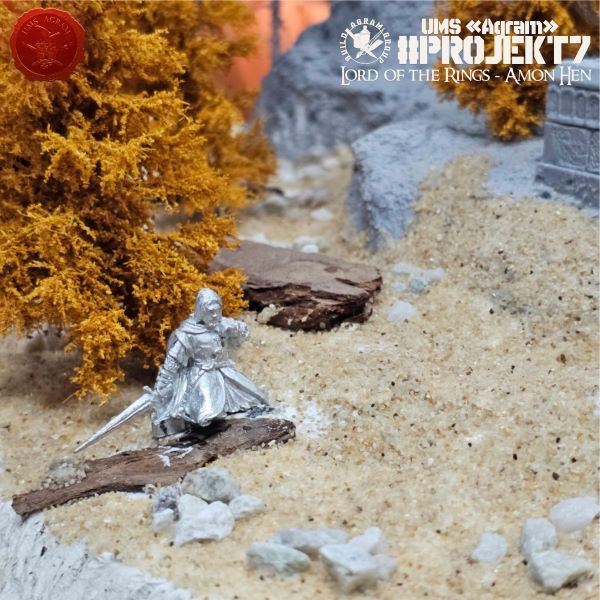
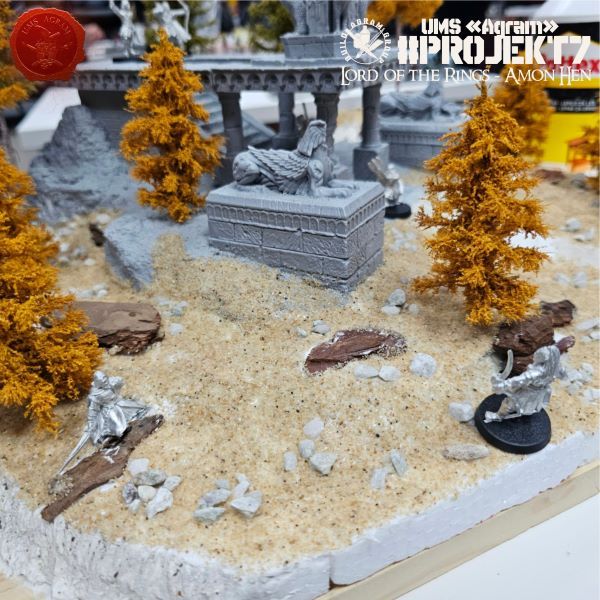
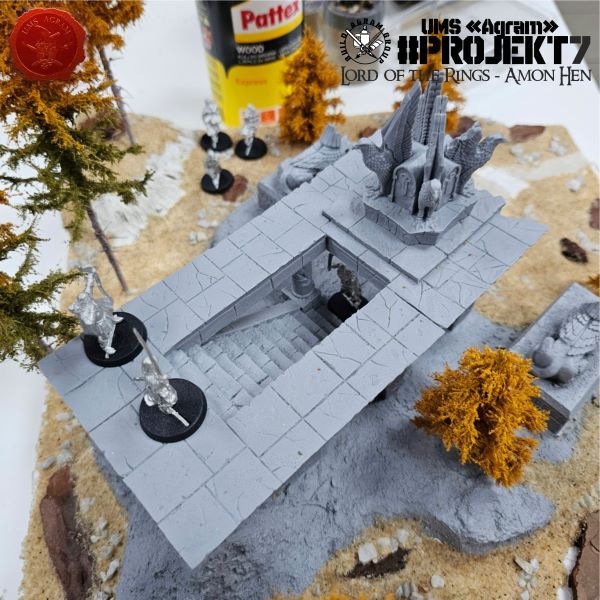
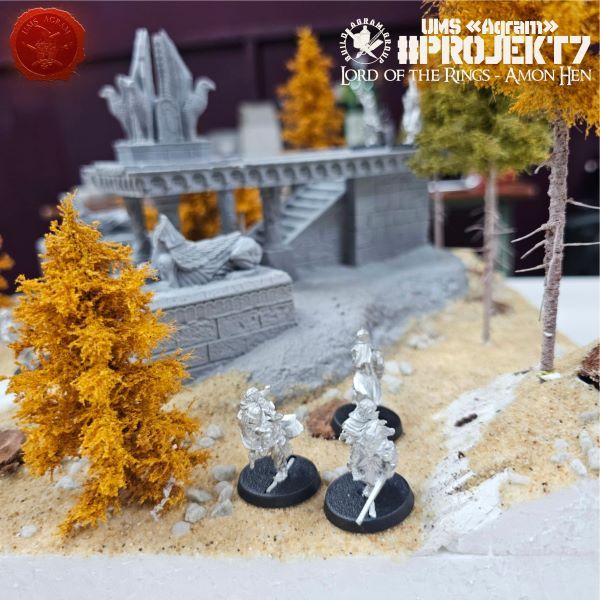
This year's Exhibition was open to the public from Feb. 20 until Mar. 8 and was completely free for all the visitors. The Exhibition showed the activities and events organised by the UMS Agram team since the Association was registered until today. It was an excellent opportunitiy for all the members but also the attendies of our Workshops to exhibit their work for free. Also, it is an opportunity for all the interested to get acquanited with this part of technical culture, to see over 200 miniatures in a single place, hand crafted, assembled and painted by UMS Agram members of all ages and several dosen of hand made pieces of tabletop scenery.
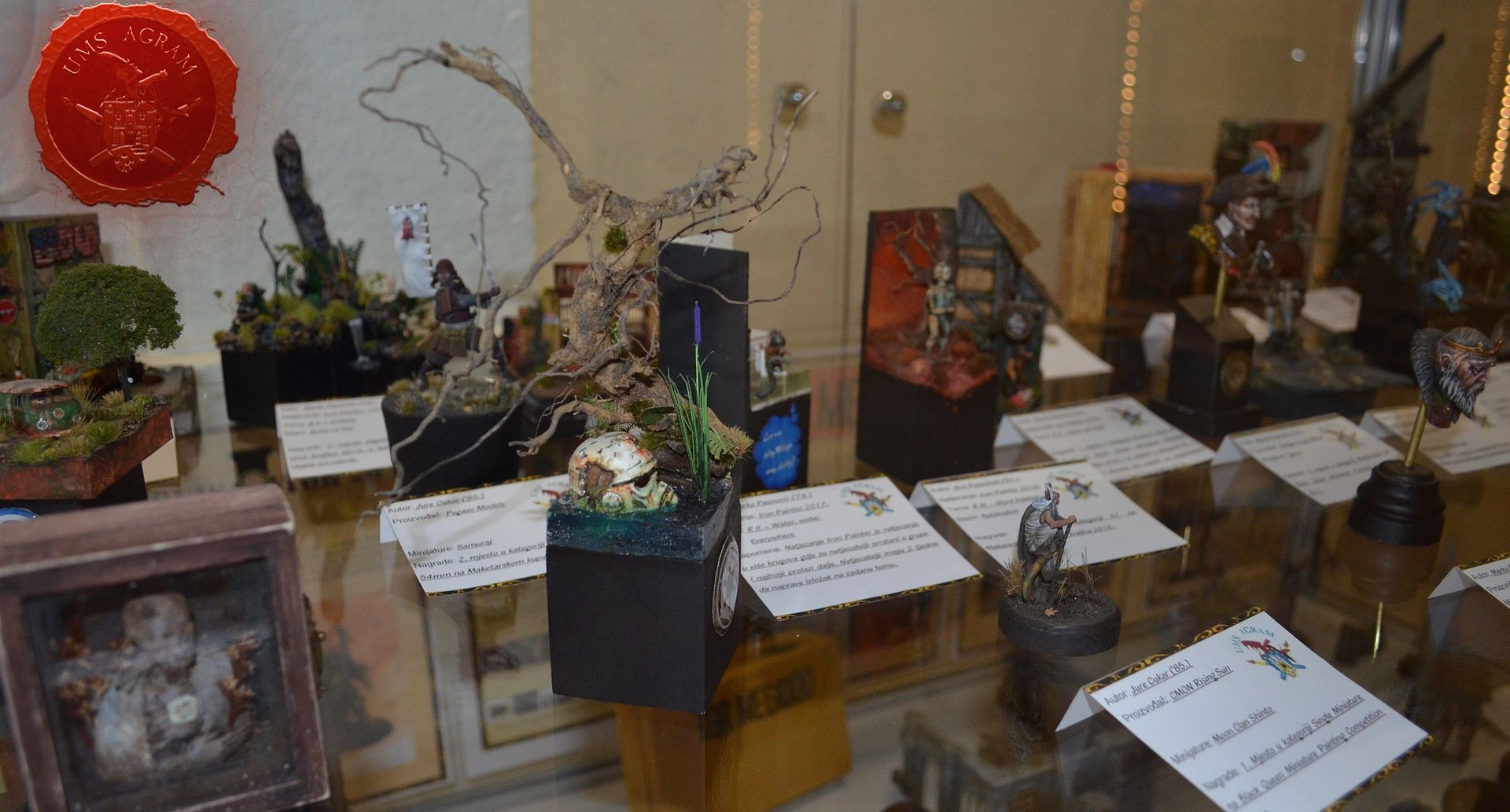
UMS Agram used the venue to organise various activities and events beside the Exhibition of Miniatures and Tabletop Scenery Agram:
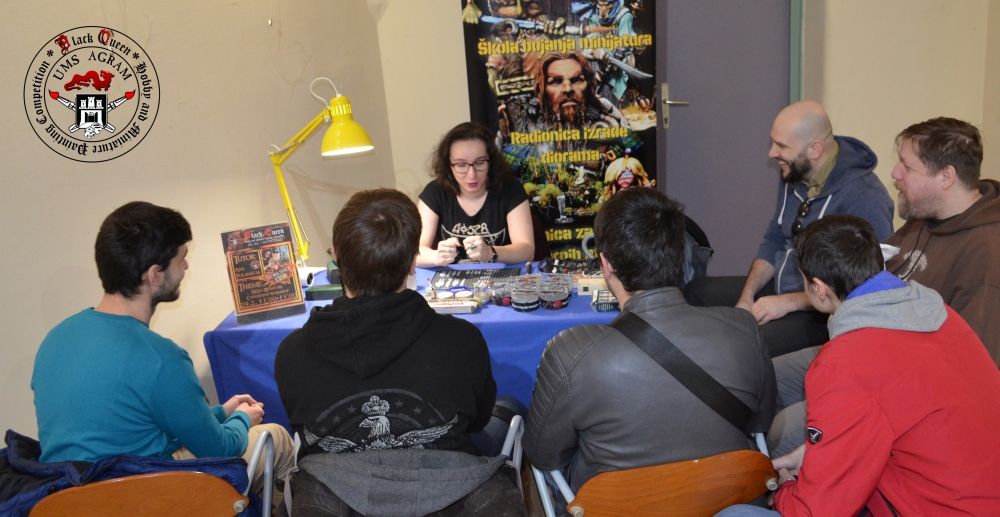
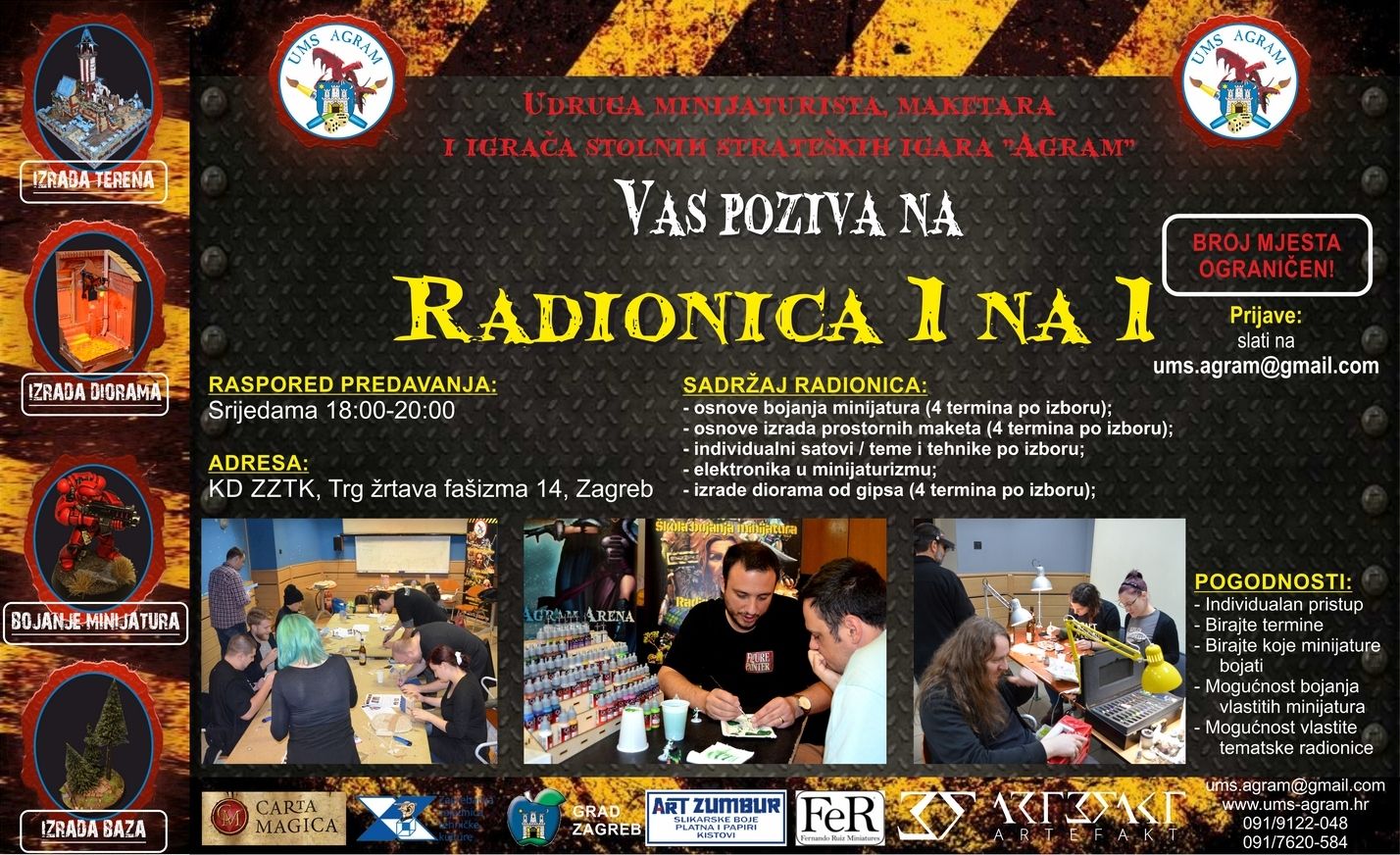
1. On Wednesdays (18-22h) during the Exhibition UMS Agram organised free beginner's workshops (Miniature Painting Workshop One on One) where one could learn the basics of miniature painting as well as building tabletop scenery.
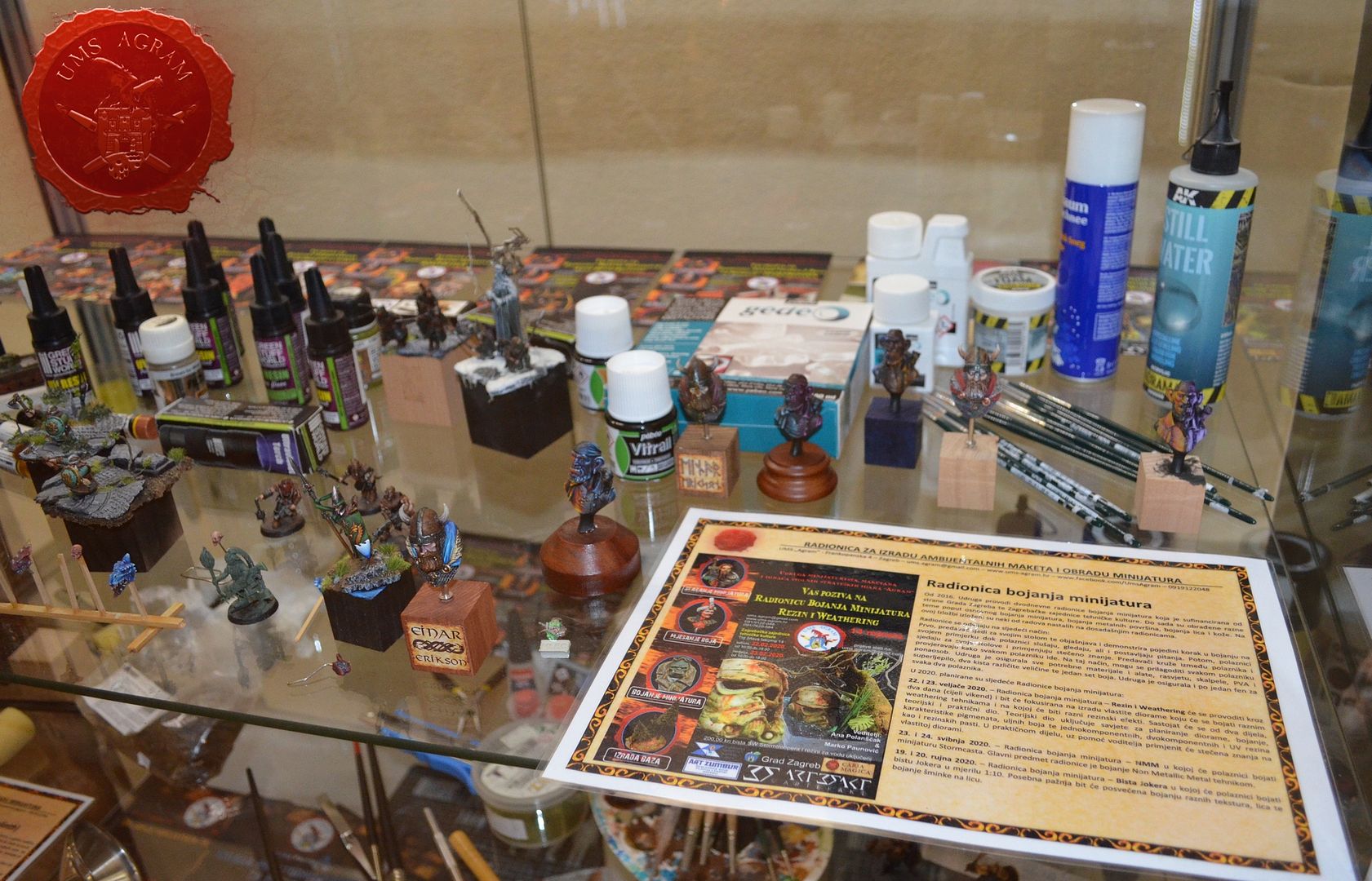
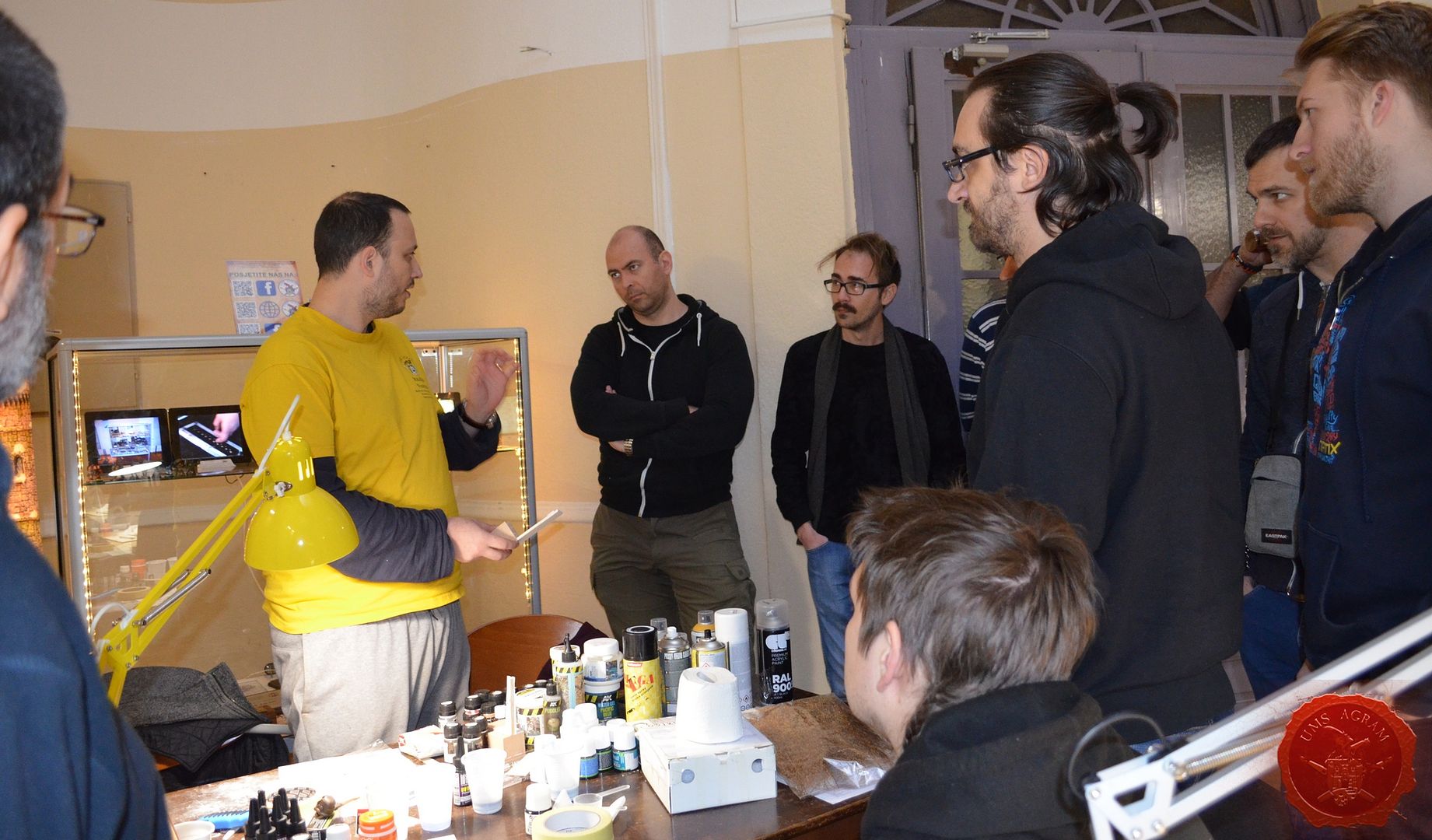
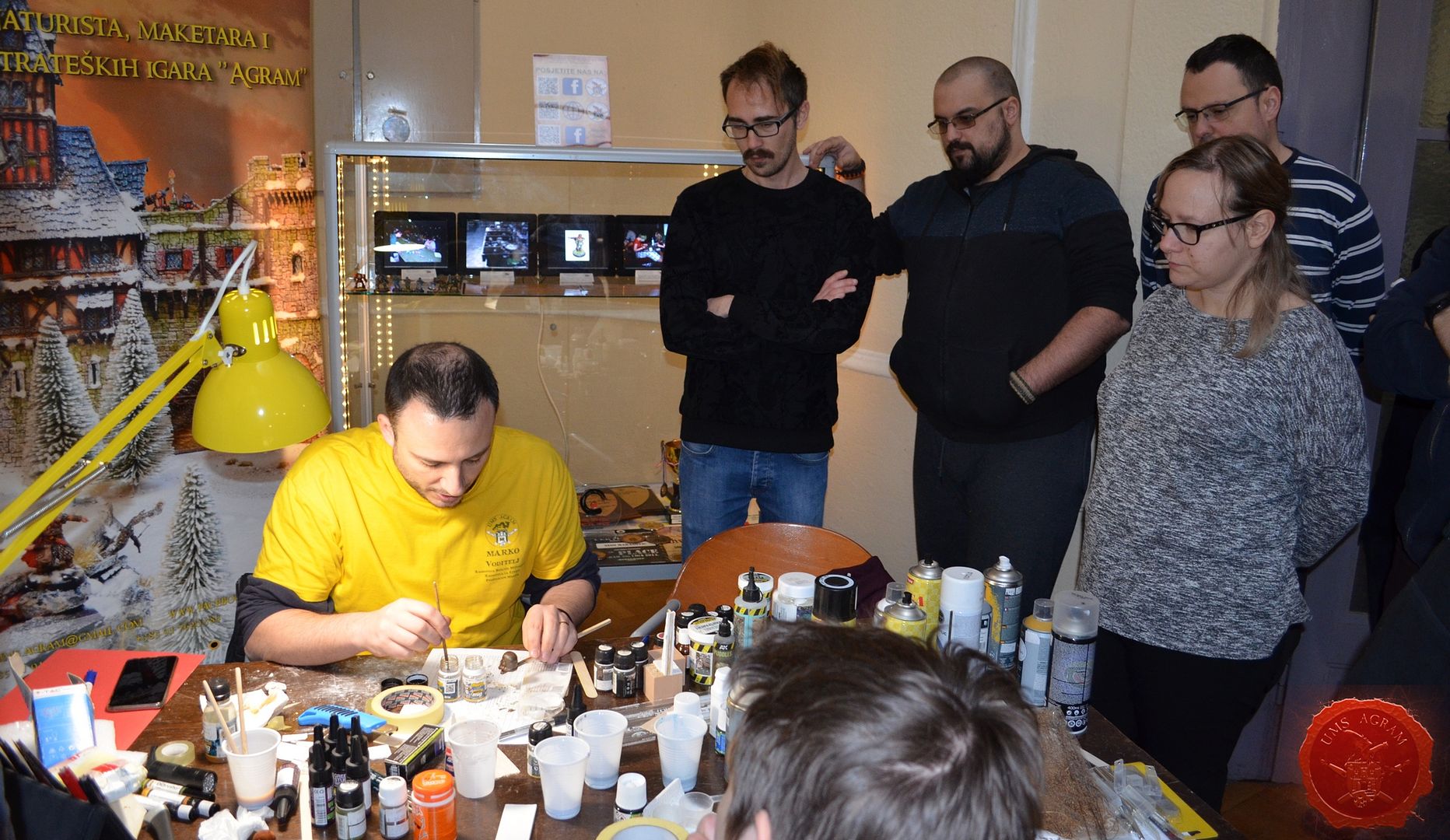
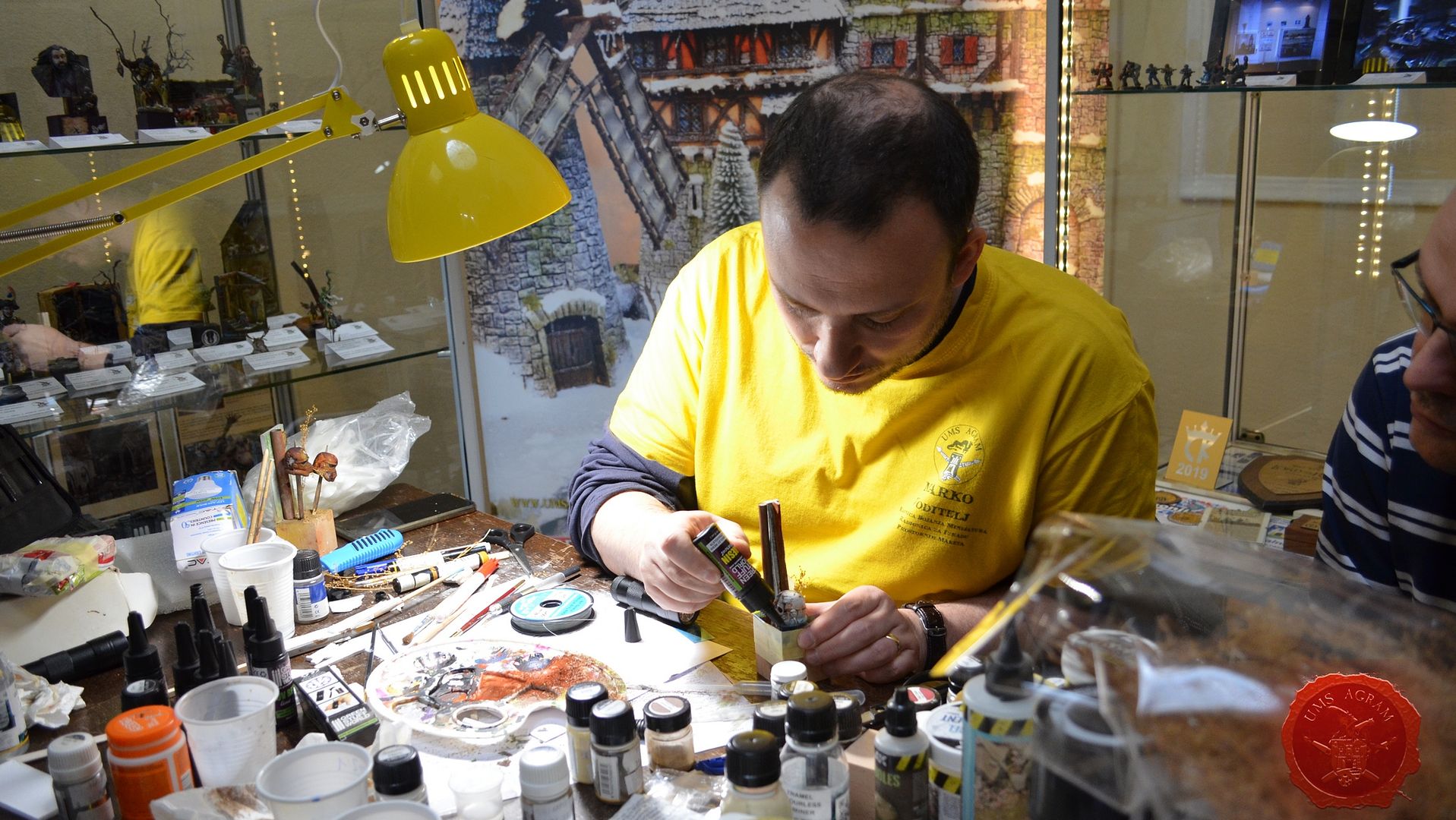
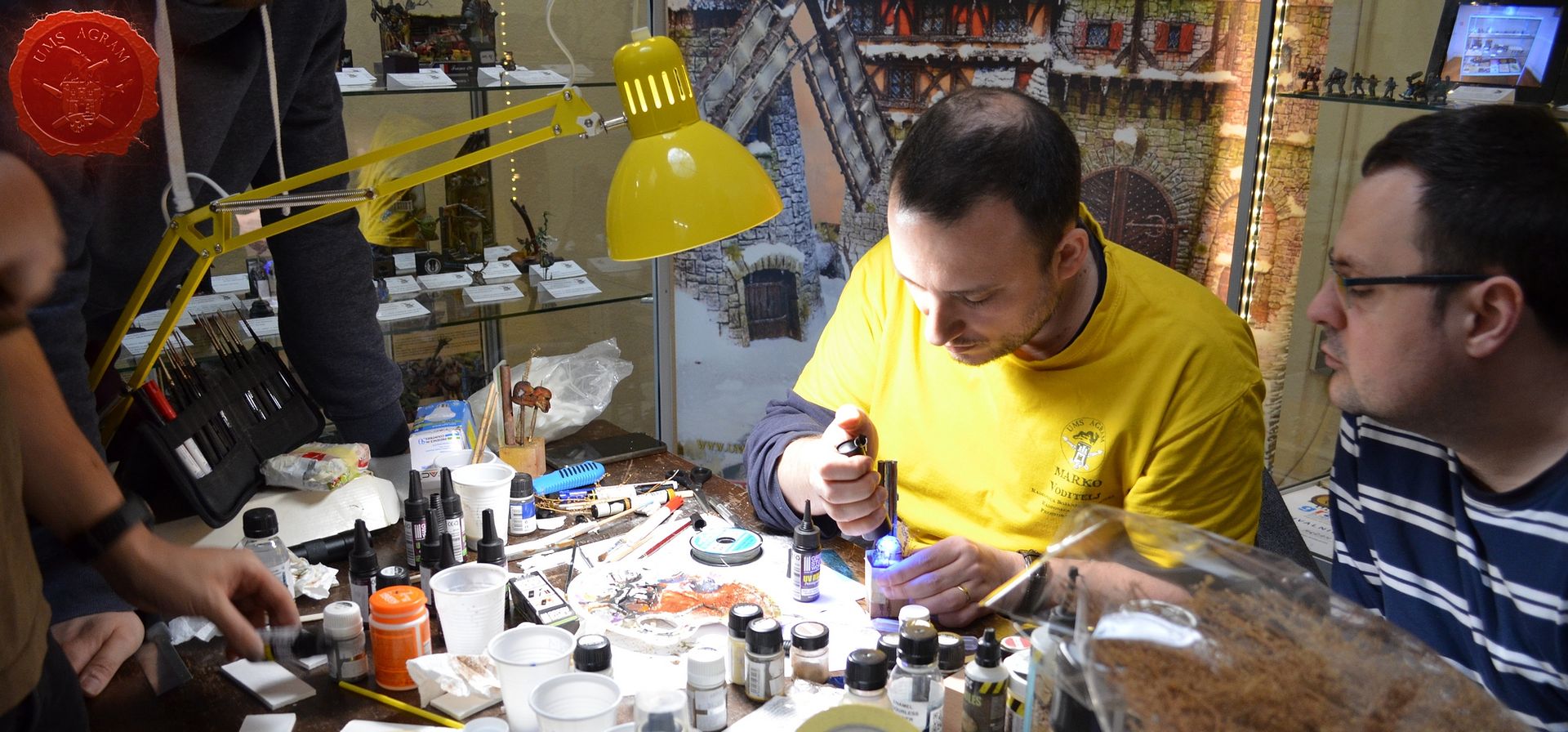
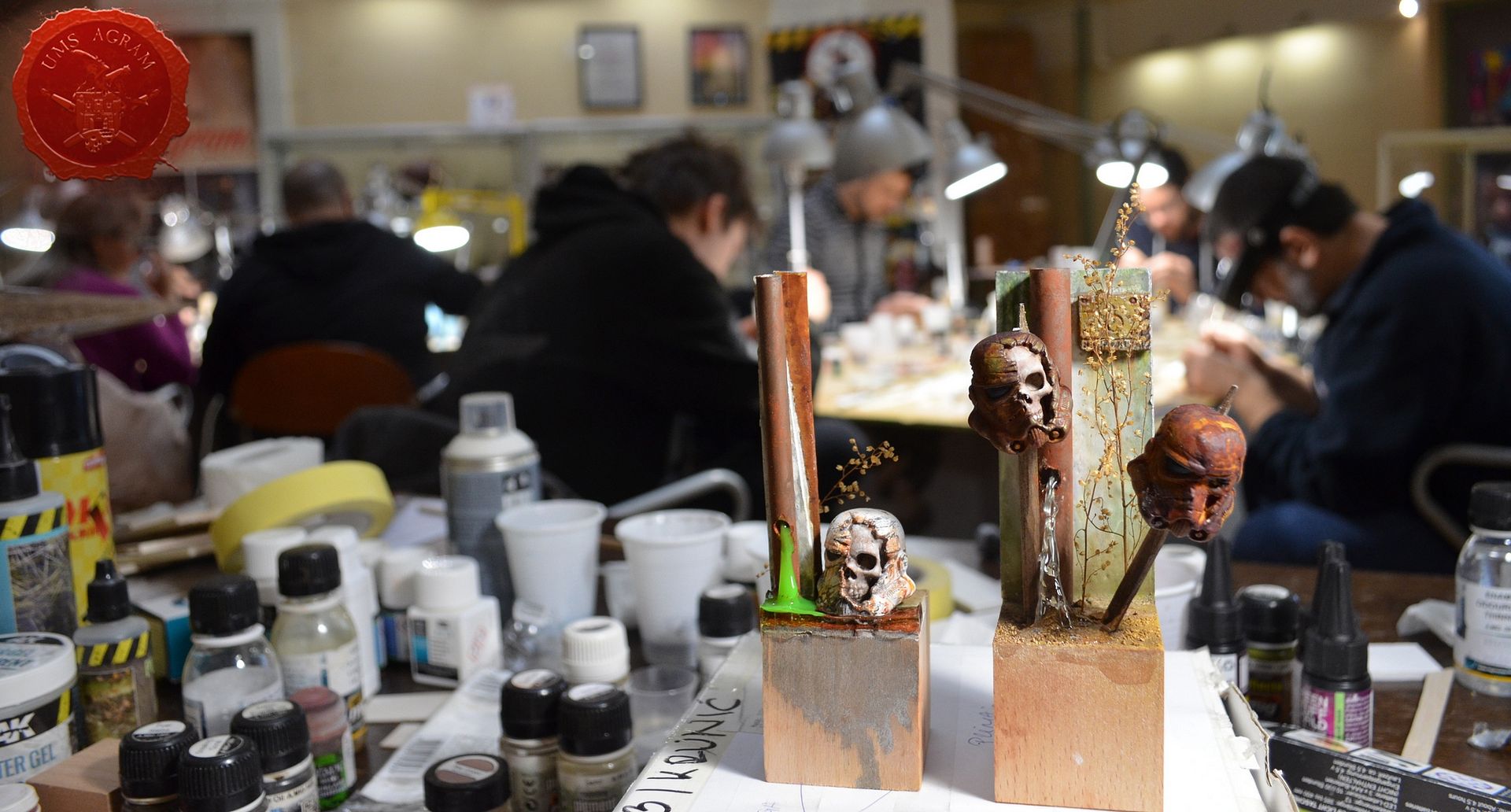
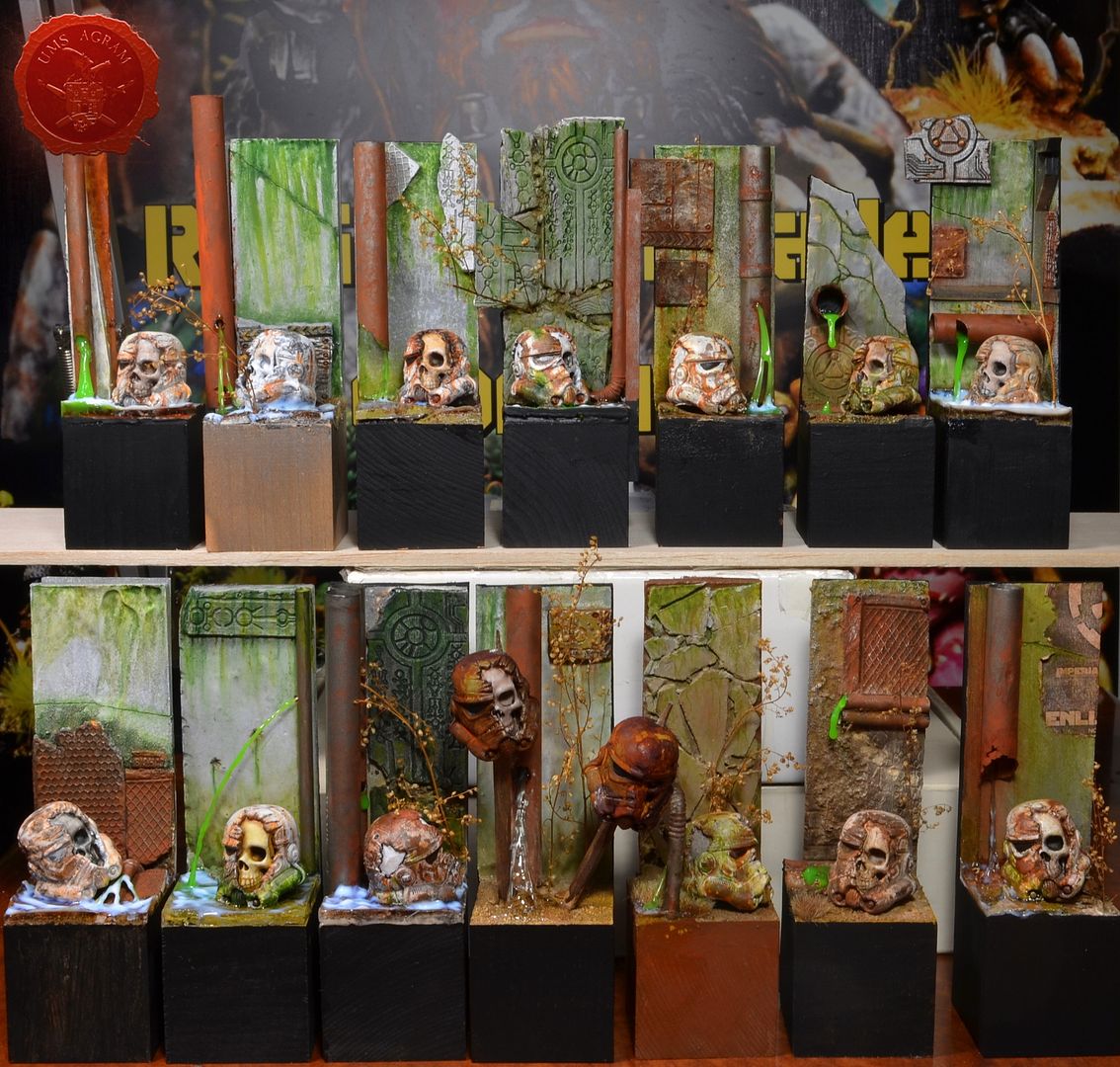
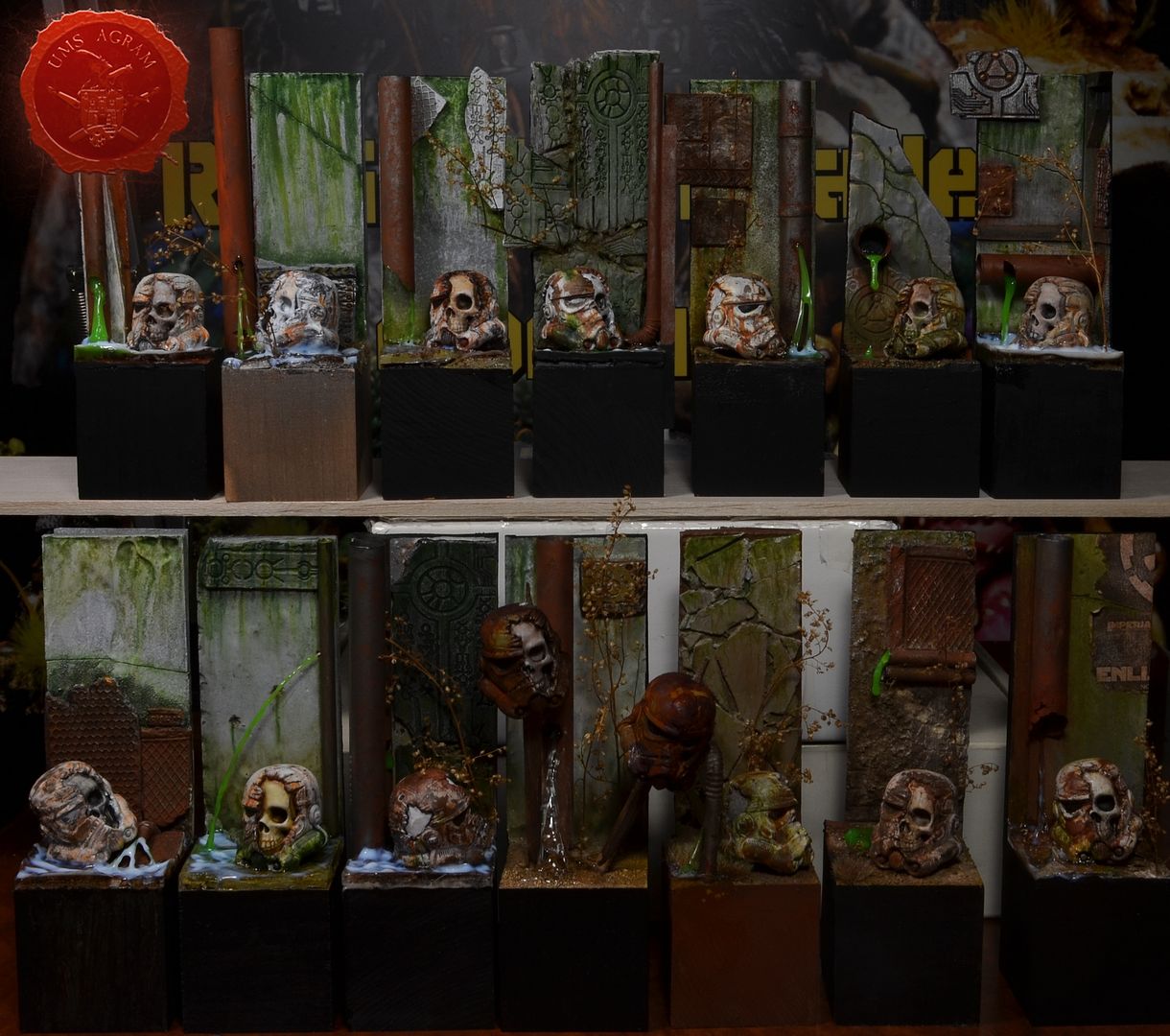
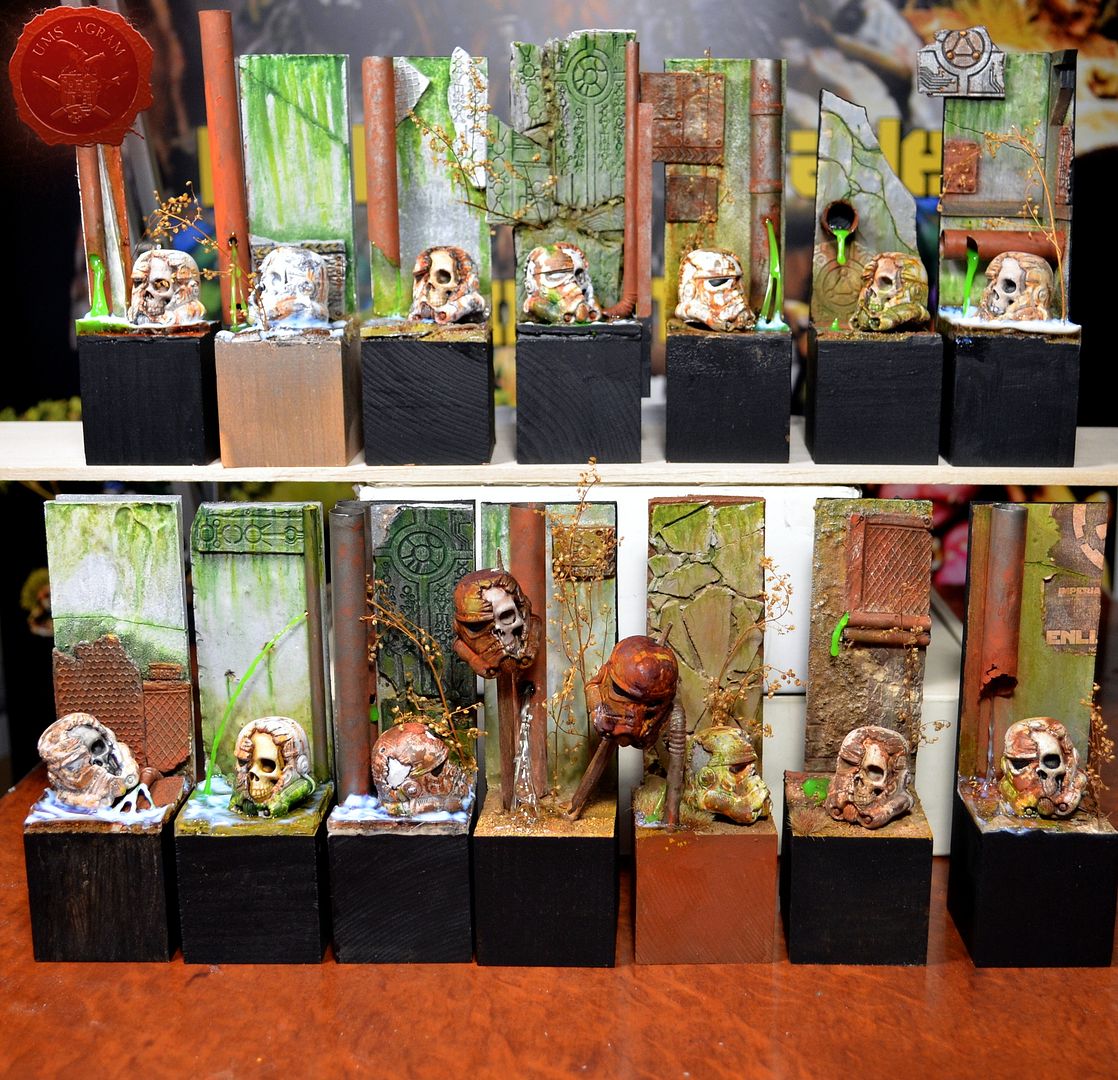
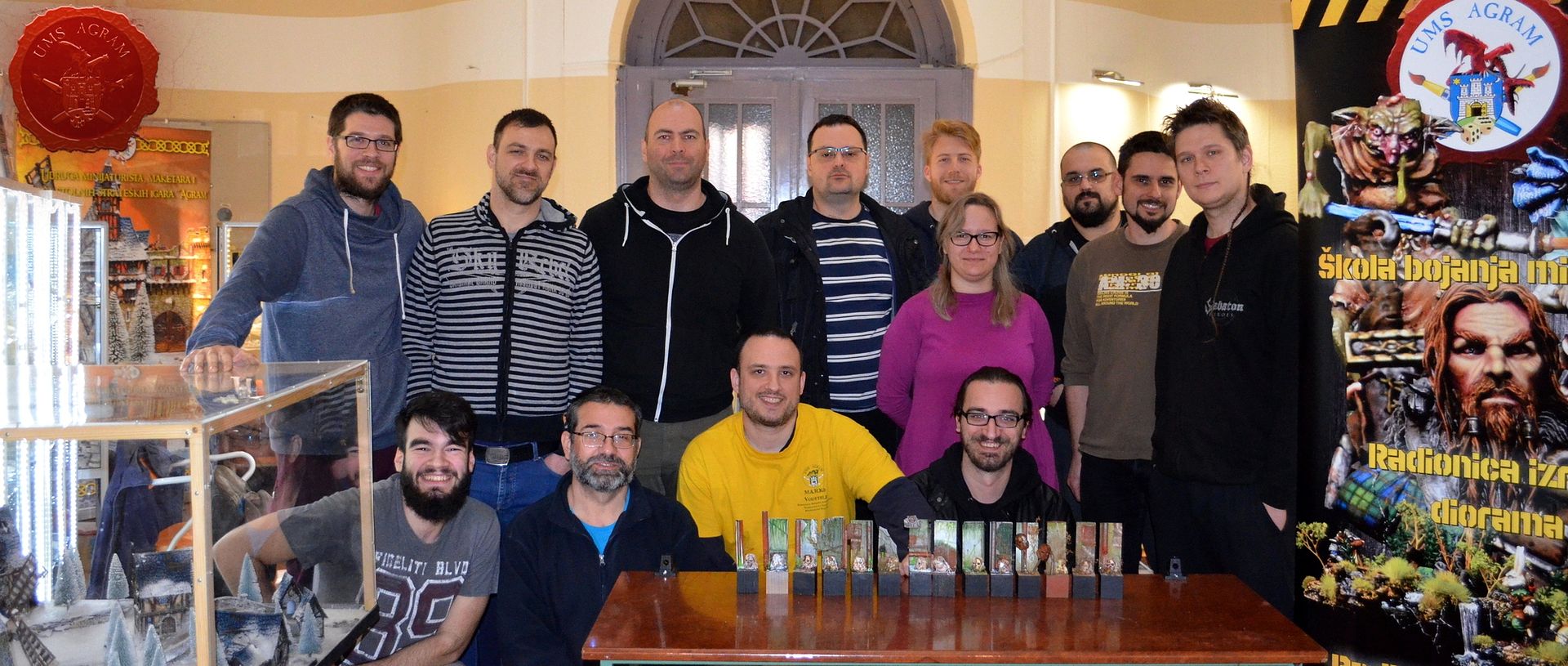
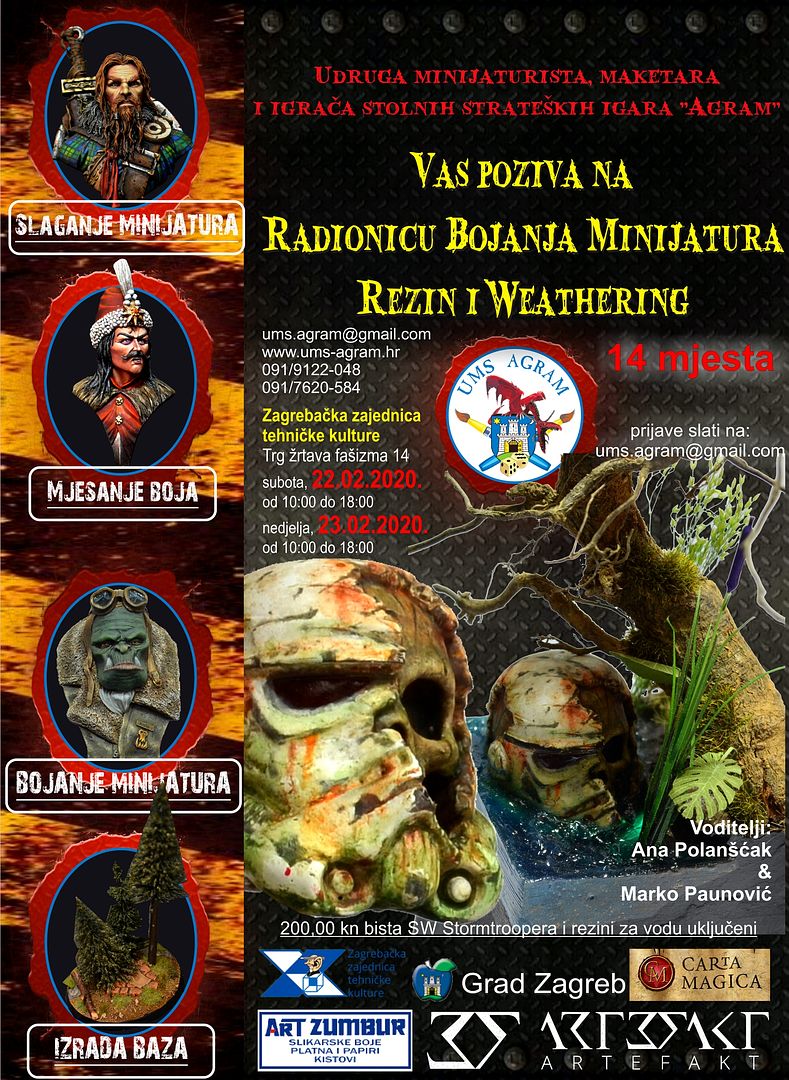
2. During Saturday and Sunday Feb. 22-23 UMS Agram held a Miniature Painting Workshop – Resins and Weathering. Thirteen attendees made their own Star Wars themed diorama, painted it using special effects based on acrylic, oil and enamel base as well as using pigments trying to depict weathering effects on various materials (metal, wood, plaster etc). After completing the paintjob, the focus of the second day was adding water/fluid effects using two-component, single-component and UV resins as well as detailing by resin gels.
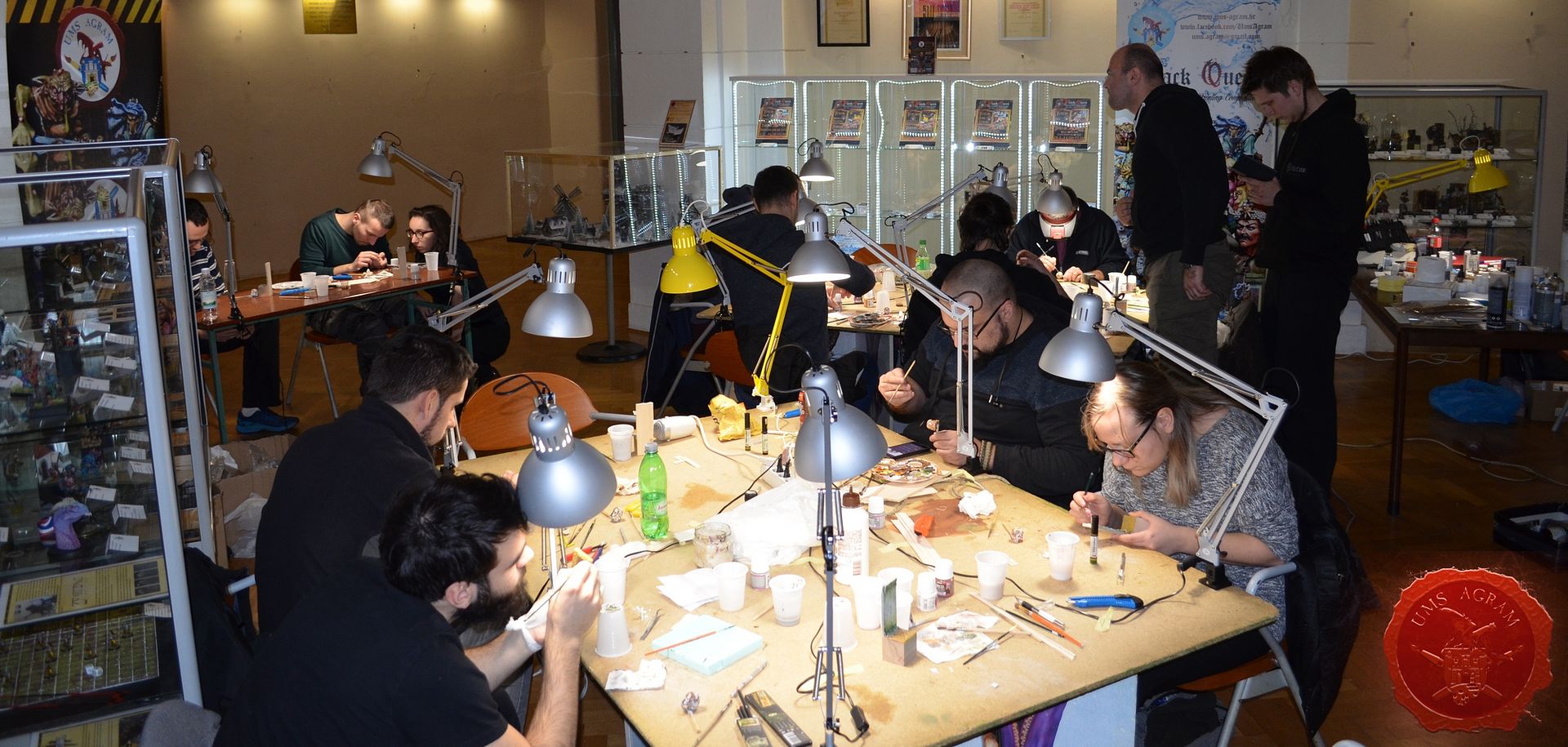
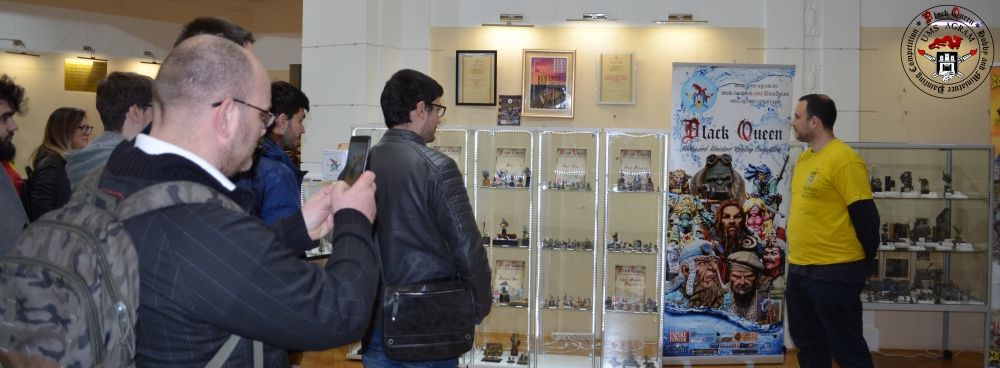
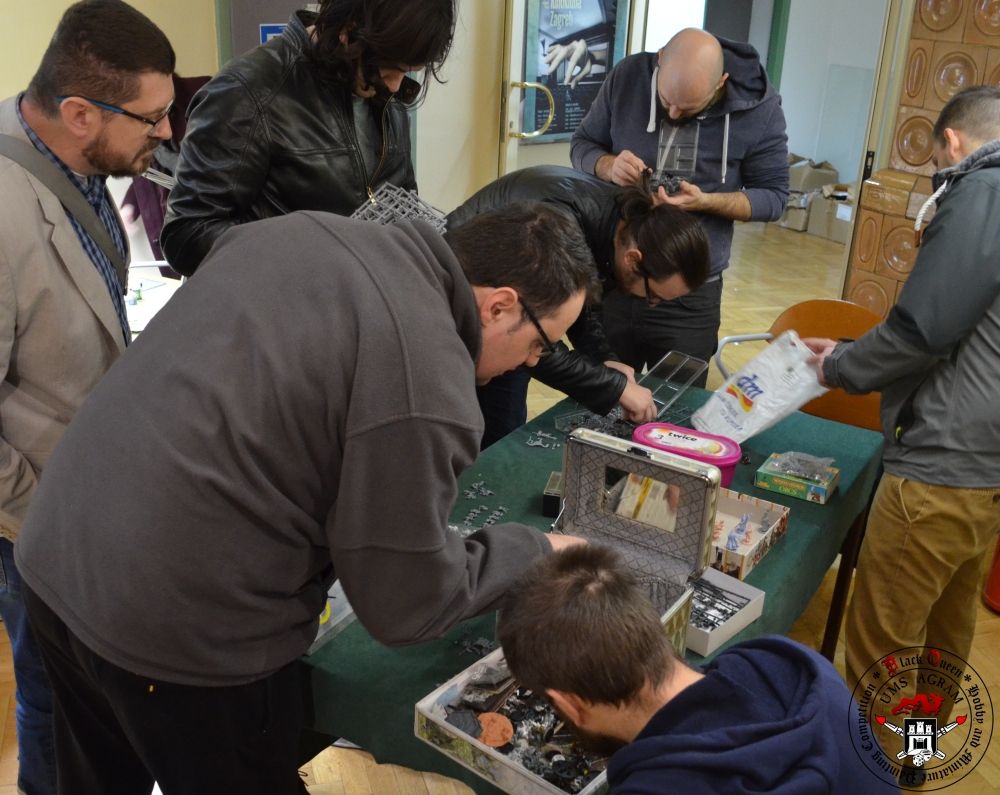
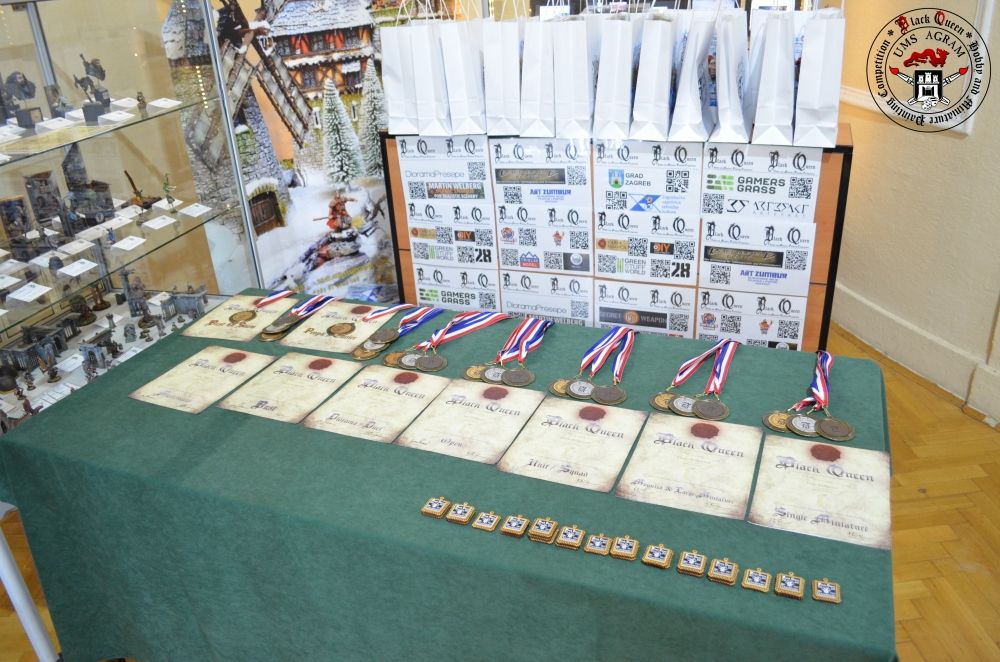
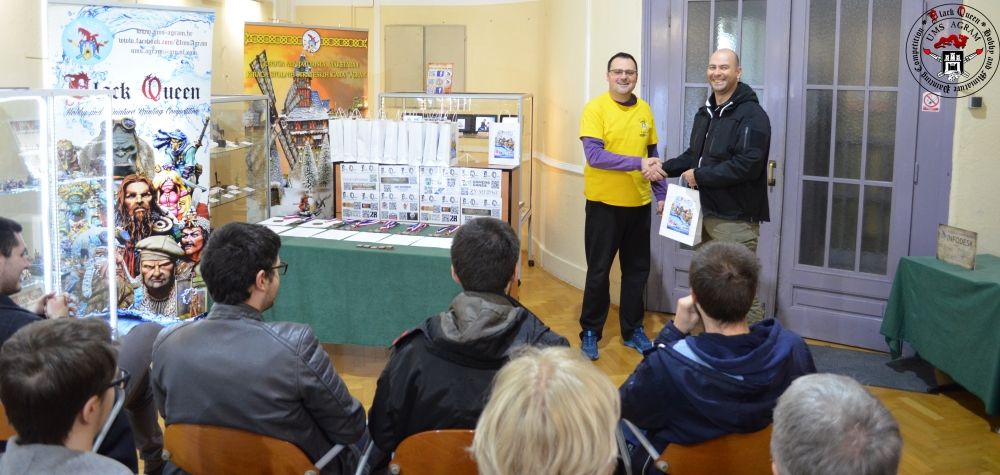
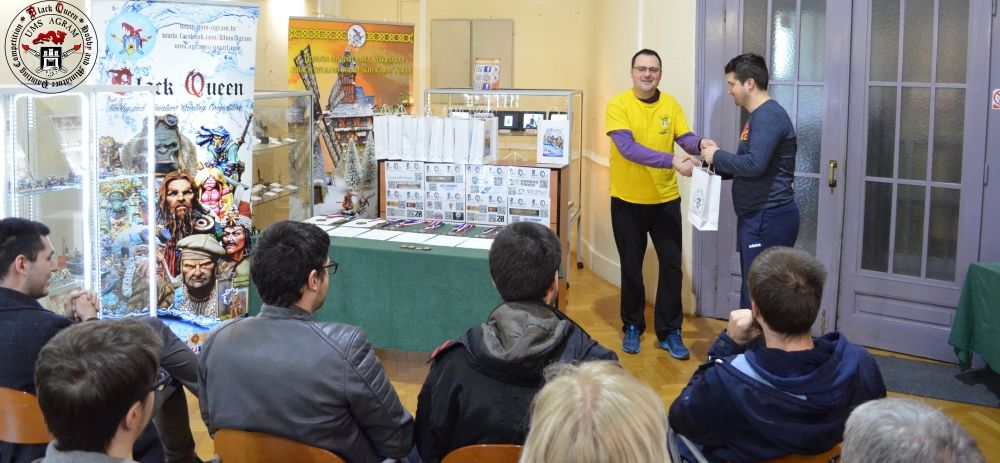
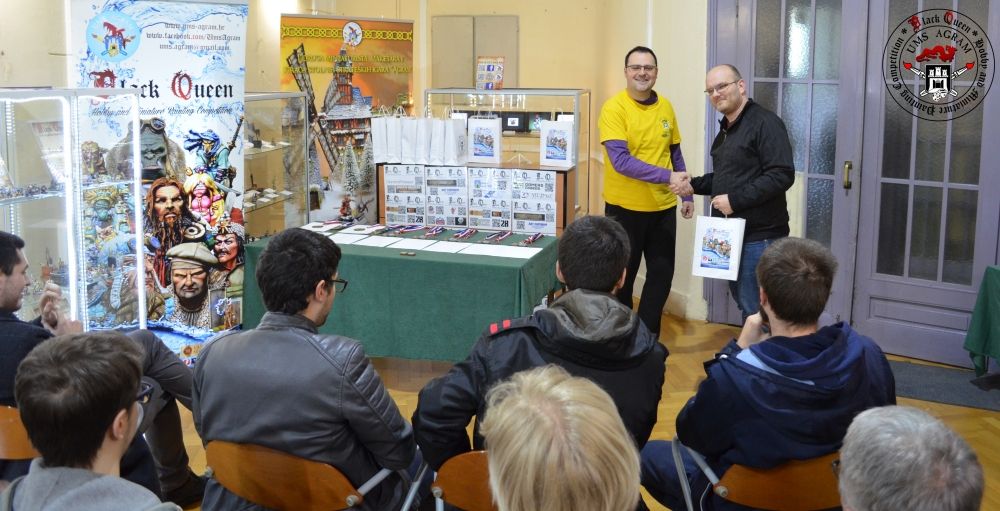
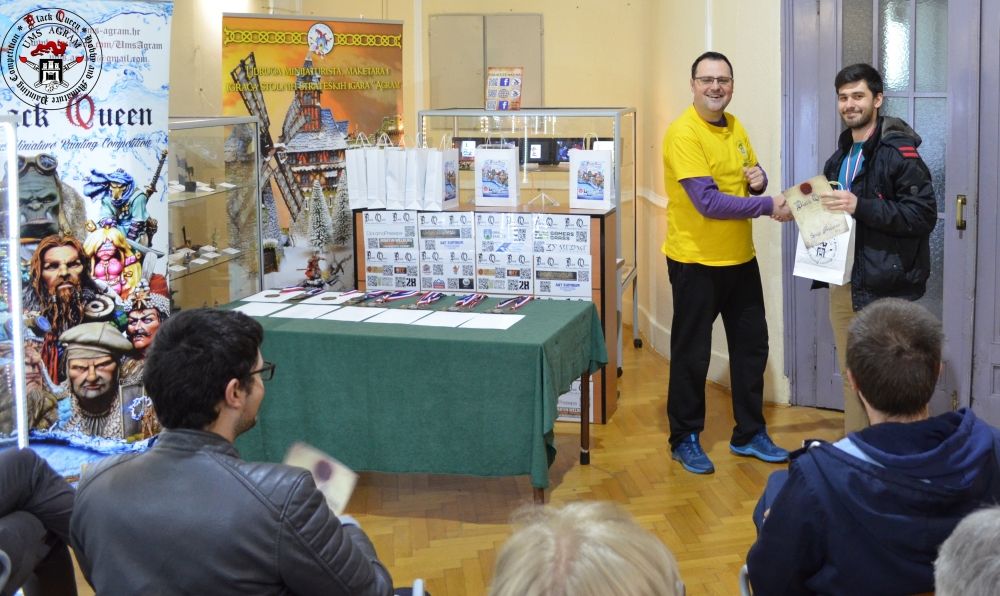
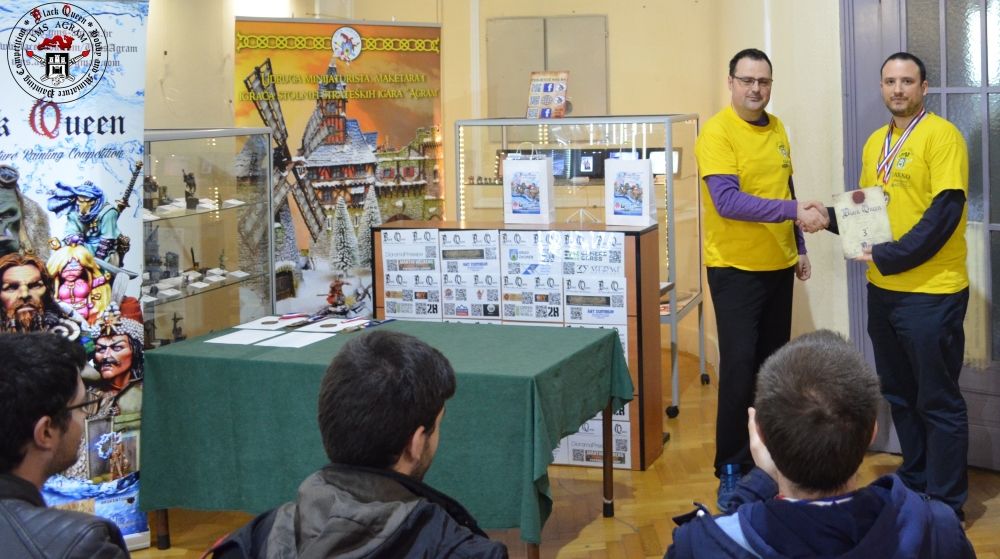
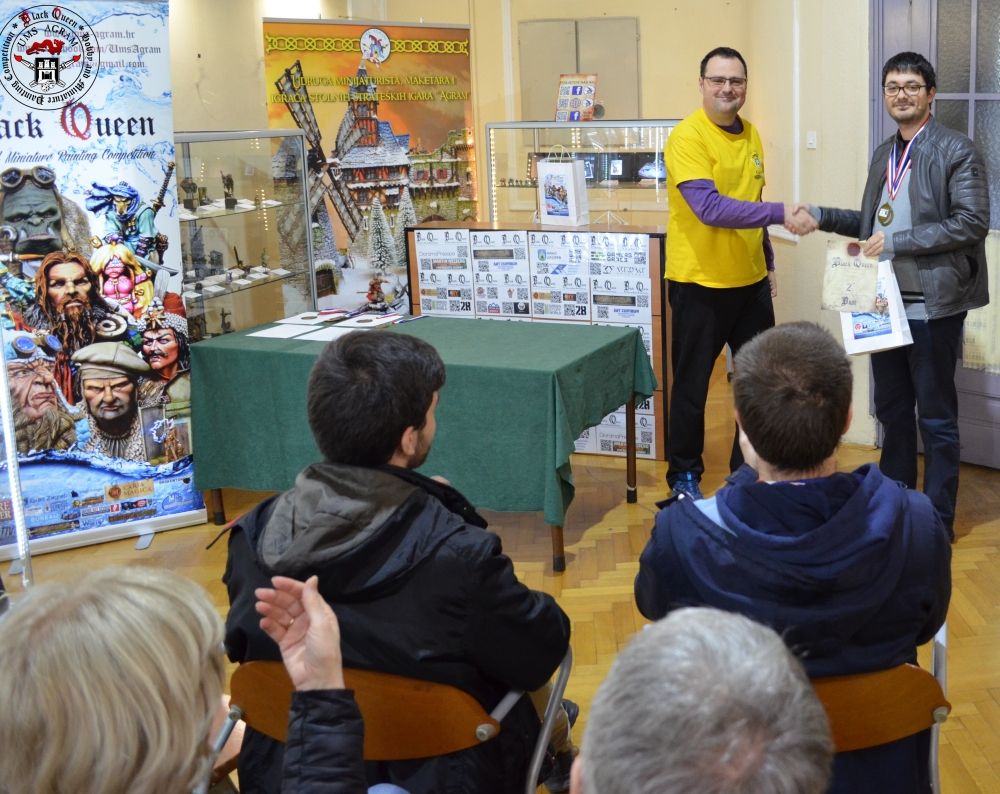
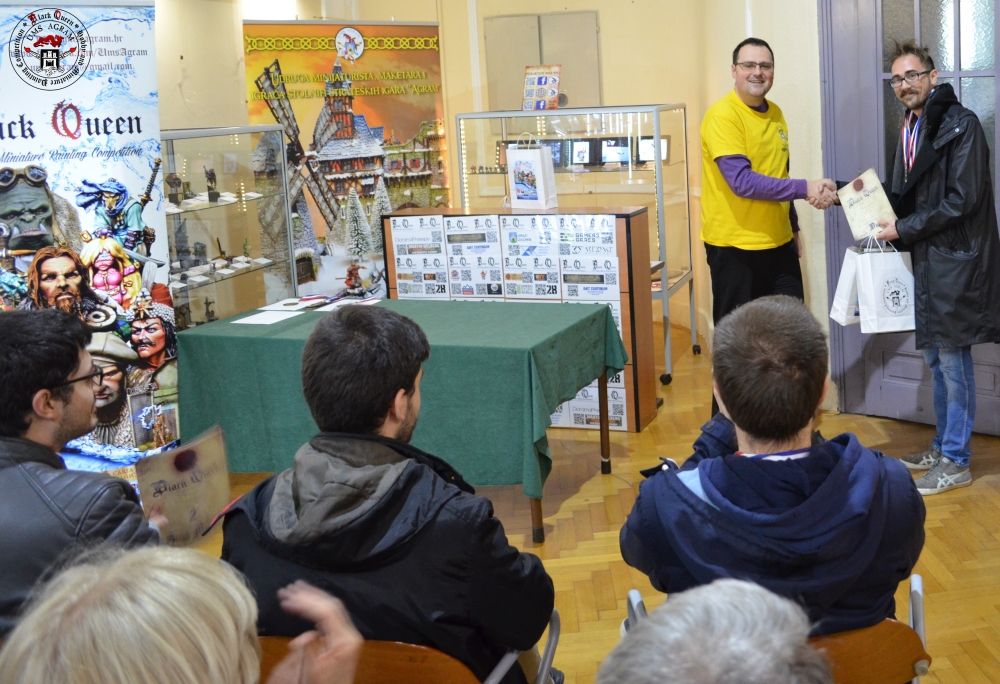
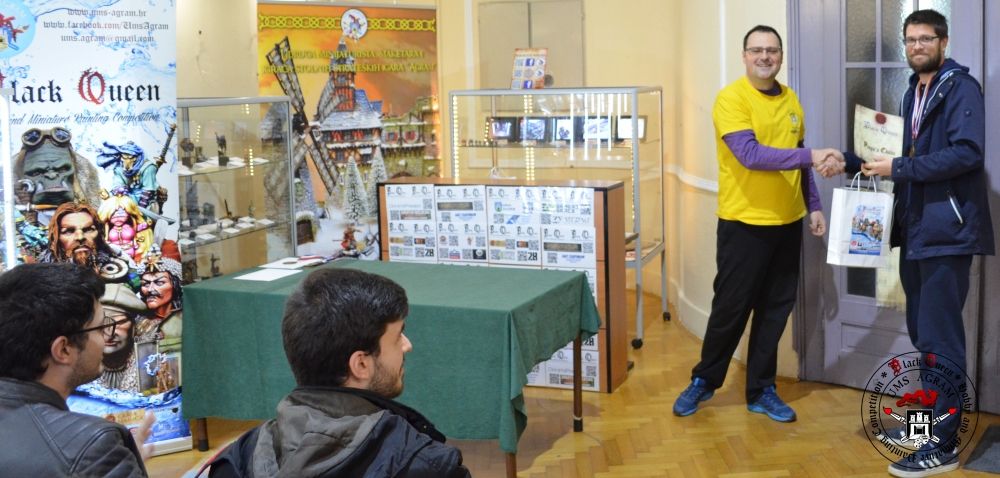
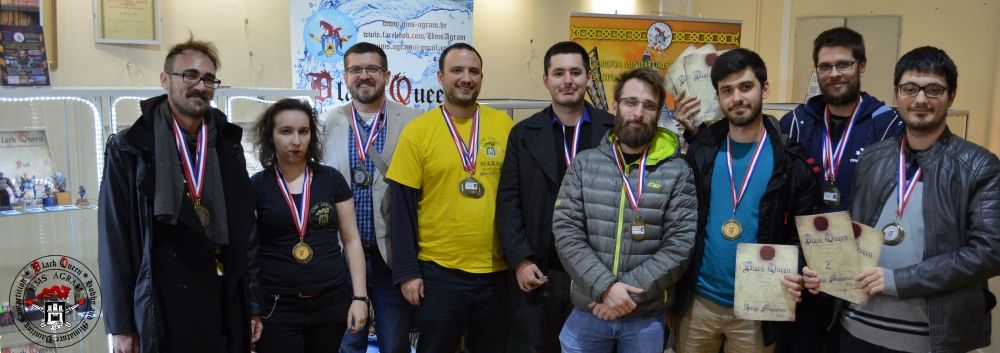
3. The weekend of Feb.2 – Mar. 1 was reserved for the international miniature painting competition: Black Queen Hobby and Miniature Painting Competition.
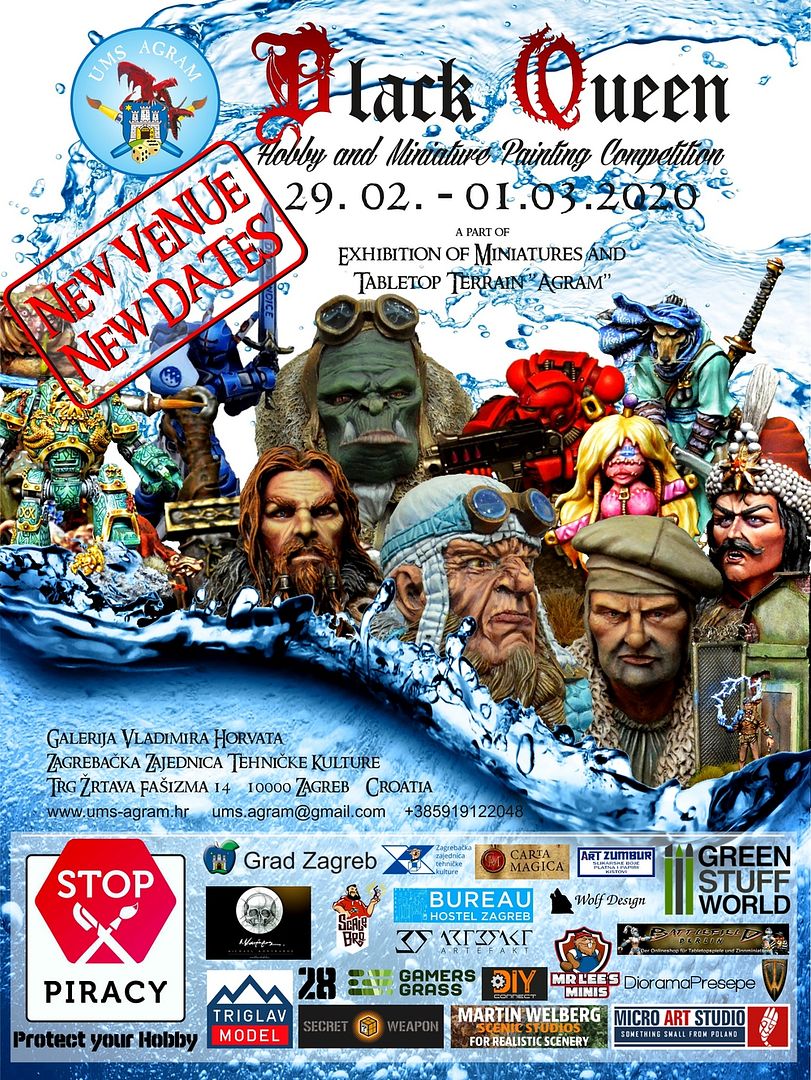
During the Black Queen Competition there were many free events organised in an effort to make this part of technical culture more popular:
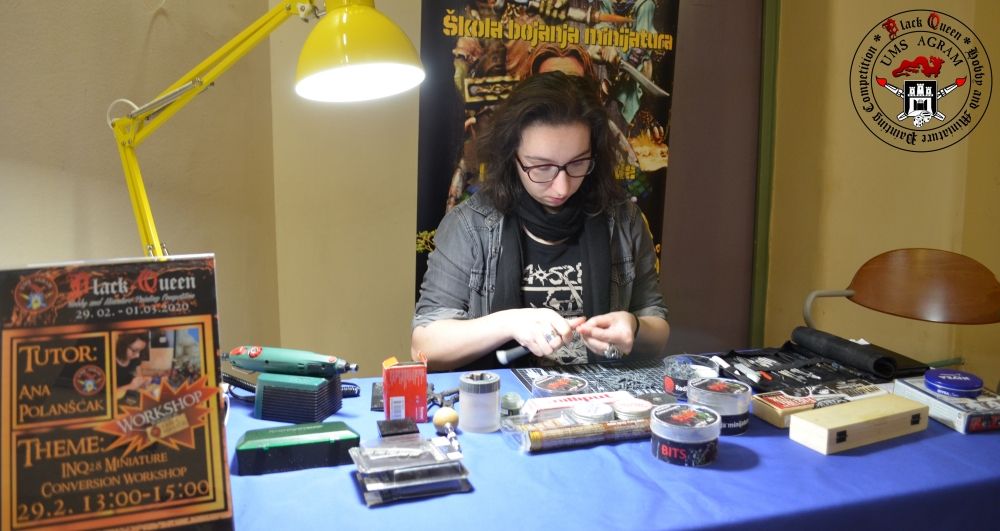
• INQ28 Converting and Kitbashing Workshop by Ana Polanšćak (Feb. 29 13:00-15:00h)
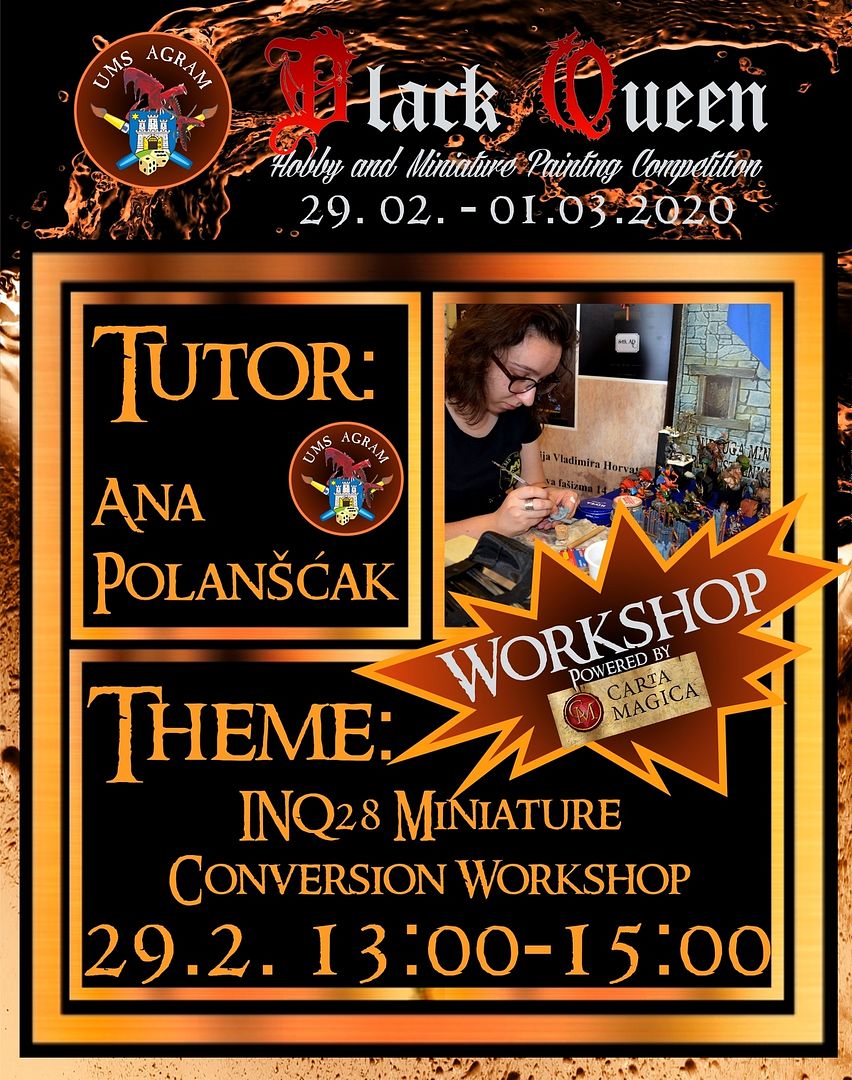
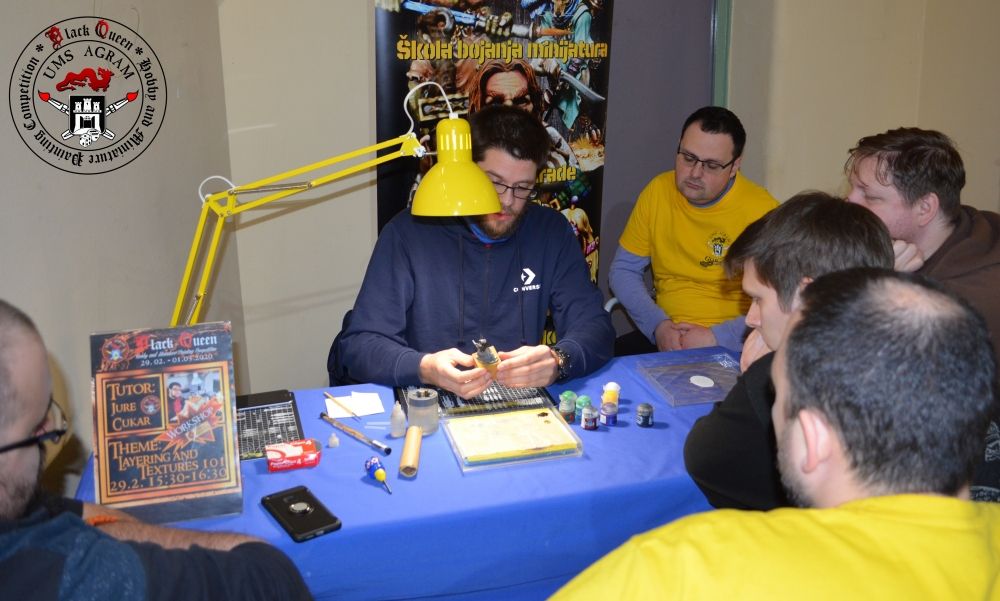
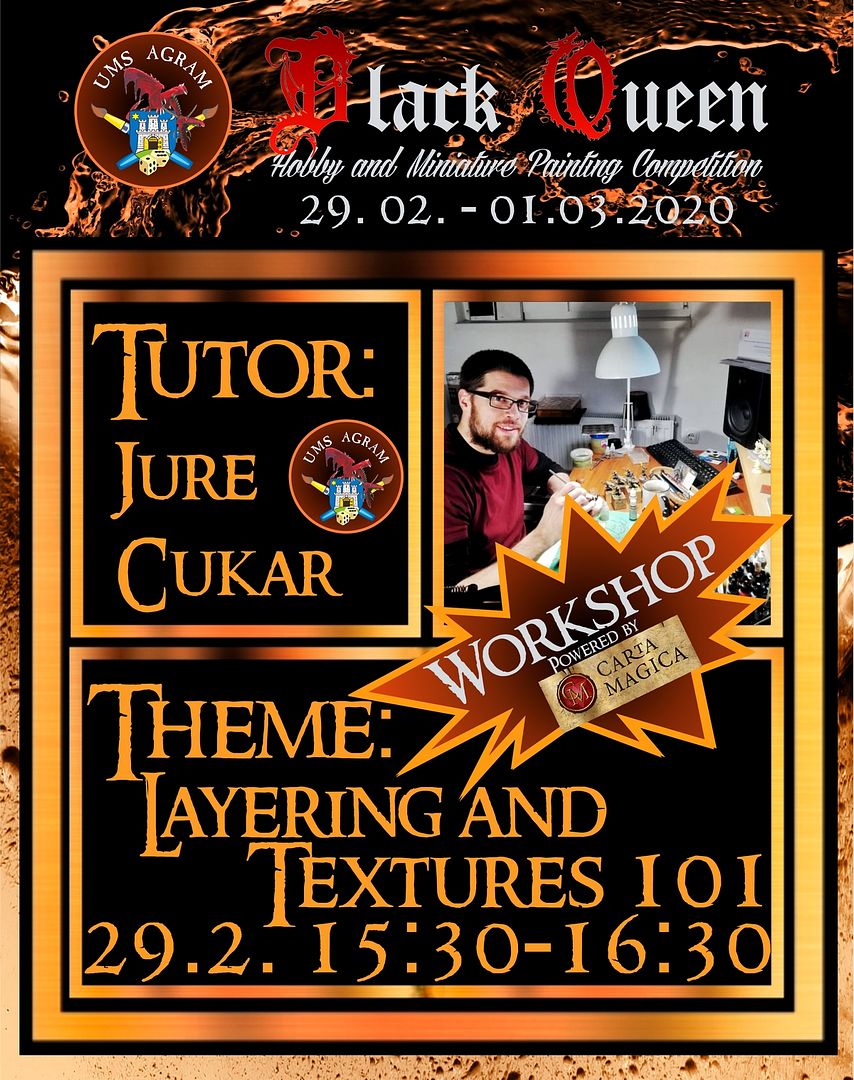
• Layering Workshop by Jure Cukar (Feb. 29 15:30 – 16:30)
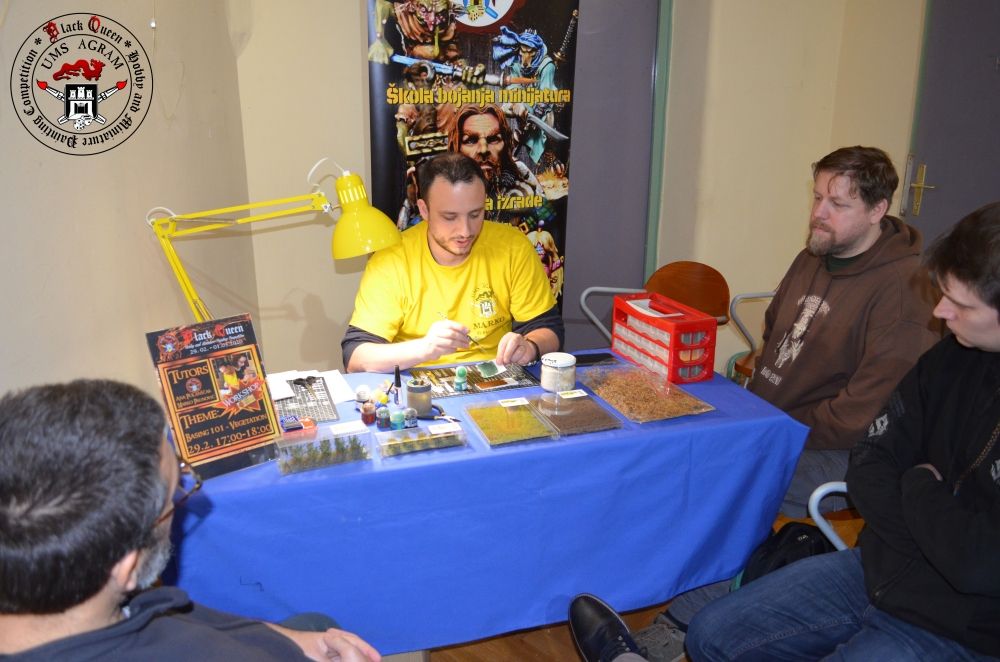
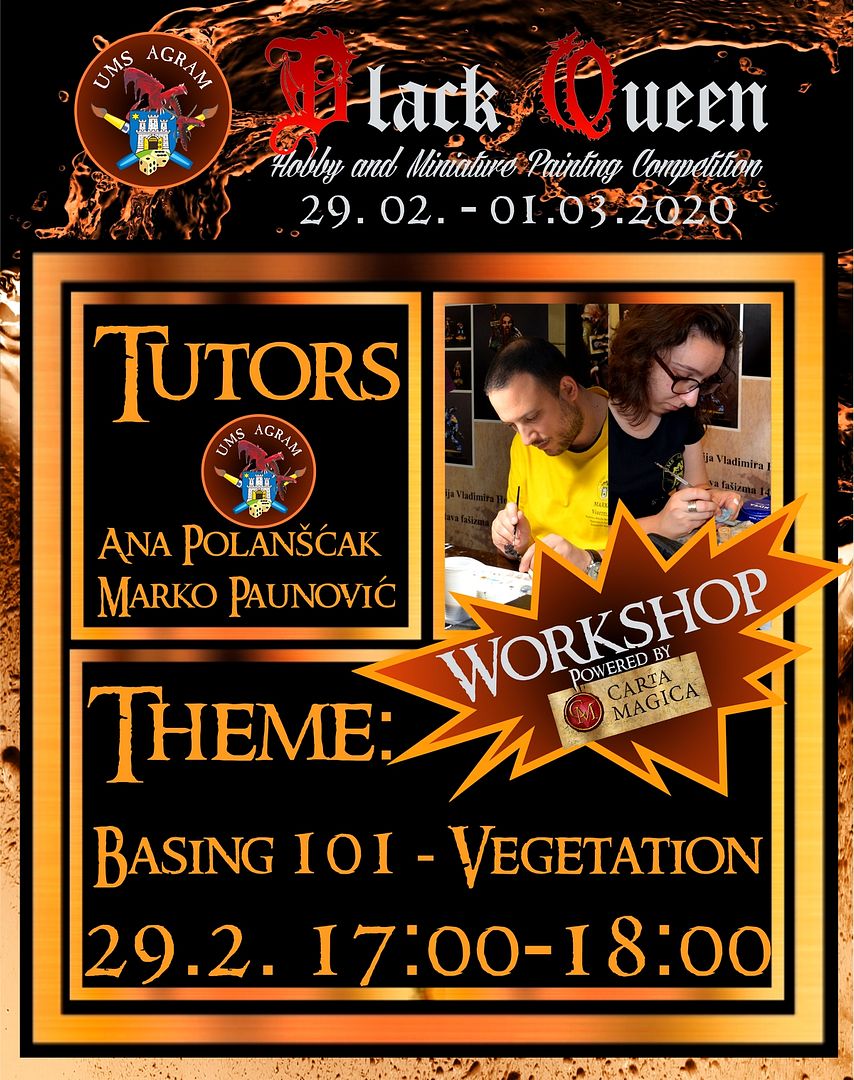
• Vegetation Workshop by Ana Polanšćak and Marko Paunović (Feb. 29 17:00-18:00h)
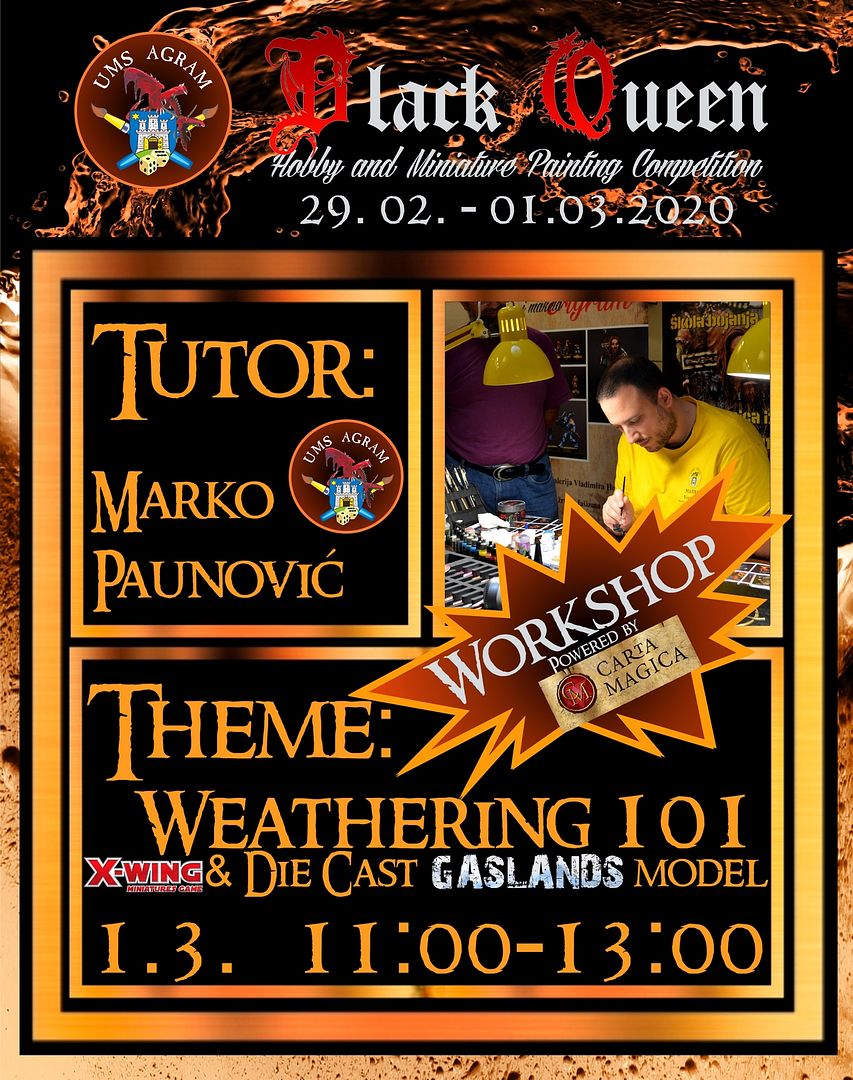
• X-Wing and Die-Cast Model Weathering Workshop by Marko Paunović (Mar. 1 11:00-13:00)
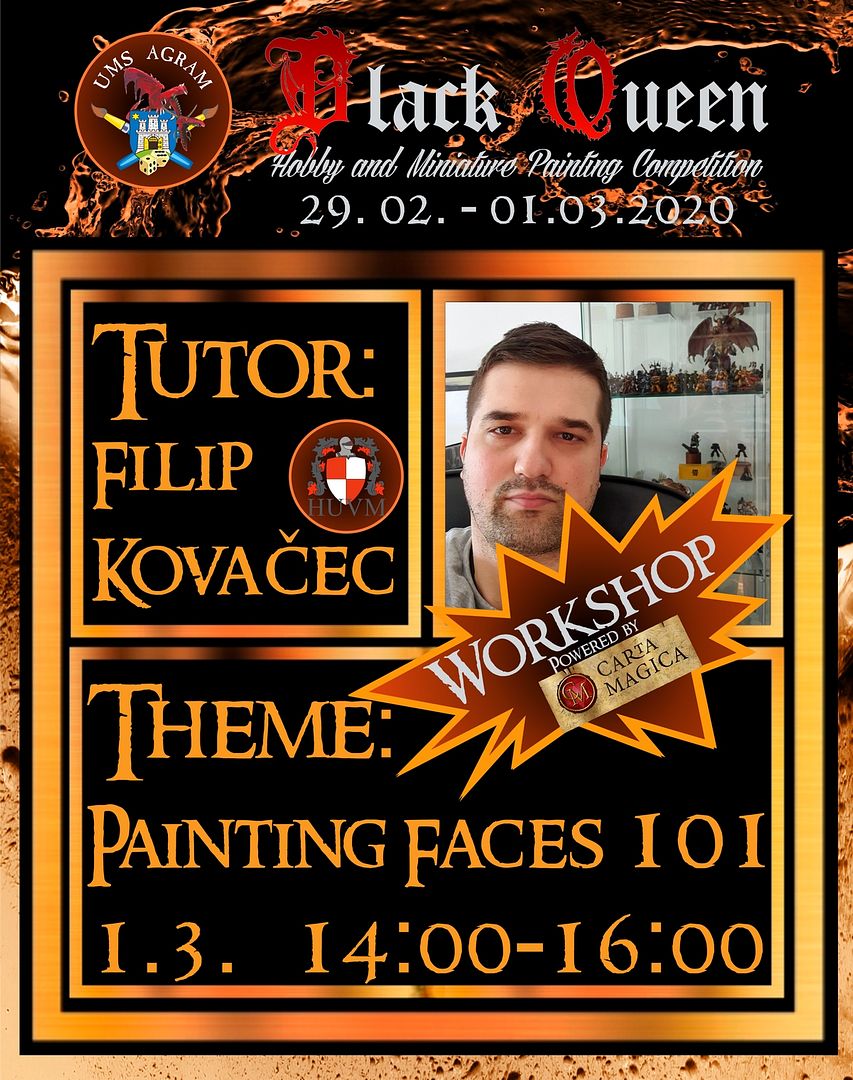
• Painting faces Workshop by Filip Kovačec (Mar. 1 14:00-16:00)
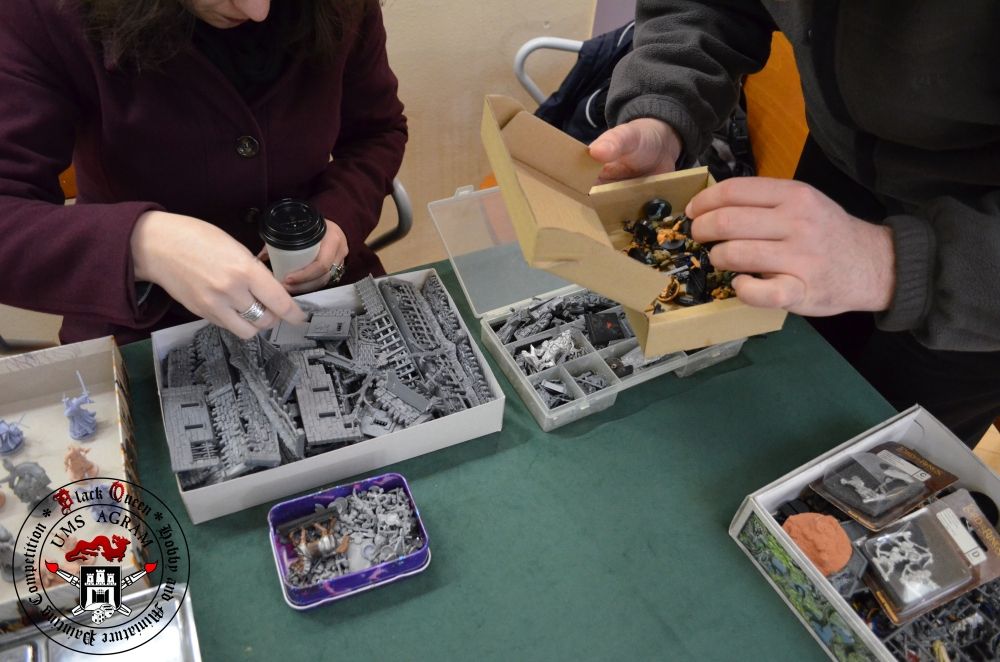
• Miniatures Fleamarket (Mar. 1 10:00-12:00h)
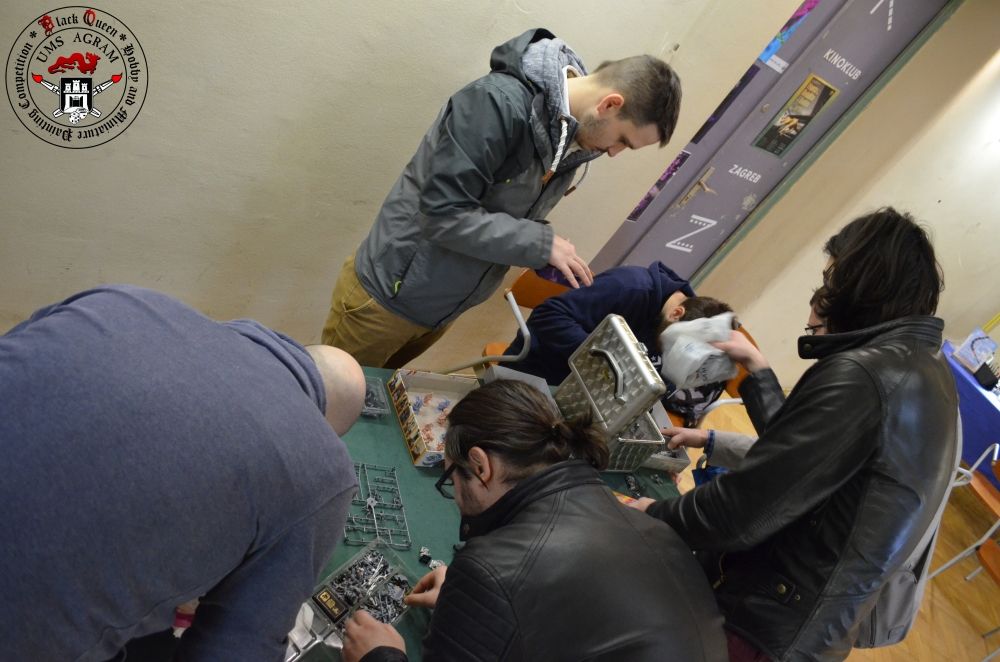
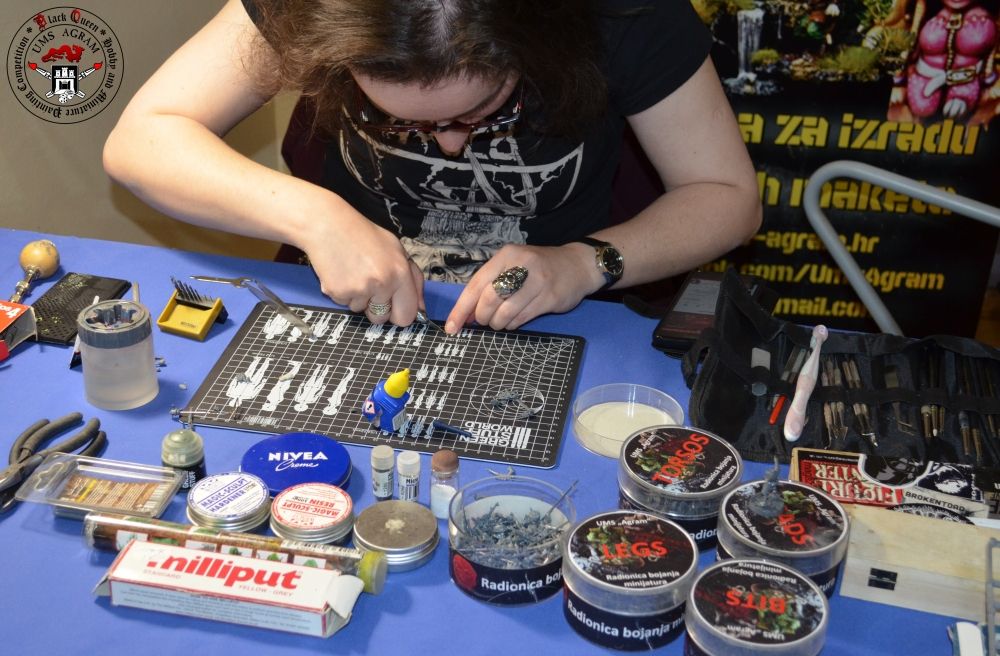
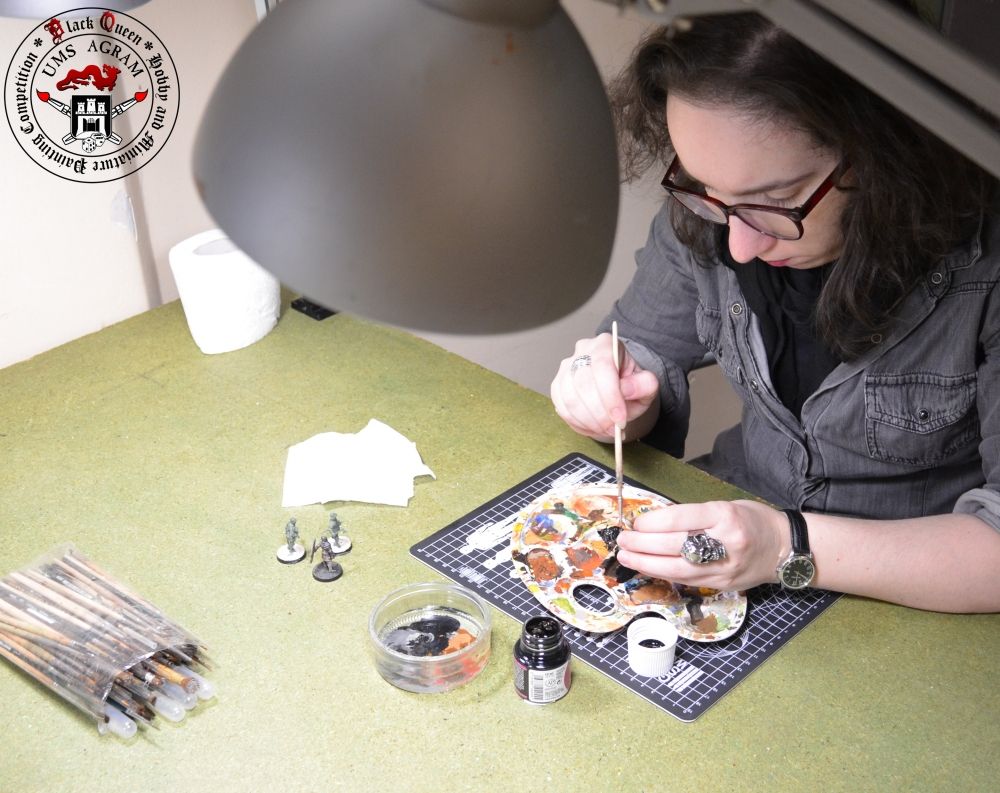
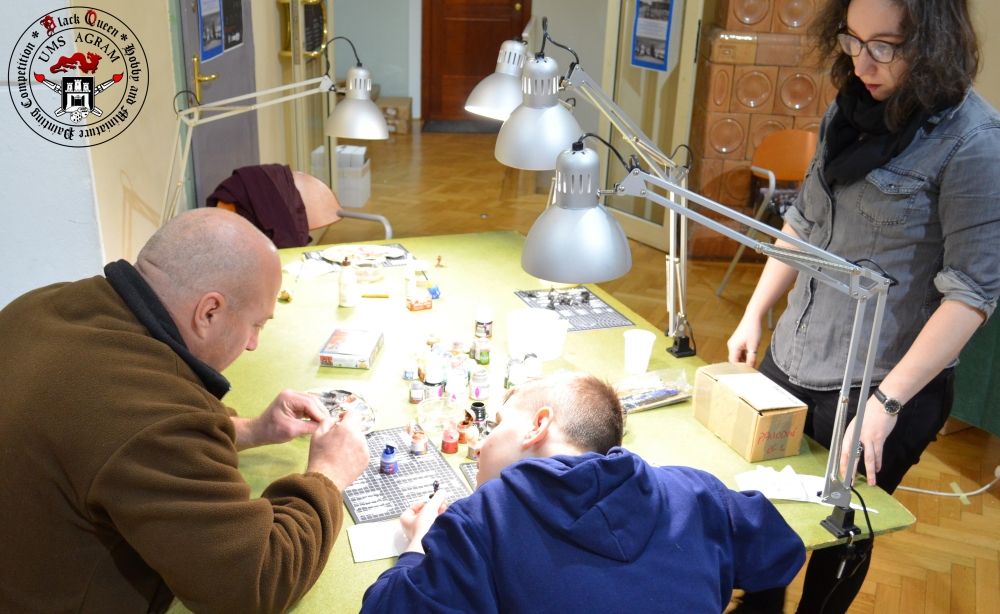
• Painting Booths (Feb. 29 12:00-18:00h and Mar. 1 10:00-16:00h)
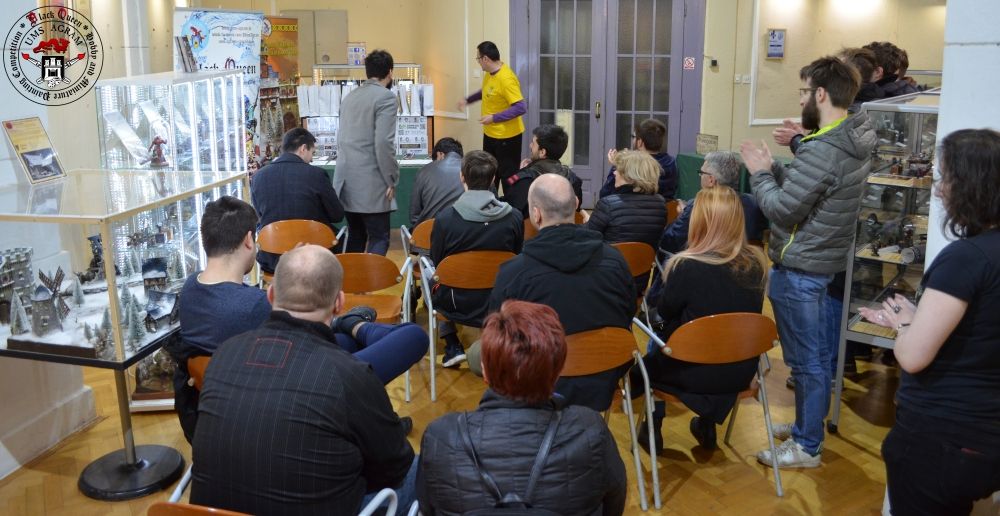
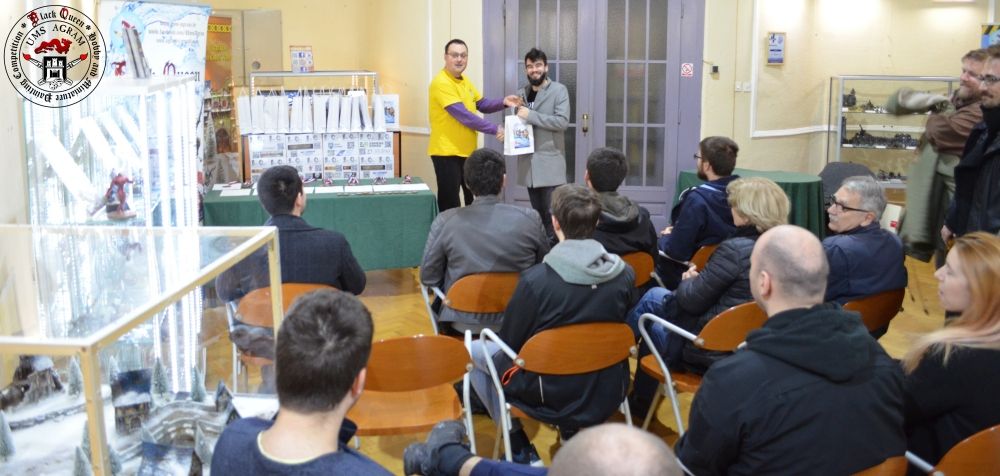
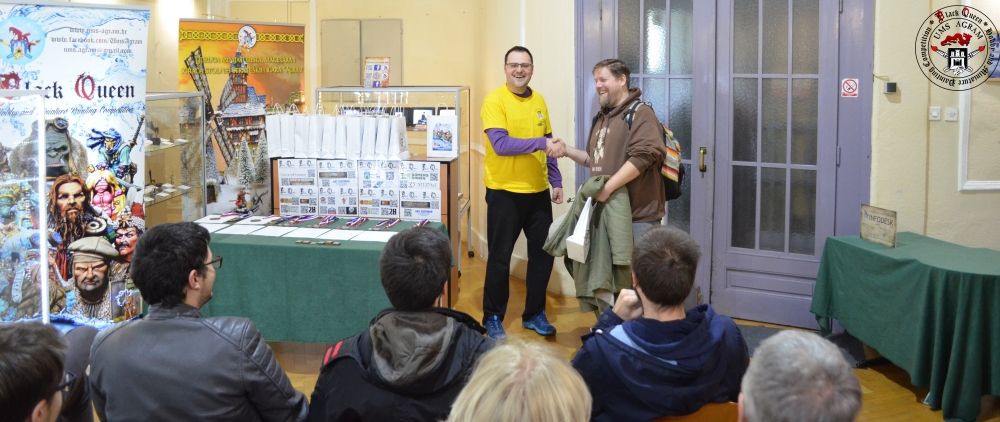
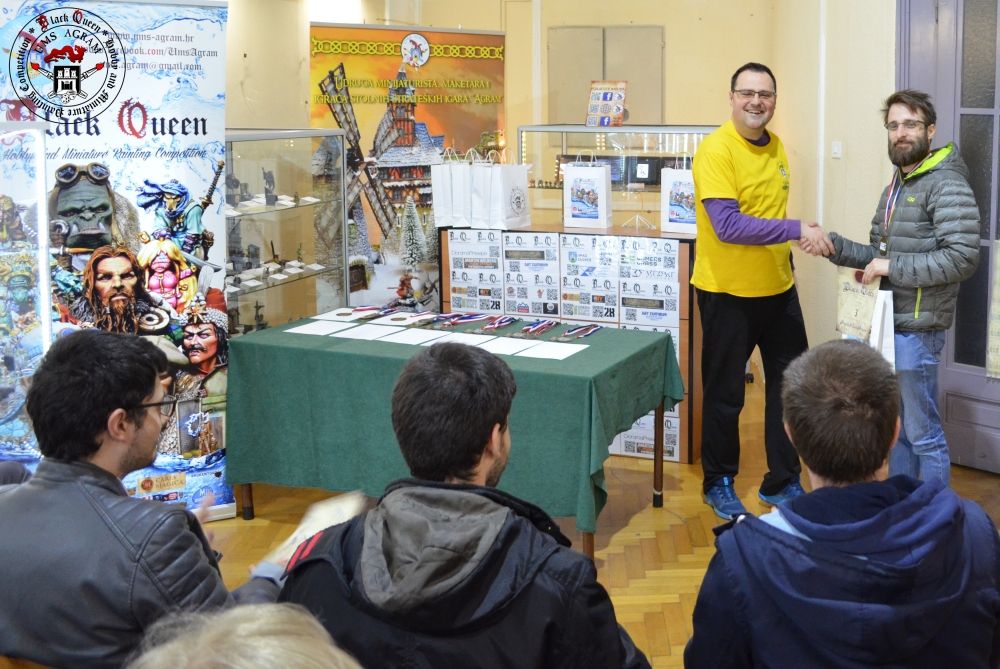
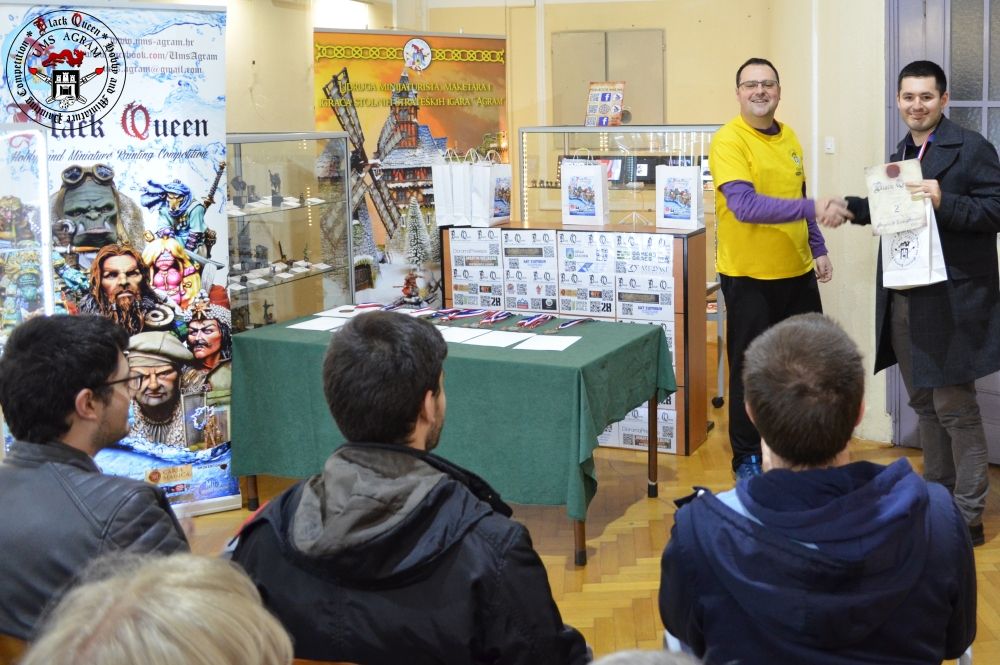
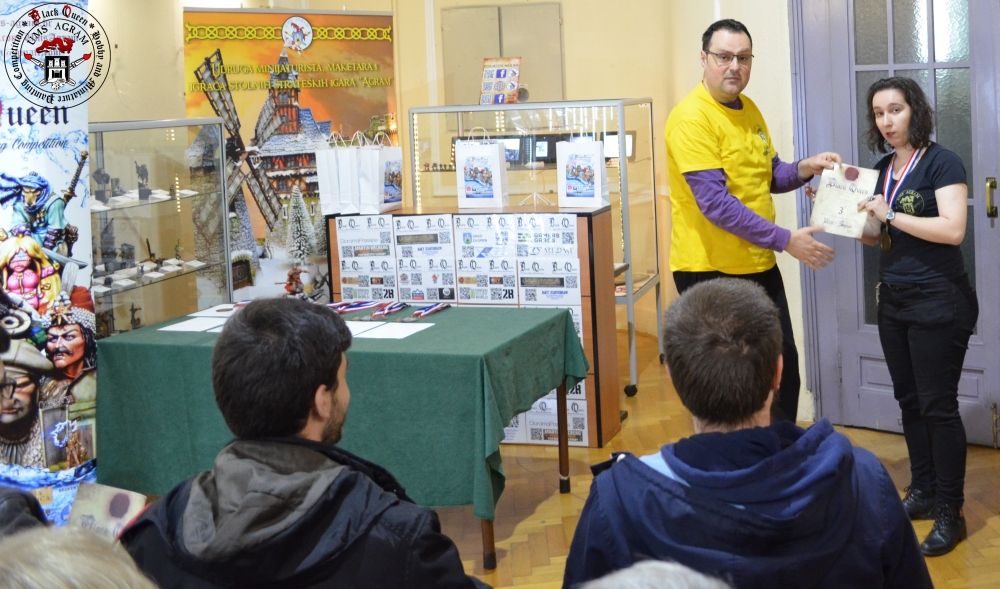
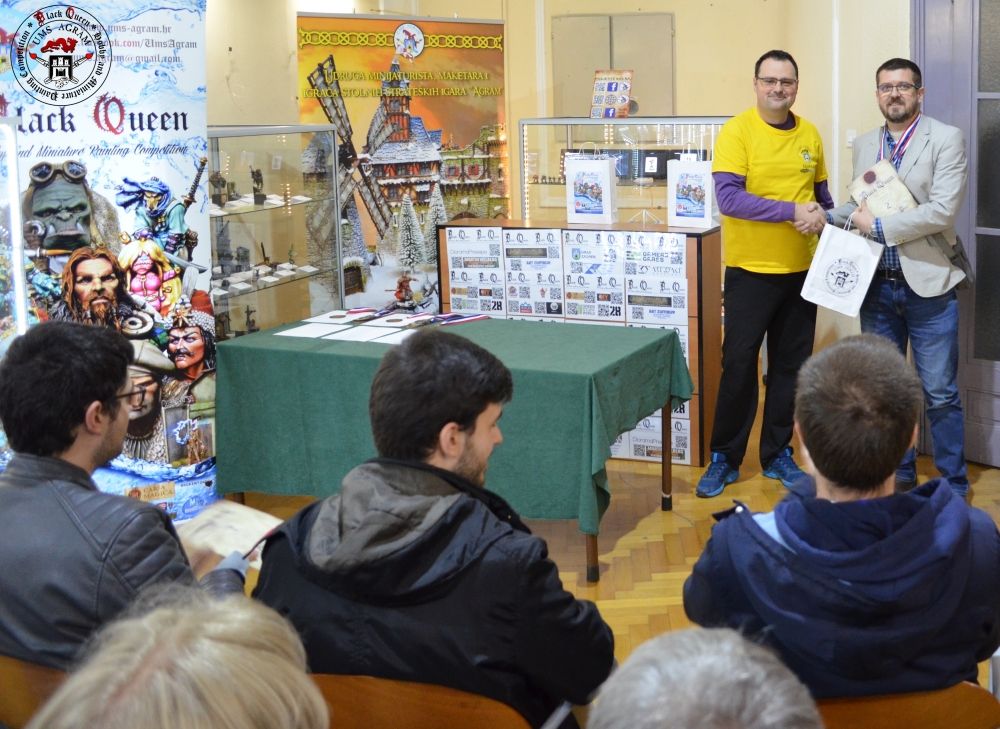
The BLACK QUEEN Hobby and Miniature Painting Competition ended on Sunday Mar. 1 at 5PM with the awards ceremony. The gallery of entries can be seen here.
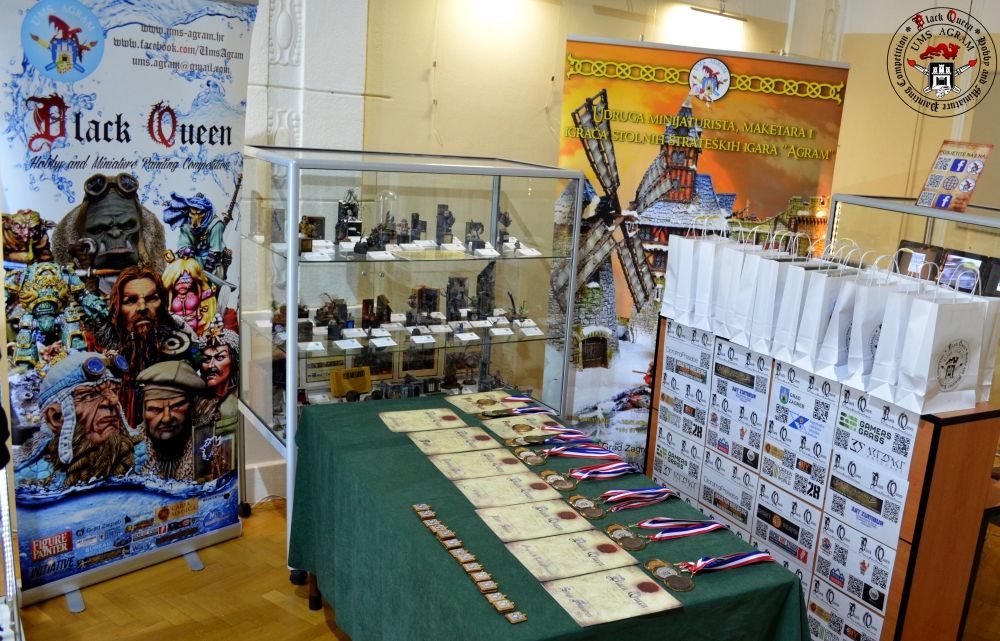
UMS Agram would like to take this opportunity and thank all the sponsors and donators of the competition: Grad Zagreb, Zagrebačka zajednica tehničke kulture, Carta Magica, Martin Wellberg Scenic Studios, Battlefield Berlin, Diorama Presepe, Green Stuff World, Gamer's Grass, DIY Connect, Triglav Models, Michael Kontraros Collectibles, Mr Lee's Minis, Scalebro, Secret Weapon Miniatures, Micro Art Studios i 28 Mag. For more info about the future UMS Agram events, look us up on social networks.
Text and photographs: Marko Paunović
Latest articles
- Painting Faces at Tabletop Level Marko Paunović, 20th May 2026
- Pigmentation principles: why do the colors look the way they do? Dunja Singer, 20th May 2026
- Painting a Floral Kimono Ivan Knezović, 5th May 2026
-
Pigmentation principles: why powdered pigment doesn't work
- • Titanium dioxide (TiO₂) — IR around 2.7 → excellent coverage, strongest white pigment
- • Zinc oxide (ZnO) — IR around 2.0 → good coverage
- • Calcium carbonate (CaCO₃) — IR around 1.59 → poor coverage, filler
- • Calcium sulfate / gypsum (CaSO₄) — IR around 1.52 → almost transparent in a binder, filler
This means that gypsum and chalk, although white as a powder, become almost transparent in the formulation of a coating or mass. They do not compete with the pigment — they are subordinate to it. That's why a small amount of pigment easily and evenly colors a gypsum or chalk-based mass, while the same amount of pigment in a mass containing TiO₂ would be barely visible.
3. Agglomeration — the enemy of even color
Pigment powders do not exist as perfectly separate particles. Due to electrostatic attractive forces and surface tension, the particles spontaneously group into clusters called agglomerates or aggregates. Agglomeration is particularly pronounced in: fine particles (the smaller the particle, the higher the surface area to volume ratio, so the attractive forces are relatively stronger) pigments with a high specific surface area, such as carbon black high temperature or humidity conditions When pigment powder is mixed with filler or binder powder, the agglomerates do not break down—they remain as compact clusters. The visual result is an uneven color: dark spots where pigment particles have accumulated, and pale areas where they are absent. The user then concludes that "more pigment is needed"—but this is not true. The problem is not a lack of pigment, but its poor distribution.
4. Dispersion — meaning properly dispersed pigment
Dispersion is the process of breaking up agglomerates and evenly distributing individual pigment particles throughout a medium (water, oil, binder). A well-dispersed pigment means that the particles are as evenly distributed as possible — each filler or binder particle "sees" the pigment, not just the neighborhood of the agglomerate. Dispersion is achieved by mechanical and chemical means:
- • Mechanical: mixing with high shear forces (mixers, mill aggregates, ultrasound). Mixing with a spoon or spatula is not sufficient to break up agglomerates.
- • Chemical: the use of dispersants and surfactants that adsorb to the surface of the particle and prevent it from re-adhering to neighboring particles.
5. Why liquid colorant works better than powdered pigment
Liquid colorants are not just pigment dissolved in water. They are ready-made systems that contain: Pigment — already dispersed to the level of individual particles or very small clusters Dispersants and surfactants — which keep the particles separated and prevent re-agglomeration Liquid medium — which allows the pigment to be evenly distributed throughout the material being colored before that material begins to set or dry When a liquid colorant is added to the mixing water (e.g. in gypsum, concrete, mortar), the pigment is already in an ideal state of dispersion. The same amount of pigment is evenly delivered to each part of the mixture. The color effect is therefore much more intense than with dry-mixed pigment — with a significantly lower total amount of pigment. The same logic applies to paints and varnishes: pigment pastes and dispersed pigments provide better coverage and color uniformity than pigments that have not undergone the dispersion process.
6. Practical application — gypsum example
Gypsum is a good example because it illustrates all the above principles at once. Because it has a low refractive index (~1.52), it is not a true white pigment — it does not resist staining when mixed with a binder. This means that a small amount of black pigment can easily and evenly color the gypsum mass. Why then does it happen to many people that they have to add a large proportion of pigment in relation to the mass of plaster? Because they mix the pigment in powder form directly into the gypsum powder. Pigment agglomerates (especially Fe₃O₄ or carbon black) remain intact, the distribution is uneven, and the result is disappointing. The conclusion "we need more" is wrong — we need better.
Correct procedure:
Add the colorant (or pigment dispersed in water) to the mixing water Mix the water with the colorant well Only then add the gypsum and mix until a homogeneous mixture This way, the pigment is distributed throughout the entire mass before the gypsum begins to set. The result is an even, intense color with a much smaller amount of pigment than with dry mixing. For those who do not have access to professional colorants, a good alternative are liquid pigment additives available in building paint stores — usually in the form of small bottles intended for tinting wall paints. It is the same principle: the pigment is already dispersed in a liquid medium with additives that prevent agglomeration. Added to the mixing water, they give a more even result than powdered pigment with a significantly smaller amount.
Conclusion
The intensity and uniformity of color in a mass depend not only on the amount of pigment — they depend on how well the pigment is dispersed. A pigment powder mixed with a powder of another material almost always gives worse results than a pigment that has been previously dispersed in a liquid medium, in the presence of dispersants. When you encounter the problem of "the pigment does not color enough," it is worth asking yourself: is the problem not in the way it was added — and not in the amount.
" ["content_hrv"]=> string(9431) "Ovaj tekst nastao je nakon druženja srijedom na kojem se razvila rasprava o pigmentaciji gipsa. Kako nisam uspjela sve objasniti na licu mjesta, odlučila sam to složiti na papir — a principi o kojima je riječ ionako vrijede šire od samog gipsa.
1. Što je pigment — i što nije
Pigment je tvar koja daje boju tako što selektivno apsorbira određene valne duljine vidljivog svjetla i reflektira ostale. Crni pigment apsorbira gotovo sve valne duljine; crveni apsorbira plavu i zelenu, a reflektira crvenu. Važno je razlikovati pigment od punila. Punila su bijele ili neutralne tvari koje se dodaju u boje, premaze i mase kako bi povećala volumen, poboljšala teksturu ili snizila cijenu — ali same po sebi ne daju snažnu boju ni dobru pokrivnost. Tipična punila su kalcijev karbonat (kreda, CaCO₃), kalcijev sulfat (gips, CaSO₄), barijev sulfat i slični materijali. Razlika između pravog pigmenta i punila nije samo u boji — leži u fizikalnom svojstvu koje se zove indeks refrakcije.
2. Indeks refrakcije i pokrivnost
Indeks refrakcije (IR) opisuje koliko se svjetlost lomi i raspršuje kada prolazi kroz neku tvar ili nailazi na njezinu površinu. Što je veći, to čestica jače raspršuje svjetlost — i time djeluje neprozirnije, "pokrivnije". Nekoliko usporednih vrijednosti:
- • Titanijev dioksid (TiO₂) — IR oko 2,7 → izvanredna pokrivnost, najjači bijeli pigment
- • Cinkov oksid (ZnO) — IR oko 2,0 → dobra pokrivnost
- • Kalcijev karbonat (CaCO₃) — IR oko 1,59 → slaba pokrivnost, punilo
- • Kalcijev sulfat / gips (CaSO₄) — IR oko 1,52 → gotovo transparentno u vezivu, punilo
Ovo znači da gips i kreda, premda su bijeli kao prah, u formulaciji premaza ili mase postaju gotovo prozirni. Ne natječu se s pigmentom — podređuju mu se. Zato mala količina pigmenta lako i ravnomjerno oboji masu na bazi gipsa ili krede, dok bi ista količina pigmenta u masi koja sadrži TiO₂ jedva bila vidljiva.
3. Aglomeracija — neprijatelj ravnomjerne boje
Pigmenti u prahu ne postoje kao savršeno odvojene čestice. Zbog elektrostatičkih privlačnih sila i površinske napetosti, čestice se spontano grupiraju u nakupine koje se zovu aglomerati ili agregati. Aglomeracija je posebno izražena kod: sitnih čestica (što je čestica manja, veći je omjer površine i volumena, pa su privlačne sile relativno jače) pigmenata visoke specifične površine, poput carbon blacka (čađe) uvjeta visokih temperatura ili vlage Kada se prah pigmenta umiješa u prah punila ili veziva, aglomerati se ne raspadaju — ostaju kao kompaktne nakupine. Vizualni rezultat je neujednačena boja: tamne mrlje tamo gdje su se nakupile čestice pigmenta, i blijeda područja tamo gdje ih nema. Korisnik tada zaključuje da "treba više pigmenta" — ali to nije točno. Problem nije nedostatak pigmenta, nego njegova loša raspodjela.
4. Disperzija — što znači pravilno dispergiran pigment
Disperzija je proces razbijanja aglomerata i ravnomjernog raspoređivanja pojedinačnih čestica pigmenta kroz medij (vodu, ulje, vezivo). Dobro dispergiran pigment znači da su čestice što ravnomjernije raspoređene — svaka čestica punila ili veziva "vidi" pigment, a ne samo susjedstvo aglomerata. Disperzija se postiže mehaničkim i kemijskim putem:
- • Mehanički: miješanje s visokim smičnim silama (mikseri, mlinski agregati, ultrazuk). Miješanje žlicom ili lopaticom nije dovoljno za razbijanje aglomerata.
- • Kemijski: upotreba dispergirnih sredstava (dispergatora) i surfaktanata koji se adsorbiraju na površinu čestice i sprječavaju njezino ponovno lijepljenje za susjedne čestice.
5. Zašto tekući kolorant radi bolje od pigmenta u prahu
Tekući koloranti nisu samo pigment otopljen u vodi. To su gotovi sustavi koji sadrže: Pigment — već dispergiran do razine pojedinačnih čestica ili vrlo malih klastera Dispergatore i surfaktante — koji drže čestice razdvojenima i sprječavaju ponovnu aglomeraciju Tekući medij — koji omogućuje da se pigment ravnomjerno rasporedi kroz materijal koji se boji još prije nego što taj materijal počne vezati ili sušiti Kada se tekući kolorant doda u vodu za miješanje (npr. kod gipsa, betona, žbuke), pigment je već u idealnom stanju disperzije. Svakom dijelu smjese ravnomjerno se isporučuje ista količina pigmenta. Efekt boje je stoga mnogo intenzivniji nego kod suho miješanog pigmenta — uz znatno manju ukupnu količinu pigmenta. Ista logika vrijedi za boje i lakove: pigmentne paste i disperzirani pigmenti daju bolju pokrivnost i ravnomjernost boje od pigmenata koji nisu prošli proces disperzije.
6. Praktična primjena — primjer gipsa
Gips je zahvalan primjer jer ilustrira sve navedene principe odjednom. Budući da ima nizak indeks refrakcije (~1,52), nije pravi bijeli pigment — u smjesi s vezivom ne pruža otpor bojanju. To znači da mala količina crnog pigmenta može lako i ravnomjerno obojiti gipsanu masu. Zašto se onda mnogima događa da moraju dodati veliki udio pigmenta u odnosu na masu gipsa? Jer pigment miješaju u obliku praha direktno u prah gipsa. Aglomerati pigmenta (posebno Fe₃O₄ ili carbon black) ostaju netaknuti, raspodjela je neujednačena, i rezultat je razočaravajući. Zaključak "treba više" je pogrešan — treba bolje.
Ispravni postupak:
Kolorant (ili pigment dispergiran u vodi) dodati u vodu za miješanje Dobro promiješati vodu s kolorantom Tek tada dodati gips i miješati do homogene smjese Na taj način pigment bude raspoređen kroz cijelu masu još prije nego gips počne vezati. Rezultat je ravnomjerna, intenzivna boja uz višestruko manju količinu pigmenta nego pri suhom miješanju. Za one koji nemaju pristup profesionalnim kolorantima, dobra alternativa su tekući pigmentni dodaci dostupni u trgovinama građevinskih boja — najčešće u obliku malih bočica namijenjenih nijansiranju zidnih boja. Radi se o istom principu: pigment je već dispergiran u tekućem mediju s aditivima koji sprječavaju aglomeraciju. Dodani u vodu za miješanje, daju ravnomjerniji rezultat od pigmenta u prahu uz znatno manju količinu.
Zaključak
Intenzitet i ravnomjernost boje u nekoj masi ne ovise samo o količini pigmenta — ovise o tome koliko je taj pigment dobro dispergiran. Prah pigmenta miješan u prah drugog materijala gotovo uvijek daje lošije rezultate od pigmenta koji je prethodno dispergiran u tekućem mediju, uz prisustvo dispergirnih sredstava. Kada se susretnete s problemom "pigment ne boji dovoljno", vrijedi si postaviti pitanje: nije li problem u načinu na koji je dodan — a ne u količini.
" ["created"]=> string(19) "2026-05-04 12:54:47" ["modified"]=> string(19) "2026-05-04 20:10:17" } ["Member"]=> array(10) { ["id"]=> string(3) "108" ["group_id"]=> string(1) "2" ["first_name"]=> string(5) "Dunja" ["last_name"]=> string(6) "Singer" ["first_name_mask"]=> string(5) "dunja" ["last_name_mask"]=> string(6) "singer" ["username"]=> string(5) "Dunja" ["password"]=> string(40) "772414a5d6b32309f32f46e9009f1e550809c62d" ["born"]=> string(19) "2006-01-01 00:00:00" ["created"]=> NULL } } Dunja Singer, 4th May 2026 - We visited: Warhammer World – pt.3 Ivan Vedak, 4th May 2026
Latest battle-reports
- Kill Team - Blooded vs. Vespid Stingwings 28th February 2025, GW - Warhammer 40.000, and Antoni Pastuović (Imperial Guard)
- 22nd April 2022, GW - Warhammer 40.000, Borna Pleše (Space Marines) and Kristijan Kliska (Tau Empire)
- 17th November 2021, GW - Warhammer 40.000, and Nino Marasović (Space Marines)