Articles
Lizardmen Sauropod – part 1
Mario Grgurev, 19th October 2026While printing a sauropod model—which I intended to use for a kitbash of a Lizardmen Bastiladon—one of the printed torsos ended up with defects in the legs. Around the same time, I was playing Pokémon Crystal; having fallen in love with some of the concepts in that game, I decided to merge the two worlds into one.
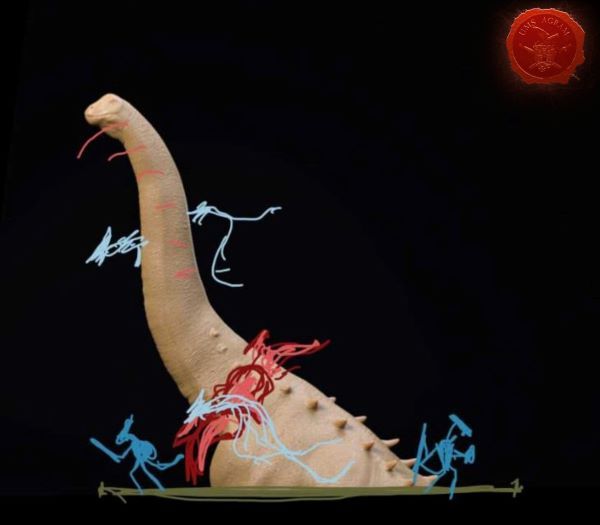
Taking the Pokémon Meganium as a starting concept, I wanted to create a dinosaur on a large base emerging from a lake, surrounded by skinks that are grooming it.
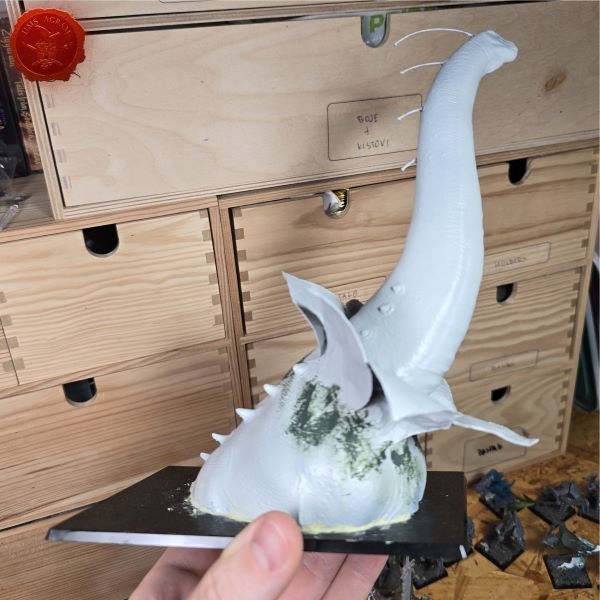
To achieve this, I decided to cut off the lower part of the torso—excluding the legs—position the model so it "lies" on the base, place a couple of Skinks around it, and pour resin over the base to create the effect of lake water.
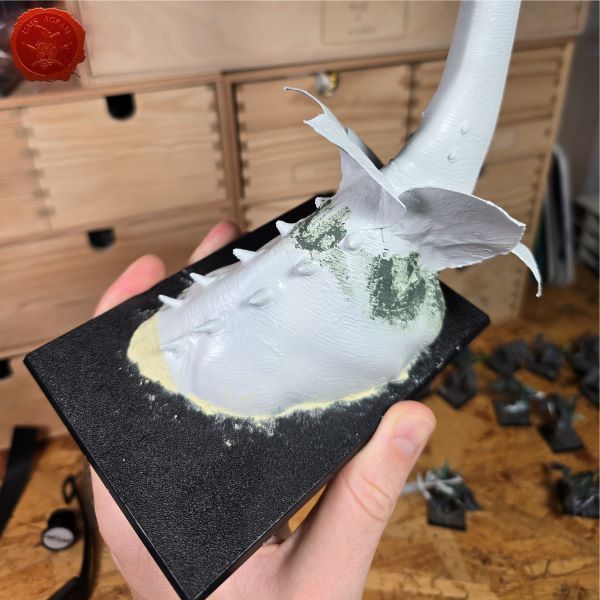
The first step was to create flower petals around the dinosaur's neck. I used slightly thicker paper, cut into the shape of petals. Afterward, I glued them together with super glue to form a flower shape. I coated each petal with wood glue—applying abo...
Read more about "Lizardmen Sauropod – part 1"Agram Group Build #7 – Amon Hen, pt.5
Krunoslav Belinić, 15th October 2026Agram Group Build is back. For this seventh installment, the team decided to create a gaming board/diorama for Amon Hen. To that end, we fulfilled a childhood dream and acquired the original Forge World Amon Hen terrain (released around 2000) along with the accompanying set of miniatures. This series of articles will document the entire project—from crafting the terrain to assembling and painting the miniatures.
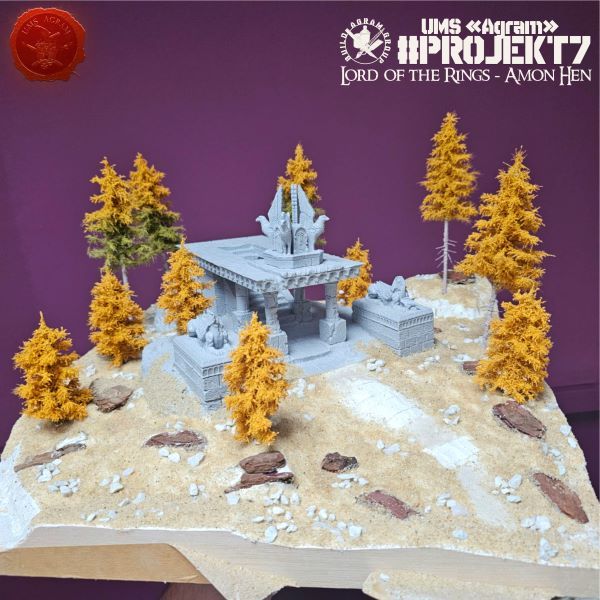
The plan last time was to also build a balsa wood frame, but unfortunately, the balsa got misplaced during the move following the renovation of the space, so we had to postpone it. Now, it’s time to get it done.
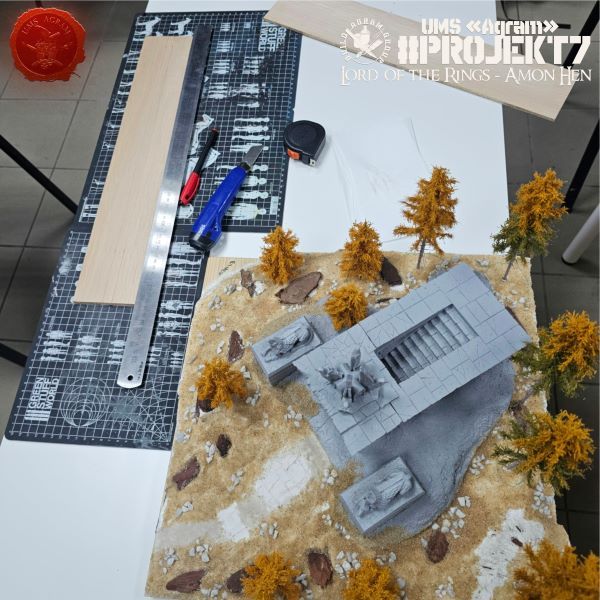
We cut the balsa wood into four 50 cm pieces. Afterward, we measured the highest points of each side, marked the balsa accordingly, and cut it to the desired dimensions.
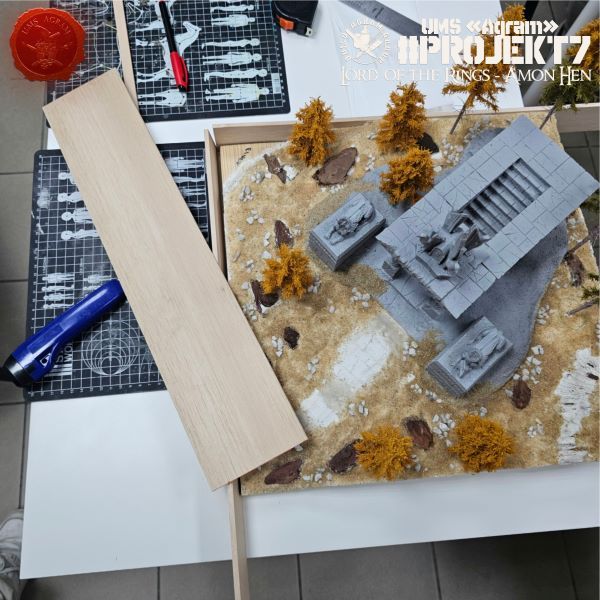
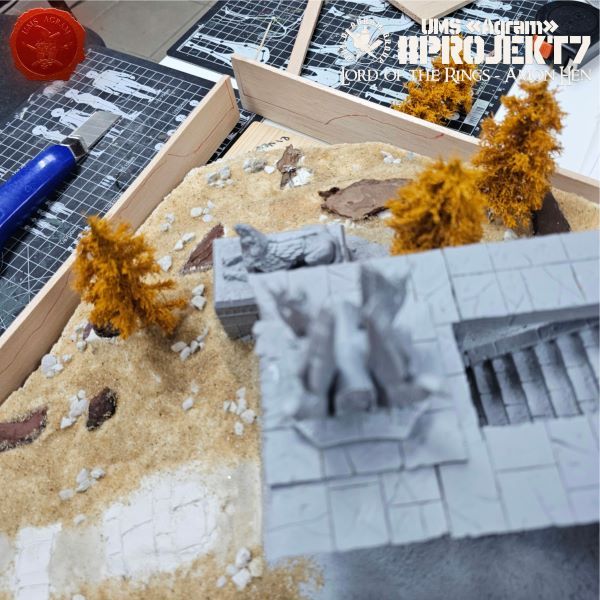
Then we traced the relief onto the balsa frame and carefully cut it out.
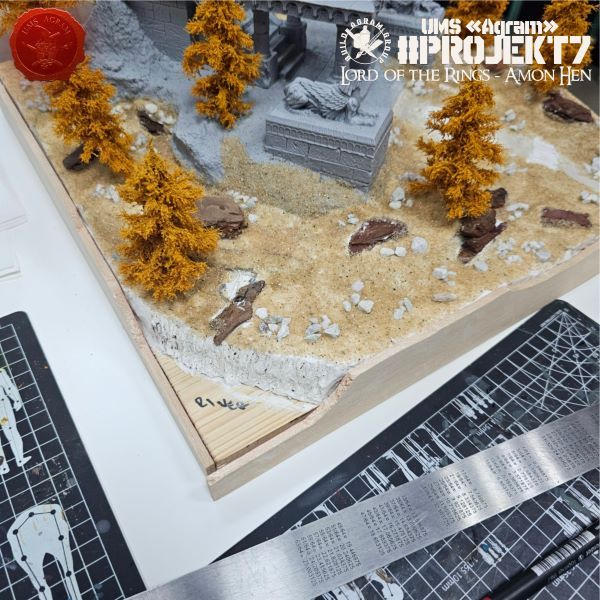
The final step was cutting each corner at a 45-degree angle to create a ...
Read more about "Agram Group Build #7 – Amon Hen, pt.5"Agram Group Build #7 – Amon Hen, pt.4
Marko Paunović, 8th October 2026Agram Group Build is back. For this seventh installment, the team decided to create a gaming board/diorama for Amon Hen. To that end, we fulfilled a childhood dream and acquired the original Forge World Amon Hen terrain (released around 2000) along with the accompanying set of miniatures. This series of articles will document the entire project—from crafting the terrain to assembling and painting the miniatures.
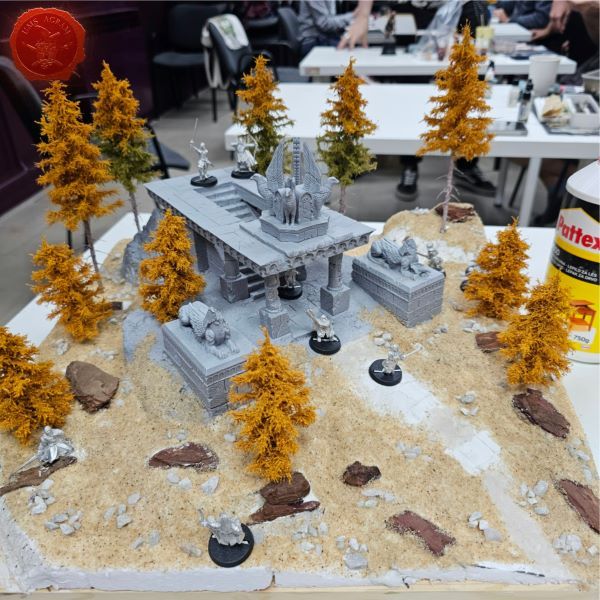
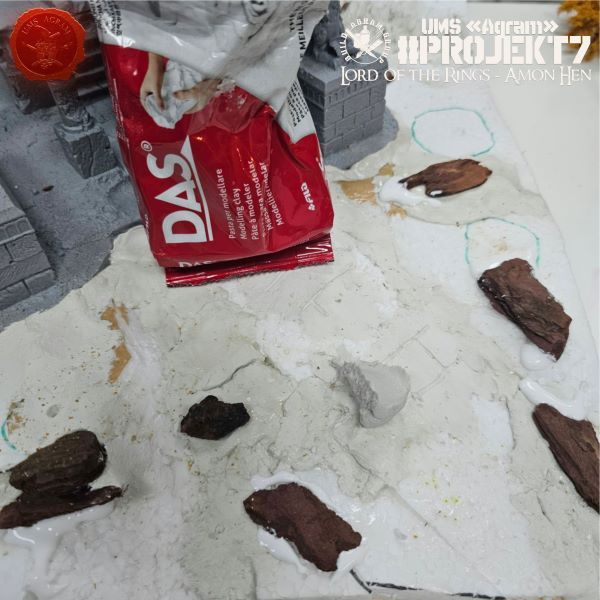
After inspecting the now-dry terrain base, we realized that a few slopes needed to be added and some gaps filled in. Therefore, we repeated the process of applying DAS modeling clay over the PVA glue coating.
The next step was adding texture. We opted for three different grain sizes of sand and gravel. You can find all these varieties at pet stores. The finest grade is for chinchillas, while the coarsest gravel is actually intended for aquariums.
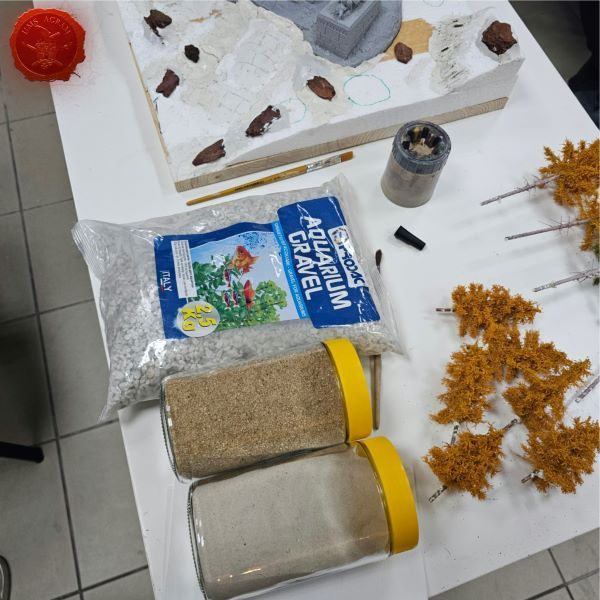
Applying the texture was actually very simple. We coated part of the base with PVA glue (sligh...
Read more about "Agram Group Build #7 – Amon Hen, pt.4"Agram Group Build #7 – Amon Hen, pt.3
Krunoslav Belinić, 1nd October 2026Agram Group Build is back. For this seventh installment, the team decided to create a gaming board/diorama for Amon Hen. To that end, we fulfilled a childhood dream and acquired the original Forge World Amon Hen terrain (released around 2000) along with the accompanying set of miniatures. This series of articles will document the entire project—from crafting the terrain to assembling and painting the miniatures.

Last time, we created and attached large volumes to the base and roughed out the terrain contours. To prevent the Styrofoam from warping while the PVA glue dried, we had secured it to the wooden base with masking tape. Therefore, the first task was to remove the excess masking tape.

Then, using PVA glue and DAS modeling clay, we created gradual transitions and built up slopes on the "steps" made of Styrofoam.

Next, we added stone structures using tree bark. At the same time, we utilized the texture of the bark, pressing it into the DAS cla...
Read more about "Agram Group Build #7 – Amon Hen, pt.3"Agram Group Build #7 – Amon Hen, pt.2
Marko Paunović, 24th September 2026Agram Group Build is back. For this seventh installment, the team decided to create a gaming board/diorama for Amon Hen. To that end, we fulfilled a childhood dream and acquired the original Forge World Amon Hen terrain (released around 2000) along with the accompanying set of miniatures. This series of articles will document the entire project—from crafting the terrain to assembling and painting the miniatures.
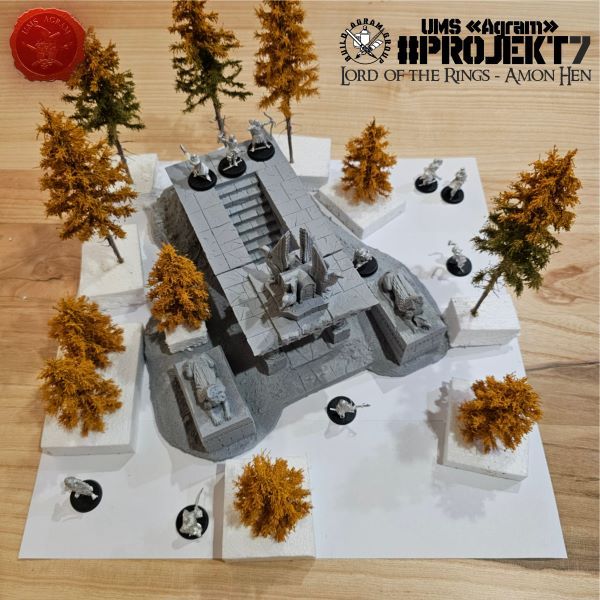
After cutting the board in the previous article, it was time to create the terrain. We decided to achieve the necessary height—or volume—by using Styrofoam. The choice of material was dictated by the availability of Styrofoam; had we possessed that amount of extruded polystyrene (XPS) foam, we certainly would have chosen it due to its ease of shaping. We arranged the Styrofoam sheets to cover the entire surface of the board, gluing them down with PVA glue and reinforcing the joints with masking tape. Next, we placed the assembled Amon Hen model in position and ...
Read more about "Agram Group Build #7 – Amon Hen, pt.2"Signs for your plinths
Marko Paunović, 24th September 2026This article will cover creating nameplates for your display figure bases. I have been considering the option of printed nameplates for quite some time, and these are the results I achieved after a bit of effort and research.
The 3D engraved nameplates I usually use are quite expensive (around €10 apiece) and require preparation, ordering from an engraving studio, and waiting for the work to be completed. Consequently, my practice has been to place only one or two orders a year, mostly before our "Black Queen" event. Another major drawback is that these nameplates are made of plastic and cannot be bent, which automatically rules out round plinths.

After a bit of research, the results showed that miniaturists quite often use printed paper signs. What I saw in person was that these signs are very glossy, and online research revealed that they are printed on photo paper. So, I decided to try it out myself. First, I created the design for the sign.

Before lo...
Read more about "Signs for your plinths "Latest battle-reports
- Kill Team - Blooded vs. Vespid Stingwings 28th February 2025, GW - Warhammer 40.000, and Antoni Pastuović (Imperial Guard)
- 22nd April 2022, GW - Warhammer 40.000, Borna Pleše (Space Marines) and Kristijan Kliska (Tau Empire)
- 17th November 2021, GW - Warhammer 40.000, and Nino Marasović (Space Marines)