The Bust Saga (part 4)
Goran Krunić, 2nd May 2021
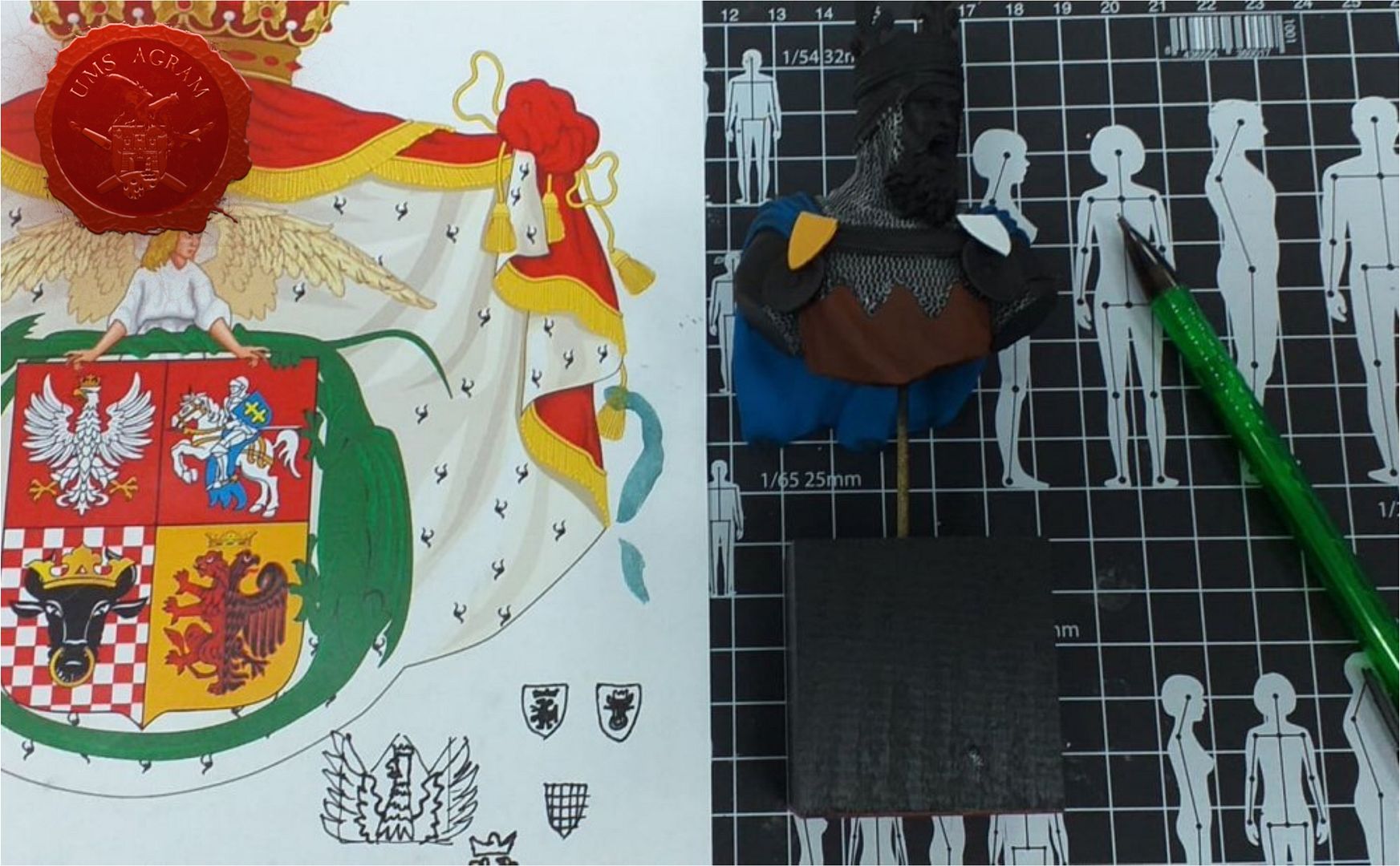
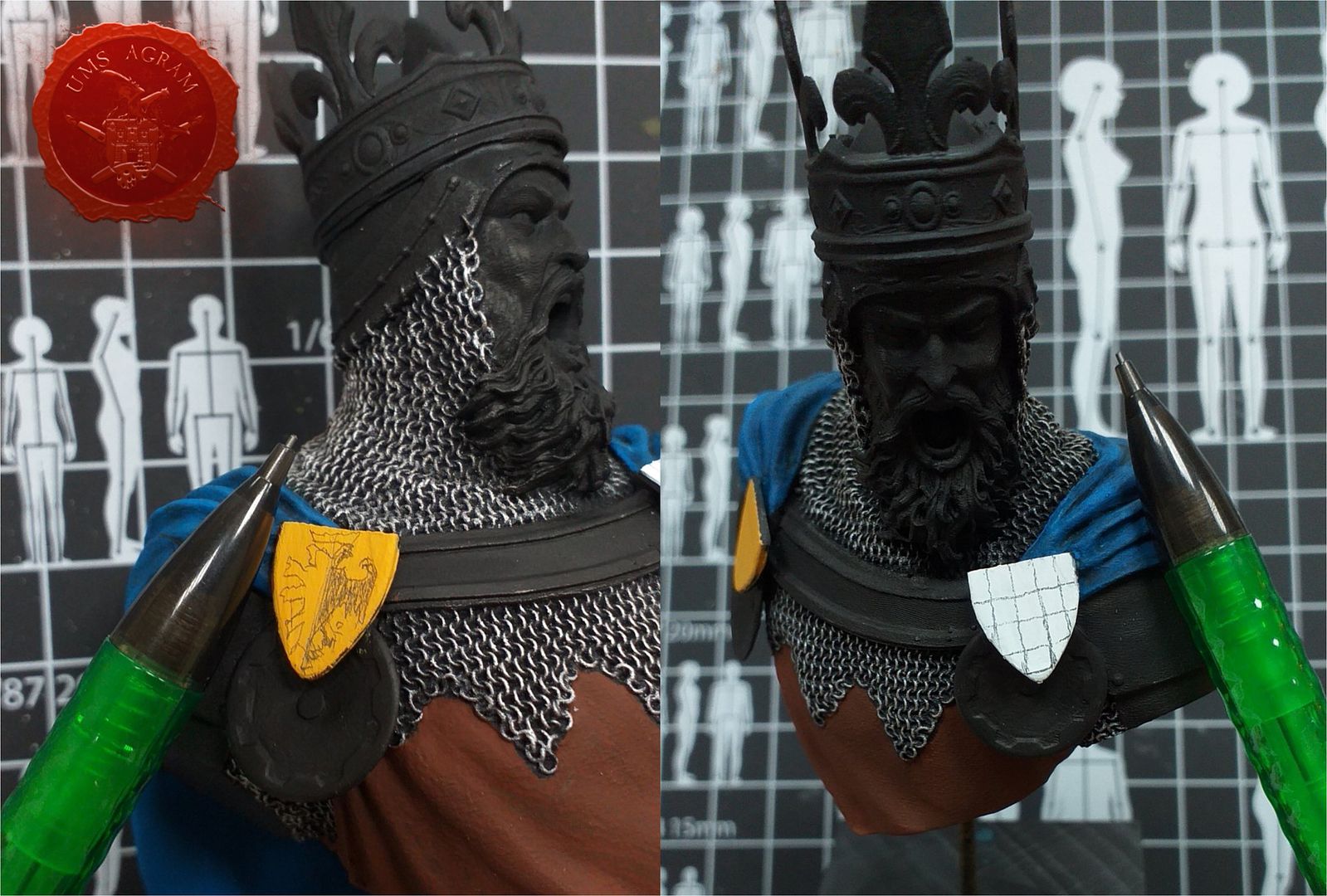
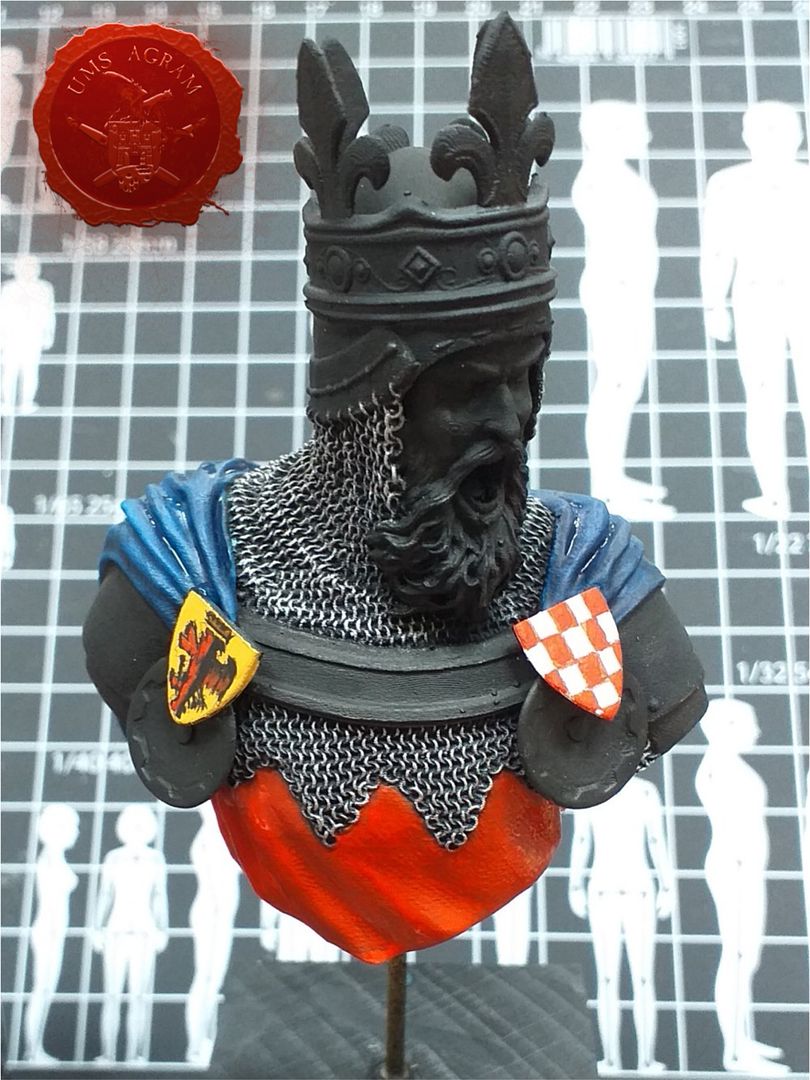
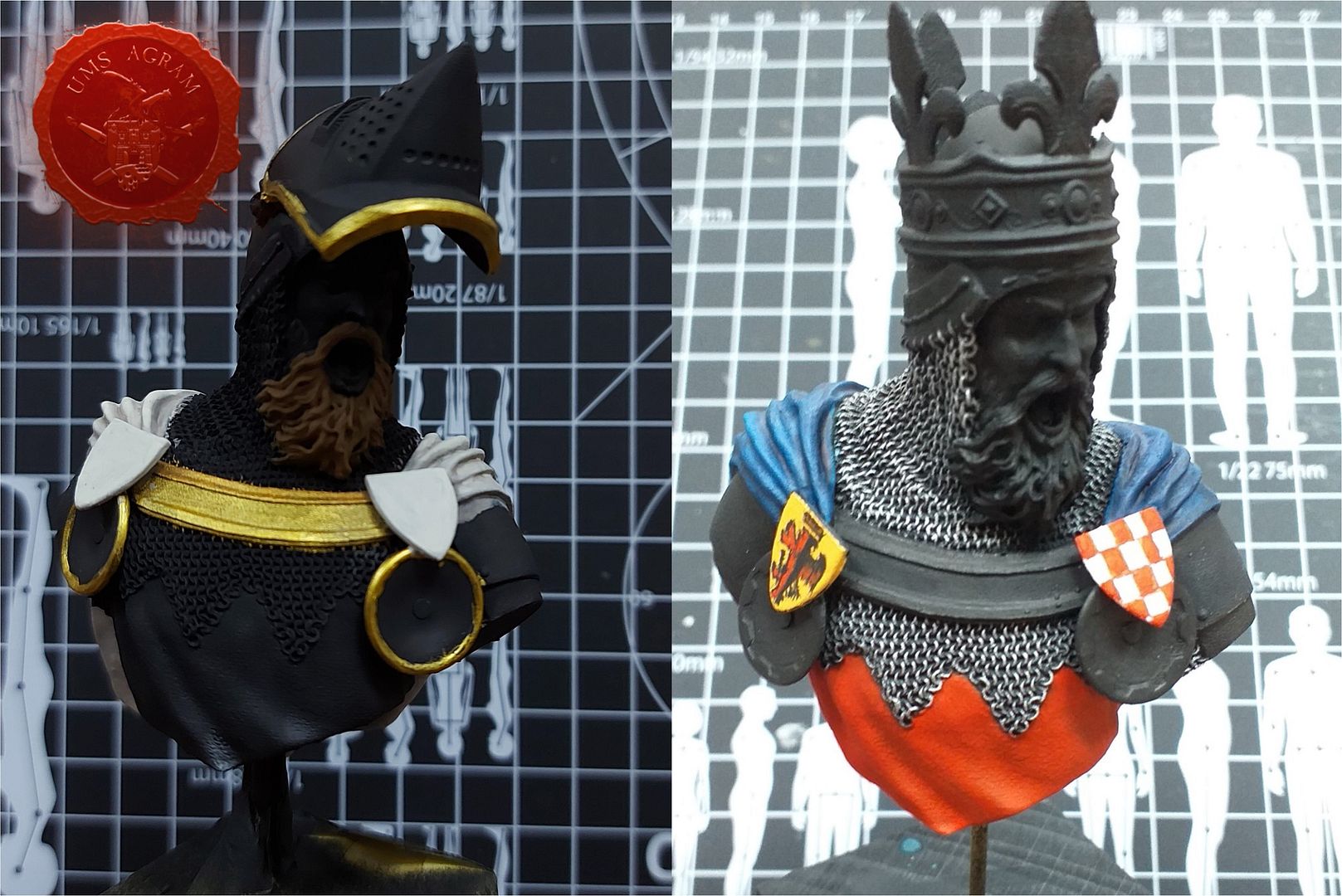
MARKO: What I forgot last time, this time I stol… borrowed and brought with me to the Hobby Corner on Wednesdays. A technical pencil. I lightly sketched on both shields the elements (a checkered plate on one plus a half lion half a bird on the other). After being relatively pleased with the look, I set out to apply the base paints. Then I added a couple of highlights to the design. This is enough for this phase since I plan to add light weathering towards the end of the painting.
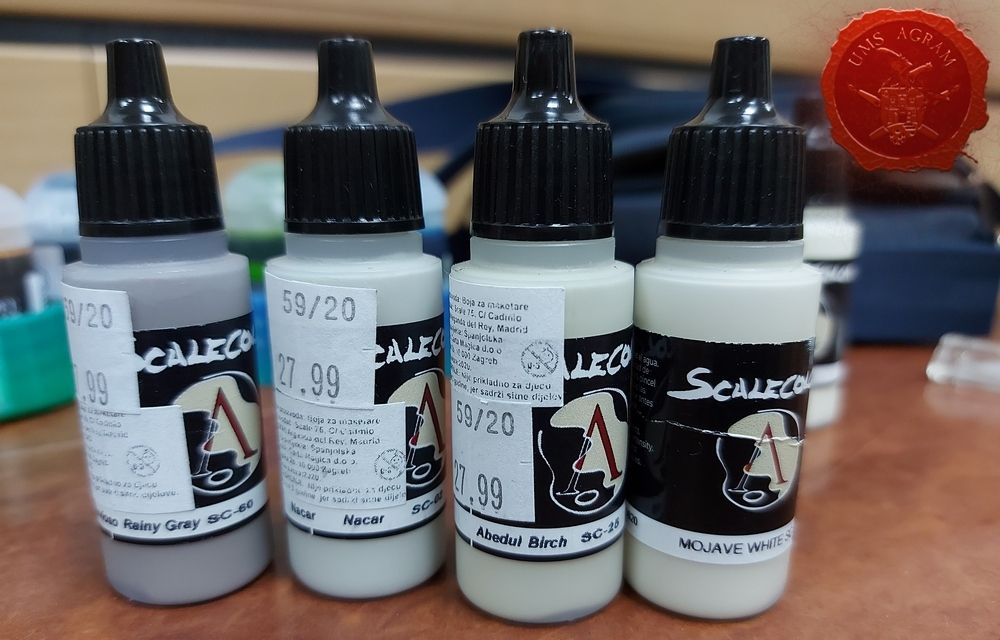
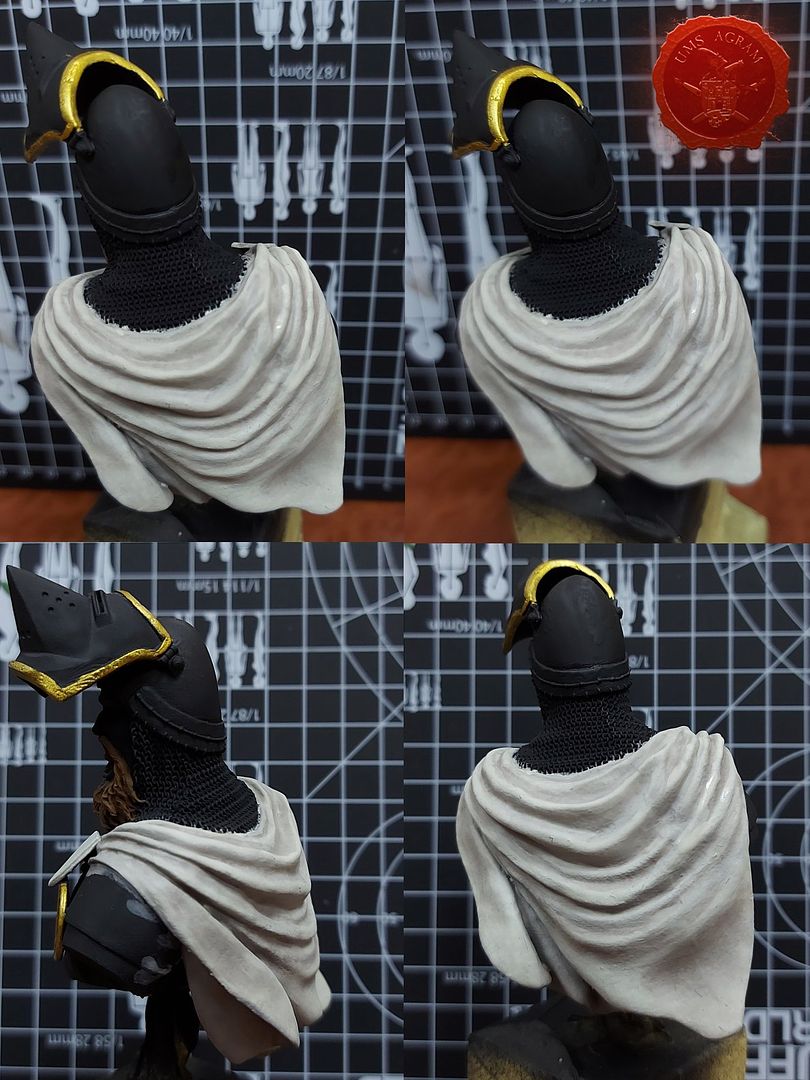
GORAN: This time I continued to work on the cloak, with the same color palette as last time. The colors used are Scale75: Rainy Gray, Nacar, Birch and Mojave White. Here it is important to note that I used a fairly diluted paint, which is also called glazing. I think I could work with an even thinner color and be more patient, but even this is more than good for my skill level.
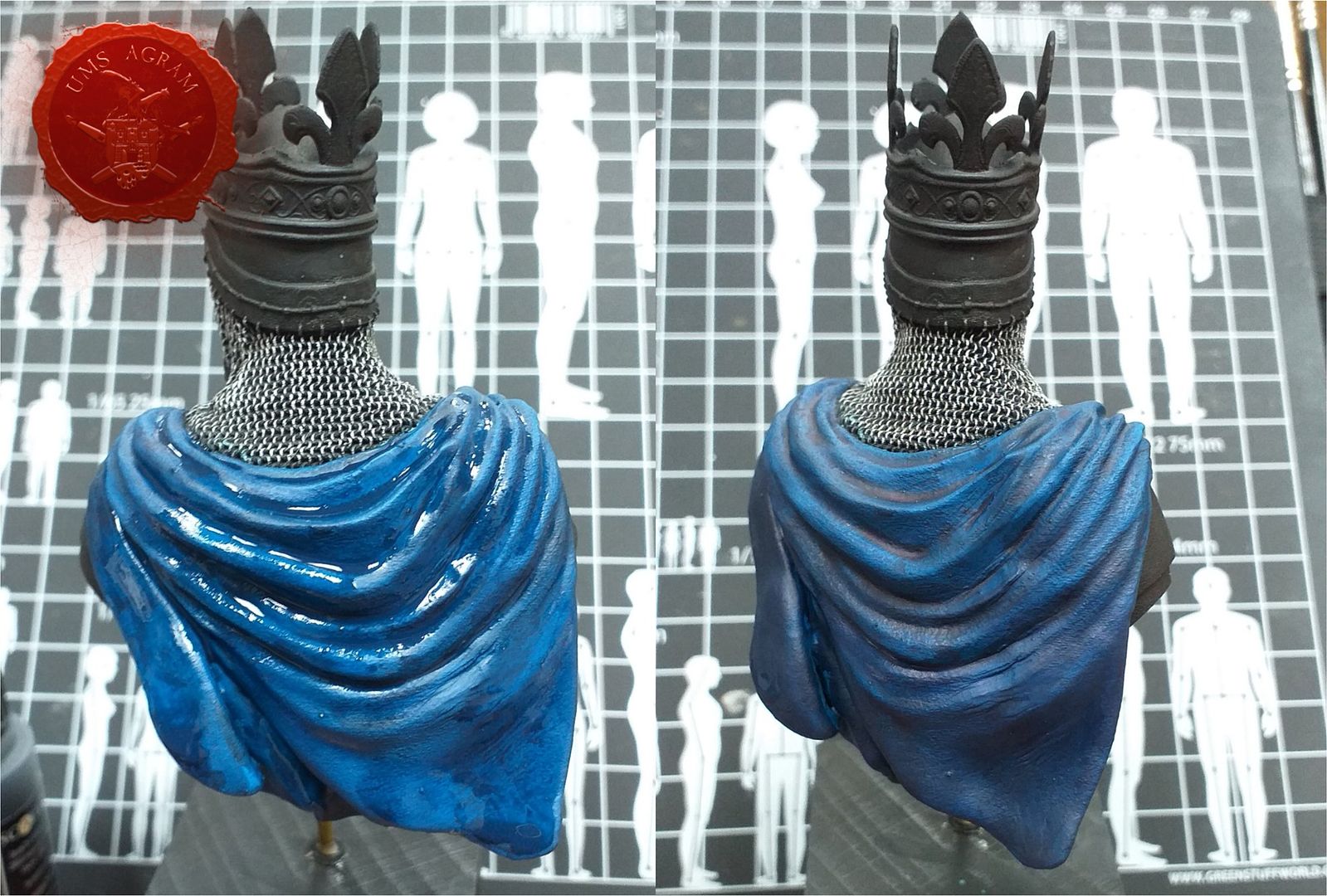
MARKO: Then I set out to work on the cloak. If you remember, last time there were white stains from washing. This time I managed to cover those and add a few more layers of shadows ... As the cloak goes towards the shoulders, so the color becomes lighter. At least that's the idea.
GORAN: Then I set out to lighten the shields on the shoulders and even out the layers of a lighter color, with pure Nacar. I also further evened out the layers and thickness of the lighter colors on the shields on the shoulders, also using Mojave White.
MARKO: For the end, I painted the fabric on the bust’s chest in a base red color. After I paint every layer on the gown, only then will I add the white eagle.
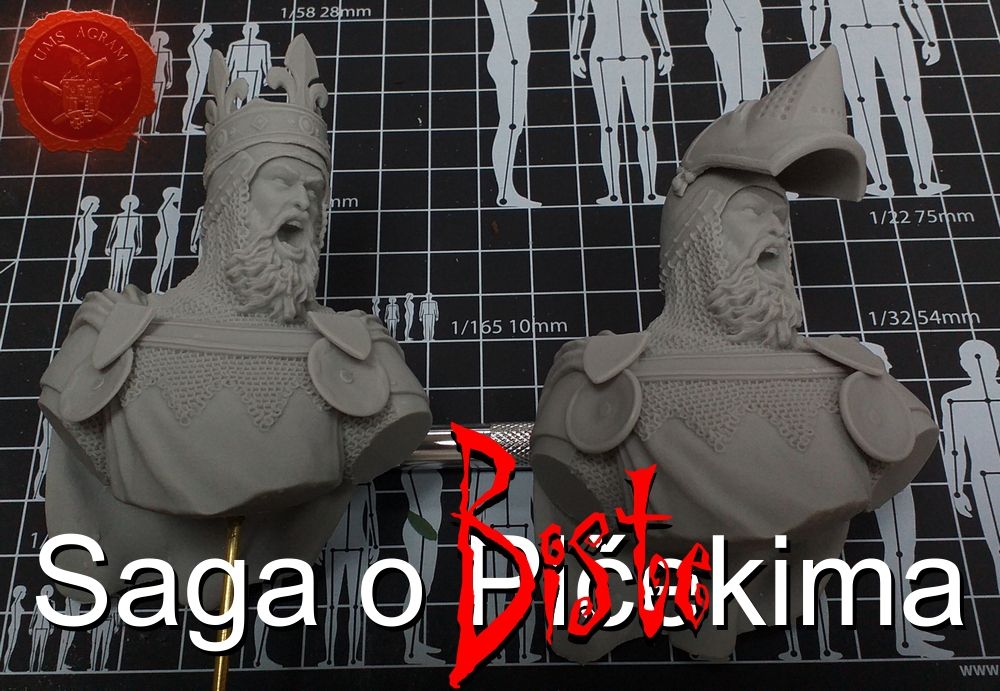
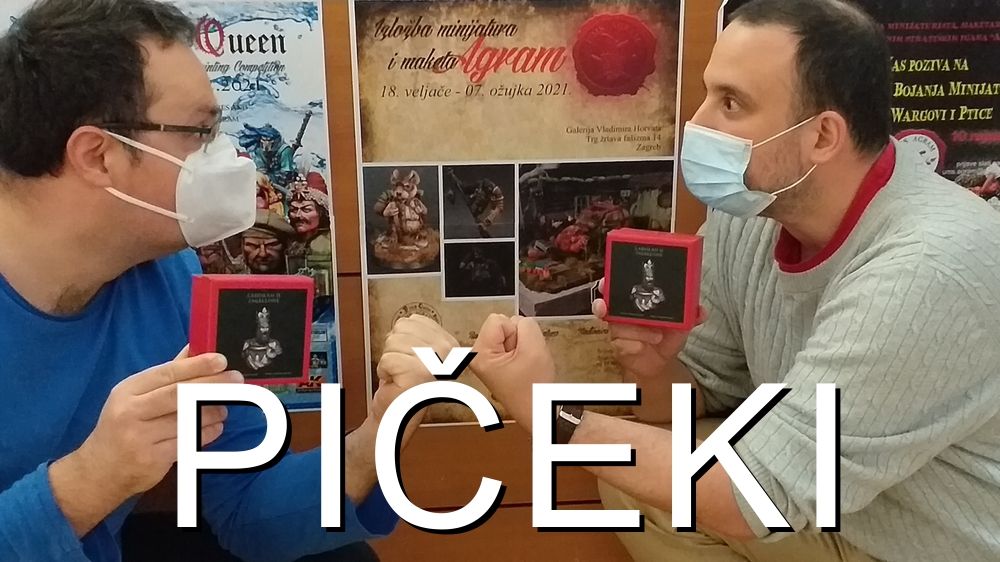
If you are a bit older and from Zagreb, you probably remember Saga o Pičekima? If not, the joke will elude you. Well, hopefully beside the Croatian pun, you will like the rest of this saga. Goran and Marko will take you on a miniature painting journey while they build and paint one and the same bust for their Admin Challenge. Why call it a saga? Because everyone who knows them knows this will take a while to finish.... They chose a bust by Crecy Models that comes in two options – as King Ladislav Jagellone and as Grand Master of Teutonic Order Ulrich von Jungingen. Goran and Marko will do different versions...
MARKO: What I forgot last time, this time I stol… borrowed and brought with me to the Hobby Corner on Wednesdays. A technical pencil. I lightly sketched on both shields the elements (a checkered plate on one plus a half lion half a bird on the other). After being relatively pleased with the look, I set out to apply the base paints. Then I added a couple of highlights to the design. This is enough for this phase since I plan to add light weathering towards the end of the painting.

GORAN: This time I continued to work on the cloak, with the same color palette as last time. The colors used are Scale75: Rainy Gray, Nacar, Birch and Mojave White. Here it is important to note that I used a fairly diluted paint, which is also called glazing. I think I could work with an even thinner color and be more patient, but even this is more than good for my skill level.
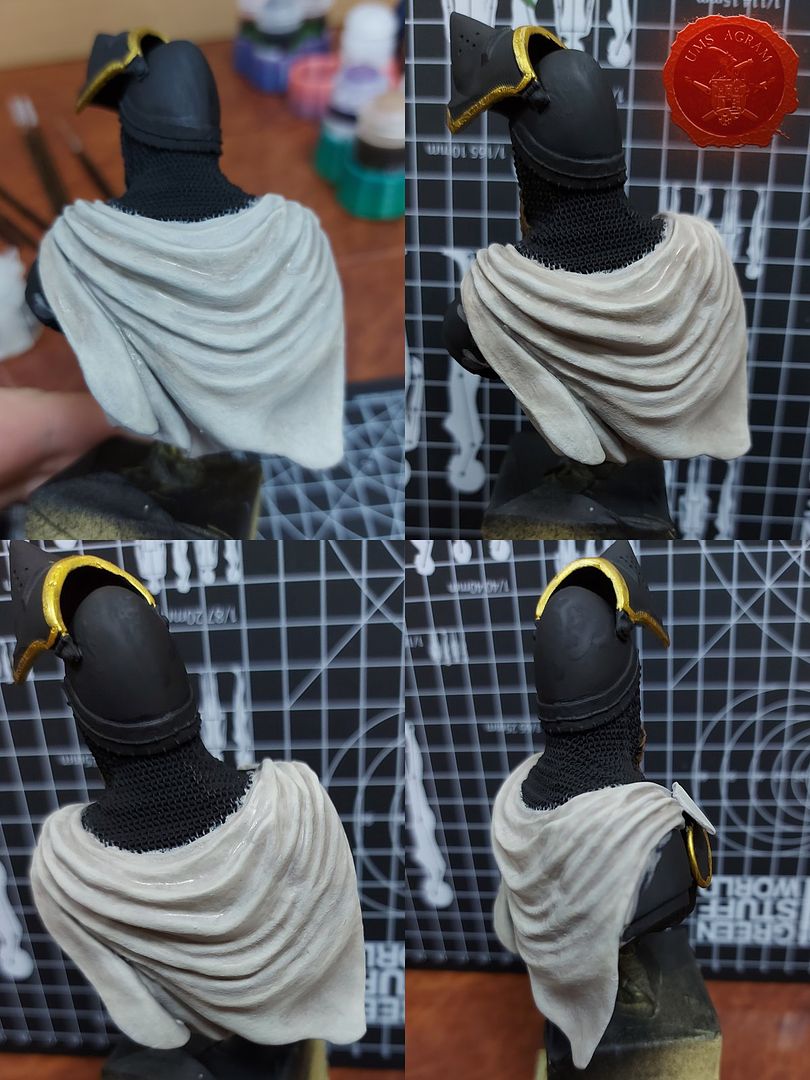
I first set out to fix the shadows using Rainy Gray. I drew the shadows by taking a slightly thicker brush (2 from the da Vinci Maestro series for example), and where the recess in the mantle was widest I applied the most pressure with the brush, so that the most paint would accumulate there. Then, while the shadow paint on the miniature was drying, I set off with a mixture of Rainy Gray and Nacar to fix the transitions between the shadow and the area next to the shadow, as they seemed relatively uneven and rough (although the roughness turned out to be a texture mantle).
MARKO: Then I set out to work on the cloak. If you remember, last time there were white stains from washing. This time I managed to cover those and add a few more layers of shadows ... As the cloak goes towards the shoulders, so the color becomes lighter. At least that's the idea.
GORAN: Then I set out to lighten the shields on the shoulders and even out the layers of a lighter color, with pure Nacar. I also further evened out the layers and thickness of the lighter colors on the shields on the shoulders, also using Mojave White.
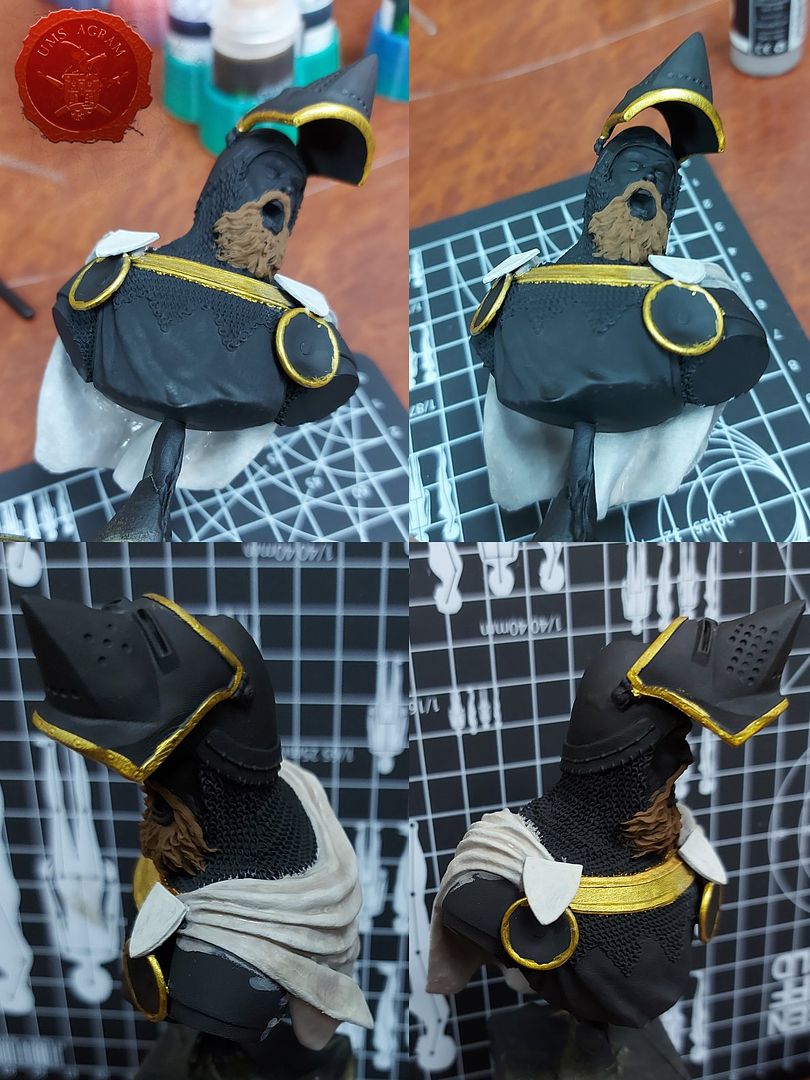
Then I started to smooth the transitions towards the lighter parts of the crease with an equally clean Nacar, here I leaned the brush against the crease itself, and I evenly smoothed the transitions near the tops of the creases with equally uniform movements towards the lighter part of the crease. Then, with a mixture of Nacar and Birch, I started to lighten the tops of the folds, the same technique of applying the brush to the folds, and uniform movements towards the lighter part of the folds. In the next step, I used Mojave White, and I additionally lightened the creases with the brush application technique along the crease tips.
MARKO: For the end, I painted the fabric on the bust’s chest in a base red color. After I paint every layer on the gown, only then will I add the white eagle.
Latest articles
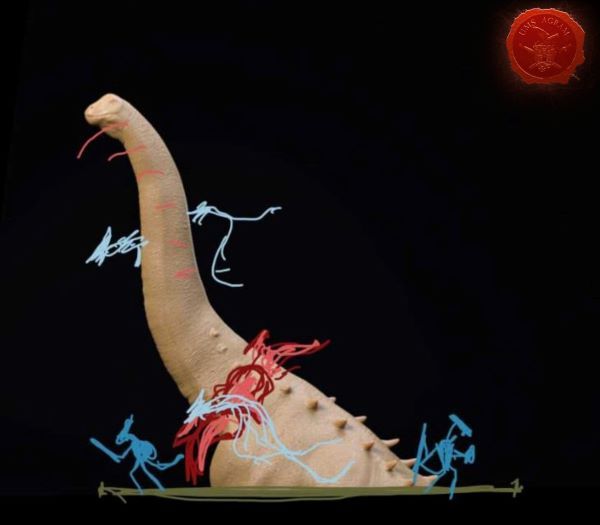
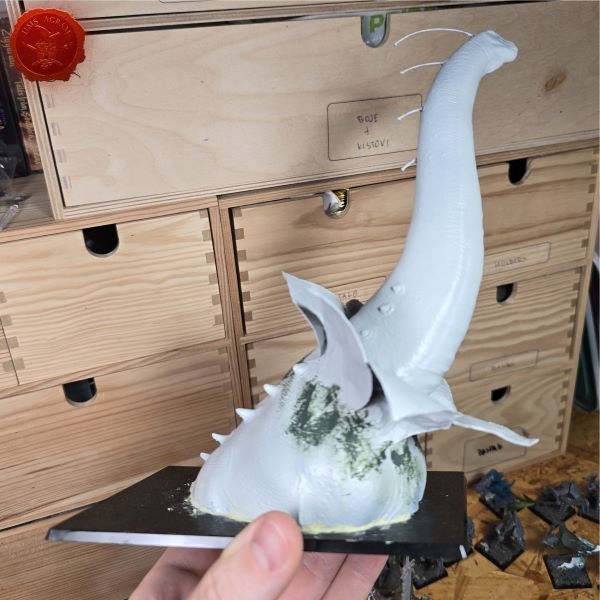
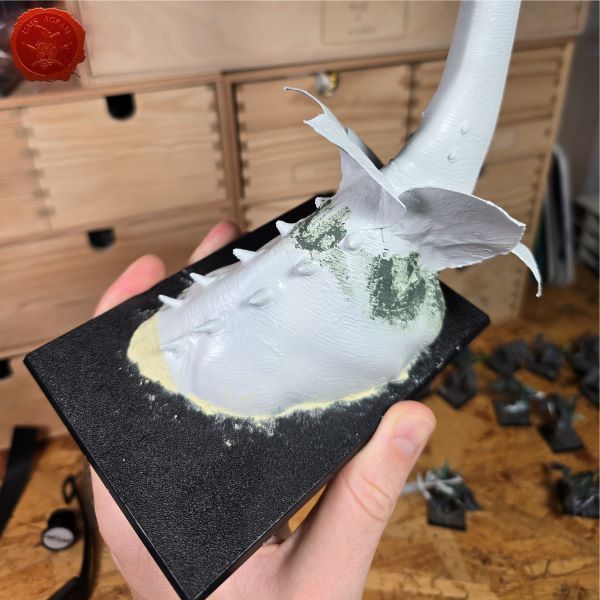
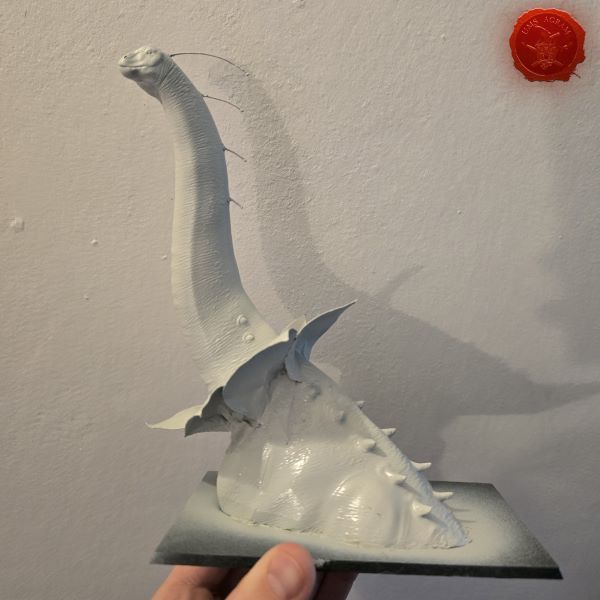
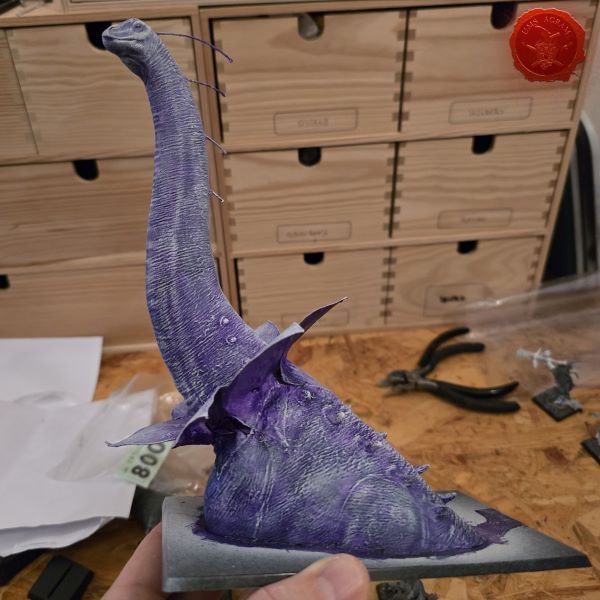
- Lizardmen Sauropod – part 1 Mario Grgurev, 19th October 2026
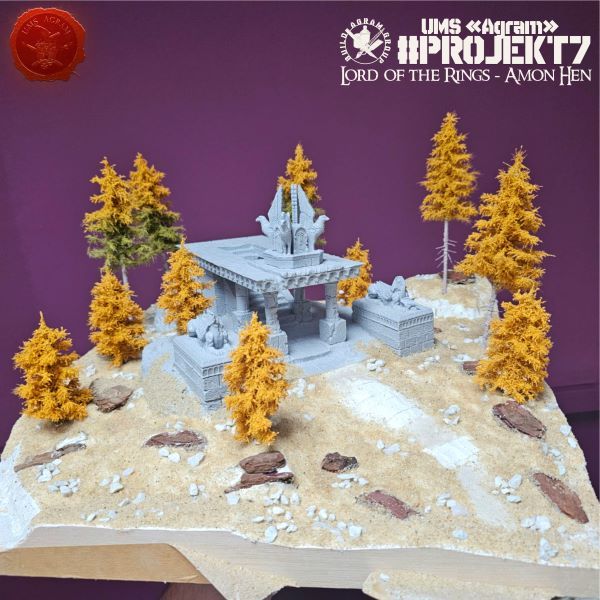
- Agram Group Build #7 – Amon Hen, pt.5 Krunoslav Belinić, 15th October 2026
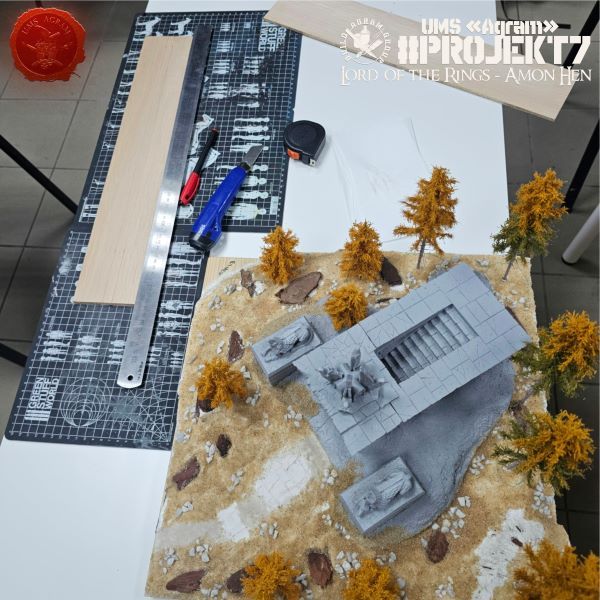
- Agram Group Build #7 – Amon Hen, pt.4 Marko Paunović, 8th October 2026
- Agram Group Build #7 – Amon Hen, pt.3 Krunoslav Belinić, 1nd October 2026
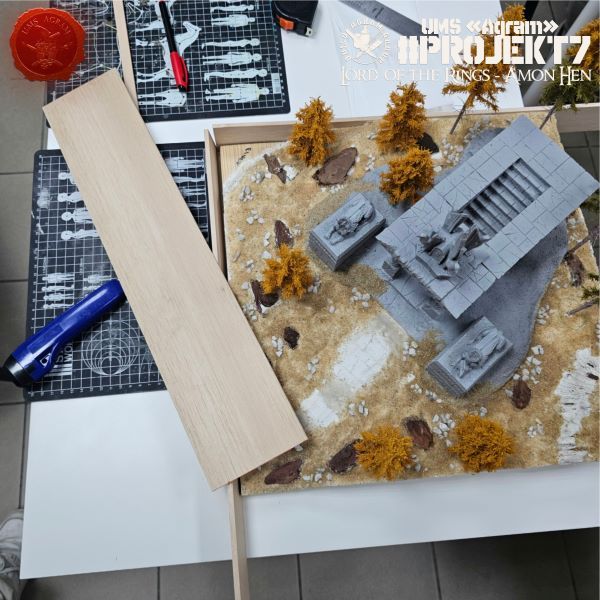
- Agram Group Build #7 – Amon Hen, pt.2 Marko Paunović, 24th September 2026




Latest battle-reports
- Kill Team - Blooded vs. Vespid Stingwings 28th February 2025, GW - Warhammer 40.000, and Antoni Pastuović (Imperial Guard)
- 22nd April 2022, GW - Warhammer 40.000, Borna Pleše (Space Marines) and Kristijan Kliska (Tau Empire)
- 17th November 2021, GW - Warhammer 40.000, and Nino Marasović (Space Marines)